
You're the Bottleneck: Why Business Growth Starts With You


 Youtube Music
 Podchaser
 Pandora
 Goodpods
 Podcast Addict
 Deezer
 PlayerFM
 Castro
 Castbox
Your team isn't performing, your business isn't growing, and you're working harder than ever. But what if the problem isn't everyone else?
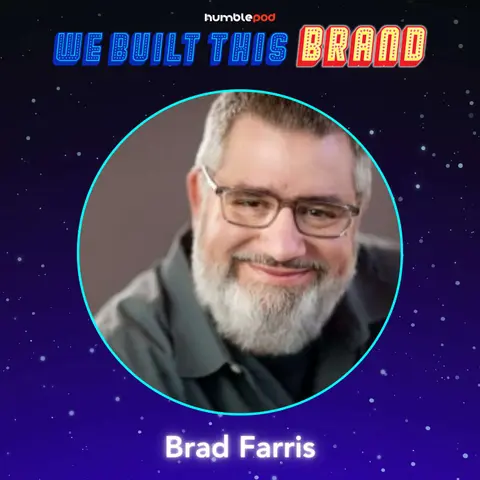
Chris sits down with Brad Farris of Anchor Advisors to explore why business growth starts with better leadership. From learning to delegate and trusting your team to navigating AI and building a brand rooted in meaningful conversations, Brad shares what it really takes to move from founder to CEO.
Because sometimes the hardest part of growing a business is getting out of your own way.
Show Highlights:
(00:00) When Teams Underperform
(01:31) Brad’s Winding Career Path
(04:44) From Doer to CEO
(12:15) Coaching Framework and Letting Go
(17:17) Starting Anchor Advisors and Naming It
(22:43) Pivoting After the Sale
(23:56) Rebrand and Nautical Identity
(26:02) From Consulting to Coaching
(28:59) Conversations Drive Growth
(33:31) Future Outlook and Wrap Up
Links:
Start a podcast with HumblePod! https://www.humblepod.com/our-services/
Sign up for our newsletter! https://www.humblepod.com/newsletter-sign-up/
Brad: Most often the problem that the, the client would bring me is, "Brad, my, my team, you know, the, the team just isn't performing. They're not doing the things that I'm s- I want them to do. They, you know, they, they don't have the skills." The... And I listen to this whole litany, and then I think, "So the team that you hired and that you're training, and you're the one holding them accountable, that, that's the team that's broken?"
Chris: Welcome to We Built This Brand, where we pull back the curtain on the people, the ideas, and the sometimes challenging processes of building something that matters. Today, I'm joined by Brad Farris at Anchor Advisors. He's an executive coach with a long history of working with entrepreneurs and startups, and quite frankly, this was a incredible conversation.
Uh, we dive into the challenges of leadership and growing a business and entrepreneurship and everything in between that comes with building the business. And yes, we even talk a little bit of branding along the way. So don't worry, there's a little bit of branding and marketing in here, too. But I think you'll really like it, and I hope you do just as much as I did.
So without further ado, here's my conversation with Brad Farris from Anchor Advisors.
Well, Brad, welcome to We Built This Brand.
Brad: Hey, thanks. I'm glad to be here.
Chris: Yeah, glad to have you. Um, we talked a few weeks ago and, um, learned a little bit about what you did at Anchor Advisors, and would just love to dive into that today. But before we do, I always like to start with, how did you get here?
Where did you get started?
Brad: It's a long and winding road, Chris. I went to college to be an engineer, and, uh, I love engineering. I, I love s- solving problems and being creative and seeing how, you know, within a set of constraints we can, we can get something to work. And at some point in my engineering career, the marketing team kind of brought me a problem, and they're like, "Hey, can we do this?"
I'm like, "Great, sure." We did it. We put it in the marketplace. It wasn't a success. And I was thinking, "Man, it's unfortunate that I'm gonna have to do the marketing job here, too, 'cause these people are obviously, you know, incompetent." This is how engineers think. And so I, I wanted to figure out what the marketing people did, so I went and hung out with them, and, and in order to talk marketing, I had to understand accounting.
And so I ended up being, like, the nerd that spoke business, or the business guy that spoke nerd, depending on which side of that wall you're on. Around that time, the organization I was a part of, uh, kind of went on an acquisition spree. We were owned by a billionaire, and the problem with billionaire families is that the kids think they get to live at the same lifestyle as their parents.
Mm-hmm. And so you need exponentially more cash every 25 years.
Chris: Mm-hmm.
Brad: So we were buying entrepreneurial businesses that we felt like could grow to, you know, put gas in the jets and feed the horses and all that stuff.
Chris: Yeah, yeah.
Brad: So they needed someone who spoke nerd, and so I went around f- for, for many years e- looking at entrepreneurial businesses and, and trying to decide whether they could grow and then buy them for the ones that, that we really liked.
And that was just fascinating, because when you go to sell your business, people care about a lot different things than you care about when you're running your business. And so seeing how entrepreneurs looked at their business and then how investors looked at businesses was one thing. And then, you know, I was there f- for several times when we gave an entrepreneur a really big check, and, like, this is supposed to be the best day of his life, right?
He worked his whole life to, to get this payday, and what I noticed is that most of them weren't super excited on that day. Like they had, they were letting go of something they really cared about.
Chris: Mm-hmm.
Brad: This was their life's work, and tomorrow they were gonna be in charge of the lawnmower and the dishwasher.
You know, like it, it, it was, it was a, it was a mixed blessing for many of them. Uh, at s- at a certain point when the acquisition thing kind of played out, I switched sides of the table and started working with the, the business owners to help them to continue to grow their business instead of selling it.
But most people sell their business 'cause it gets to a size where they just don't know what to do next, right? Like, like, "This is the biggest business I've been, ever been a part of," or, "I just don't have the leadership capacity to lead this business."
Chris: Mm.
Brad: For the last 25 years, I've worked on the entrepreneur side, helping them to grow their, their leadership so that they can grow their business.
Chris: That's quite the journey.
Brad: I told you it was a long and winding road.
Chris: A long and winding road. And I have so many questions about both sides of that, which I don't think are necessarily relevant to this conversation, but I love, I love hearing that story because it helps make sense of what you're doing now.
So let's, let's talk about what you do at Anchor Advisors now. What, what exactly is Anchor Advisors?
Brad: We're an executive leadership coaching, um, firm. I work primarily with owners of growing businesses, a lot of creative service businesses, so marketing, advertising, PR, web design, architecture, interior design, those types of businesses.
The people who run those businesses largely- Are doing it because they love doing the thing, right? Like building the websites or, or designing houses or whatever it is. And the challenge is that if they keep doing the thing, they can't grow the business. And so helping them to make that transition from being the technical operator to being the CEO who's leading, who's, who's building a system so that a group of other people can get the thing done.
Chris: I completely feel that so much right now- ... just as a small business owner. Like, it's, it's hard to, to be in that place of like, I've gotta, I've gotta grow a business, I gotta keep, I gotta love my family, I gotta spend time with them.
Brad: That's right.
Chris: But I also have to get the work done so that I can do those other two things.
Brad: That's right.
Chris: And it's, it's a very challenging place to be, and knowing how to grow it, figuring it out, nobody gives you a manual on that. I mean, I, I would say I'm fortunate in that I got my undergrad degree in marketing and entrepreneurship, and I actually... It was not just how to start a coffee shop, it was how to actually, you know, a lot of it was learning basically what you would need to learn to be in a startup or to be, you know, in a small s- on the, on the early side of a, um, you know, a VC-funded company.
And it was cool, it was helpful. Um, but even then, you come out of it and there's so many things. Like, they don't tell you about the, all the interpersonal skills you need to deal with people. And, and when you come out of college, like, you're not gonna be that leader unless, unless you're a Mark Zuckerberg or somebody, and I think that those days are probably gone for most people.
But, you know, that, that whole, like, wunderkind, you know, type s- scenario where you come out just doesn't happen anymore. So, like, learning it as an adult, learning how to deal with all that, like, people are figuring this out for the first time. I, it's interesting, I, I've s- we've been a lot in tech, but I've also been in the craft beer is what really sprung to mind as you were talking about this.
Um, because it's very much a bunch of engineers almo- If you look at a lot of the founders, they are engineer backgrounds, and they get out, craft beer's always been their passion, and if you, if you look at the basis behind, like, why craft beer is such a draw for engineers, like, it's a fascinating Venn diagram of how all that works together.
But they get out, and then they get, you know, they're doing this in the later stage of their career, and then they sell their business and move on. So, like, I've heard this story that you're talking about time and time again is where I'm going with this, and it's, it's a challenge. So, how do you, how do you help someone in, in those early phases?
Brad: Something that you said really resonated, which is, you know, there's one job that only I can do, which is to be a husband to my wife and parent to my children. After that, I spend, I have to split my time between all of these other roles that I have. But in the company, if I am doing client service, if I'm doing the thing that the company gets paid for, then no one is doing the CEO job, right?
No one's gonna step into that role. That's, that's a job that they're gonna leave for me to do, and if I'm not doing it, then I've essentially abandoned the job that is making the company the most money.
Chris: Mm-hmm.
Brad: Seth Godin has a really interesting, um, distinction that he draws between, um, freelancers and entrepreneurs.
And he, he says freelancers are people who sell their time, their creative services, their genius, for money. Entrepreneurs sell other people's time for money. And so if you are the person who's doing the thing, he's like, "It doesn't matter how big your company is, you're a freelancer 'cause you're not really doing the thing that generates the leverage that builds the business."
And then to your point, the reason that people tend to do that is that being the CEO is this job that requires a lot of skills that I don't have. Like, I need to figure out how to manage people, and I, I need to figure out how to hire people, and then there's this whole financial piece that I don't really understand, right?
And so those are very learnable skills. And so helping the, the, the entrepreneur to, to feel more comfortable in that CEO role, just like I learned that Creative problem-solving didn't just happen with circuits and gears, right? Th- th- there are creative problems to solve with people, too, and people actually are really fascinating, like infinitely fascinating.
So the, the creative problem-solving to be done at the CEO level can be just as fulfilling, if not more fulfilling, than, you know, doing the drafting or writing the code or whatever the thing is.
Chris: It becomes like a video game, I have found, and that's probably a terrible analogy, but like-
Brad: No, it's real ...
Chris: yeah, for me being a nerd, like, you know, there's, there's a reason, and I had this early on in my business, I, I found myself...
This is so nerdy. I found myself being drawn to what they call 4X strategy games, which are like the, the really big, broad, like Europa Universalis is a good example of it, and they're these big, like you're managing a whole country and deciding whether to go to war or whether to grow economically and all these things.
And like, I found myself being drawn to that, in city-building games and things like that, and I'm like, "Why am I doing this?" And I realized, like, it's basically a ga- a business simulation, and it's one that g- gives me sometimes better instant gratification for what I want out of growing a business.
Brad: Oh, way better.
Absolutely.
Chris: Yeah, so yeah, that's, that's me on the therapist couch there.
Brad: But that, that executive decision-making, like, like that is one level.
Chris: Mm-hmm.
Brad: The reason that there's so much more, um, immediate feedback in the game is, is people, right? So like in the game, you have, you make a decision, and the m- machine does the thing that you decided.
When you're a leader, you make a decision, and then people don't do it, and they have to go find out why aren't they doing it. And like, you know, "Hey, remember we said we were gonna do this?" "Oh, yeah. Yeah, yeah."
Chris: Yeah. It's, it's, it's not as fun when, when you can't just say, "Go th- go do this." And I was talking to another friend, um, about like how he's using AI in his business, and not to make this an AI conversation, but, but like we, w- I was trying, I was trying to just process with him, like why is this so addictive to founders?
Like especially founders, and it's that same thing. It's that video game kind of thing. It's like everything I wanted, I don't have to wait for. I get instant gratification from getting an answer, getting a solution, getting a product built, and I think I have it, and it creates problems, but but it's, it's fascinating to see what it can come up with, and yeah, there's just that, that whole thing there.
So, so you start working with people. You start helping them along this road. Um, what do you really like- How do, how do you really help people get to that next step? Like, what, what is kind of your approach to getting people to, um, to grow?
Brad: The- there's sort, sort of two threads to that. One is the business provides the curriculum.
You know? I- i- if, if they... If I say just, you know, "How's business?" They're gonna tell me what's going on, and there's plenty of us to work on just from whatever happens to be going on in their day. And that's, that's sort of one level of the game, which is if you think about it like a, a chess player, like, that's the tactics on the board.
Do we move this piece? Do we move that piece, right? But the much more powerful level is, is what I call talking about the chess player. So you've got the moves on the board, but then also you have the person playing the chess. And what I've found is we can't build a business bigger than we've grown ourselves.
Like, the, the first person that we need to lead is ourselves. And when we build that muscle of leading ourselves and s- and watching our decisions and watching how we're thinking and feeling about things, and that then helps us to make the, the moves on the board much more effortlessly. So, so a great example of that, I've been talking recently with a, an ar- a person who owns an architecture firm.
And in her firm, she is the business development person, right? She's got a lot of people who can draft and do other things like that, but she's doing all the business development herself. And she has a belief that that's sort of her magic power. Like, she can... She's the one that creates this bond with the, the client.
Well, if that's true, then this business can't grow, right? If you're the only one that can sell a project, and if you're the one creating that bond, then you have to stay involved as the project moves along, too, right? It's harder to pass it along. So we've been working on that belief that she has by just running some experiments.
Like, what if we took two or three leads that are, you know, not a whole house redesign, but maybe a kitchen and bath project, and train one of your team members to go have that conversation and see what happens? So low stakes kind of things. Let's just try it out and see. And I don't have to convince her that she's wrong.
I don't have to tell her that this is, you know, "You have to do this." She, she can do whatever she wants. It's her business. But we could try this experiment and see what happens.
Chris: That whole process is, um, big for a lot of founders. People, people don't want to give up working in the business. They don't want to give up something they consider themselves integral to.
I think for myself, with the business we've created, like, I, I feel like I'm in a good place where it's like, I'm not always in the best place with it, but it's, for the most part, like, I, I trust my team to do their work. Like, I can, I can say, "Okay, you guys go off and do this." And, and in fact, early on, I ma- forced myself to hire people, forced myself to bring people in so that margin was a part of my business, so I knew...
So it didn't feel like I wasn't giving up part of myself or part of my livelihood to bring somebody in. And then as it grew, realizing, okay, this takes weight off my shoulders to continue. I mean, that's, that's huge. But a lot of founders, I mean, especially in the consulting or design industries, like yeah, it's hard.
I mean, podcasting is hard, too. You want to make the best product for every client every time. And yeah, you got to trust your team to do that, too. So I, I totally get that. That's a big challenge.
Brad: There's a math part of it, too, right? Like, when, when it's maybe you and an, an assistant or you and two people, when you go to hire that third person- You're increasing your, your, uh, payroll by 25%, right?
It's a huge increase, huge increment. And now there's a huge amount of work that you need to move down to that person to, to, to pay for that leverage. So there's a step function in what you need to do to create your business. There's a step function in, in your change. When you're hiring your 20th person, it's a 5% increase in payroll they're probably not taking anything off of your plate.
They're, y- things are just sort of sliding down the hill. And so the h- the first hires are the hardest. W- if you can get over those first few, each next hire gets easier and easier and easier.
Chris: Yeah. I can, I can identify with that. I'll just leave it at that.
Brad: The impression that most, uh, business owners have is, you know, they get to around a million five, maybe two million, and they're working really hard, and they're like, "I can't double this, Brad.
I'm a, I'm... I can't work twice as hard." I'm like, "Exactly. Exactly." Yeah. "You're gonna work less hard at four or five million than you are right now at a million five."
Chris: Yeah. Yeah, you, you wanna continue to distribute that, that work out and find ways to get it beyond yourself, and that's, that's, I think, the, the nut most people need to crack.
So, yeah.
Brad: It's a challenge.
Chris: So let's talk a little bit about kinda starting... I mean, we've talked about getting into the business. We've kinda dove off the deep end. I, I have a bad habit of doing that, but-
Brad: It's good habit. There's nothing bad about that ...
Chris: but love diving off the deep end. But when we, when we talk about getting this business started, what made you make that leap to the other side?
Brad: I was invited to find employment somewhere else.
Chris: Been there.
Brad: The dot bomb happened, right? Valuations, uh, got really squirrely, and interest rates got high, and we just weren't gonna do any more deals, and I had been running one of the deal, one of the businesses that we'd bought. And, uh, it got to the point where we just needed to hire a CEO that was from the industry, and, and there just wasn't a next step for me.
And at the same time, I kinda had an itch to do something differently. I imagined there must be other entrepreneurs out there that, that needed the kind of help that I was offering, you know, working for the billionaire. And so it was a pretty natural step to, to just kind of go out and get something started.
Chris: Sometimes those thing, those opportunities present themselves, and-
Brad: Indeed.
Chris: It's good to, good to take advantage. Yeah. So, so clearly, I mean, you had a passion for this industry, passion for these people as you came into it. Um, when, when it started to grow, like, when was that moment when you realized, "Okay, this isn't just an in-between thing that I'm using to fill up my..."
You know, people do that, like, fill up their resume until they find something else. Like, what was that moment of validation for you like?
Brad: So when I started, I had, I had two kind of tracks that I was running down. One was I was gonna do this consulting thing, kinda see how it goes, kind of in the back of my mind thinking that one of these people would just hire me, right?
And then the other option was maybe I'll find one of these businesses, and I'll just buy it 'cause, 'cause I had done a bunch of acquisitions, and it, it would be really fun to run a business again. And I remember there was a certain day when I was like, "You know, I haven't looked at a business brokerage site in, I don't know, six months."
And I stopped looking at job sites, you know? And so there was just a place where it wasn't like a turning point, it was just a moment where I realized, "No, I think this is the thing I'm doing." And it took a long time. It probably took three or four years to where I, I was like, "No, this is the thing." And, and interestingly, about that time is when I started hiring other people, too.
Like, once I decided that this was the thing I was gonna keep doing, I realized that I couldn't do it by myself anymore.
Chris: So for you, having gone through it on that side, too, 'cause I know a lot of folks in your type of business, a lot of times it is just a solo practice. But when, when did you get to that threshold for yourself?
Brad: I actually worked with a coach around that time, because I felt like my business was kind of stuck against a plateau. And so the, the coach that I brought in, she suggested hiring some people. And, you know, I had a, some arguments with her about how would that work, and all the same conversations that I have with clients now, right?
And she convinced me to give it a try, and I actually started off hiring two people right away, 'cause I figured it's easier to train two people, and that way when one of them's terrible, I can fire that person and then still have some help. You know? We set up a rhythm where I just wouldn't go anywhere by myself.
If I was going to see a client, whether it was a prospect or, or a client we were working with, I would bring someone with me. They would be there to hear the conversation that we're having, and they'd contribute, too, and then they would go do the homework, whatever the homework was, and I would go to the next meeting.
And so, uh, that was kind of the, the initial way that the business ran.
Chris: Yeah, and that's, that's good, because they're, they're seeing how you talk, how you do things, and they're, they're able to, to pick up on that.
Brad: Right.
Chris: I, I always hear people say, "Oh, you gotta hire an assistant first." Did you, did you go that route, or did you find, find somebody at a higher level?
Brad: It's interesting that you say that. I did hire an assistant first. Um, mostly because, again, my, my coach at the time was like, "Well, track your time, Brad. Figure out where you're spending your time." And what we saw is that 20% of my time went into scheduling client meetings and prospect meetings. Like, it was just a lot of, like, Tetris on the calendar, and at that time I was driving to meet people in their office, so that, you know, it was j- it was kind of a mess.
I was like, 20% of my time, I can get a day a week back for 500 bucks a month? Like, in. I am totally in. So I hired a VA and gave up my calendar, and that was phenomenal. That was huge.
Chris: Yeah, I mean, tho- tho- those folks can make a big difference in what you're doing
Brad: It was great.
Chris: So then you moved on from there.
What, what about the name, Anchor Advisors? I like to say, you know, names are intrinsic to branding. This is... We built this brand. Um, I'd be remiss if I didn't ask a good branding question. So why the name?
Brad: So when I initially started the business, the business plan was, you know, remember, I had been buying businesses from entrepreneurs, and so the offer I was making to the marketplace was, "Hey, you're thinking about selling.
Let's work together for a year. I'll help you to get a better valuation 'cause we can clean up some of the stuff on your balance sheet. We can get rid of Uncle Eddie and, you know, all the things that you don't wanna do but are gonna get, make you more money. And then when you sell it, I'll just take a piece of the upside."
And, um, so the anchor in Anchor Advisors was, like, the anchor leg of the relay. It was like, "This is your last lap. Let's do this together." I signed a couple of those deals, worked, straightened out the business, was like, "All right, great. Now it's time. Let's put it on the market." And they're like- Why would I wanna sell it?
This is a great business. Like, you fixed all the problems. It was like, so that was how I was getting paid? Never mind. We're just gonna do this differently from now on.
Chris: You, you live and learn, right? You live and learn.
Brad: Right. Exactly. Maybe I should have foreseen that, but whatever.
Chris: Some- sometimes you can't predict it.
We, um, you know, we do podcast production, and we've... You know, we, we used to sell, like, se- a series up front, and I stopped doing that because I realized people were buying it, and then the company would sit on it. And then, like, five years later they'd come back and be like, "Hey, we still have those 10 episodes with you, right?"
So not quite the same thing, but a similar, similar scenario of like, oh, if I don't do something to structure this better, I'm gonna be in trouble.
Brad: Yeah.
Chris: Yeah. Yeah. So, so then what, what was the pivot after that then?
Brad: Uh, so I just started helping people to, to improve their businesses and grow them. Like, that's what they wanted anyway, right?
And it, it was easy. Like, looking for people who were getting ready to sell narrowed my market. This just made it, opened up the number of people that I could talk to. And so e- one of my clients was a marketing firm, and I said, "Listen, we gotta..." Because the logo was, like, handing off the baton. Like, everything didn't fit, right?
And so they redid the logo with this nautical theme, and it's still, um, the tagline is, "Own your course." So it's, it's about getting more agency, which is what I'm all about. And so, like, it fit. It's fine. And, and trust is the, the underlying thing of the brand. It's, it's this green and black, it's kind of a high, um, higher-end look but, but built along trust.
And so the, the name kept, the name still worked. There was no reason to change it. We just kind of pivoted it around to a different logo.
Chris: Yeah. I mean, I think it, it fits more the, the name itself, and the, the everything about that makes a lot more sense. Do you... I'm just curious, do you have any experience with sailing or nautical-themed things?
Like, is that a passion or...?
Brad: I mean, around that time I was reading Patrick O'Brian. I don't know if you know
Chris: his- Yes, yes.
Brad: So that, that's as, as much sailing as I've done, but it-
Chris: It's a good book. Good books.
Brad: Yeah, fantastic.
Chris: To me, that's a deep cut from, like, my past. So I'm like, "Oh, my gosh, I haven't heard that name in a while."
Brad: I know.
Chris: So then where, where are things for you now? Where are you hoping things to go in the future?
Brad: Want to launch a podcast without the hassle? HumblePod makes podcasting
Chris: easy. From concept to launch, we'll help you create a professional, engaging show. Already have a podcast? We handle editing, show notes, transcriptions, and even video production, so you can focus on your content.
With our tailored services, you get high-quality production, seamless publishing, and expert support at every step. Whether you're starting fresh or leveling up, HumblePod ensures your podcast sounds amazing and reaches the right audience. Visit humblepod.com to get started today
Brad: So in 2019, I pivoted out of consulting and into coaching. And what happened there, I, I, I enjoy consulting, I enjoy the hands-on and solving problems. Um, but sort of i- in the same way the, what you were talking about at your business, the thing about consulting is the, the implied deal is that the client says, "I have this problem," and you say, "Well, I'm gonna fix it," right?
Chris: Mm-hmm.
Brad: But most often the problem that the, the client would bring me is, "Brad, my, my team, you know, the, the team just isn't performing. They're not doing the things that I'm s- I want them to do. They, you know, they, they don't have the skills." The, and I listen to this whole litany and then I think, "So the team that you hired and that you're training, and you're the one holding them accountable, that, that's the team that's broken?"
Chris: Yeah. Touché.
Brad: And so, uh, again, I ha- and this was another point in which I was working with a coach and, and I went to her and I said, "I, I just don't wanna have this conversation anymore." She said, "Well, that's coaching. Coaching is saying the first thing to fix is you, and when you fix you, everything around you changes."
And I was like, "Yes, I know. That's exactly how it works." And she says, "Well, then maybe that's what you should sell." So I, I pivoted out of consulting into coaching. It's really helped me to sharpen the message that I'm giving to the world. And like now if you go to my homepage, it basically says, "When you come to the point where you realize that you are the reason that your business isn't growing, you should give me a call."
And that's, that means I don't have to have that conversation anymore. People that are coming to me knowing that, that they're the first client. And now, um, you know, a significant portion of my clients, I'm working with the CEO, but I'm also working with their management team. So now we're fixing both problems together.
So the CEO is changing her behavior, and then we're talking to the management team about where their gaps are. And so that is, like, now it's come full circle to where we're, we're working both with the CEO and with the team to close the gaps and move the business forward.
Chris: I really like your approach when I was looking through the website, just how you're, you're, you're very approachable.
Like, I feel like a lot of these coaches and, and folks that I see, sometimes it can feel a little intimidating to reach out or, or like, "How am I gonna talk to this guy?" And you seem like, "Hey, let's just have a conversation and see where this goes. Like, I'm not gonna pressure you into anything. Like, let's just see if I can help.
Let's see if we can do some things." And like, it, for my personality and a lot of other entrepreneurs, I think that's really helpful to know that they can test the waters versus having to commit to, you know, a, you know, $100,000-a-year training course that's gonna meet in a cohort every Friday at 6:00 AM.
You know? Like, that can be difficult for some people, and that, that's a lot of commitment up front versus, "Hey, let's just see how it goes."
Brad: One of the things that I'm sort of, uh, known for fr- by my clients is that I, I say that all sales come in conversations, right? You don't sell anything to anybody you're not having a conversation with, especially in, in professional services.
And so whatever marketing we're doing, the goal of that marketing is to start a conversation. And this is one of the things I, I love about email marketing, is that I can send an email out to thousands of people, and when they hit reply, we're in a one-to-one conversation. And so the end of every one of my emails is a question, and a surprising number of people hit reply and answer that question.
And now we're in a conversation, right? And that conversation might be, "You know, that's a really great an- let's get on the phone and talk about that," and now we're in a, in a sales conversation. But, but whatever it is that I'm doing, the goal of that is to start conversations with people.
Chris: I think that's a great position on it too, 'cause that's, that's all you really can do, um, is just try to get that conversation, try to have that first talk, and a lot of times things naturally flow from there.
Whether they become a client or not, you at least have the conversation.
Brad: M- my current coach, one of the things that she says all the time is, uh, "I talk to people all day long. Some people pay me, some people don't." It, it's hard to know wha- wha- whether from the first conversation or the second conversation if it makes sense for us to work together.
So just having more conversations leads to more clients. That's kinda the way it works.
Chris: Do you have a, a specific strategy around trying to get these conversations, or is it just, "Hey, if I put myself out there, the business comes in and we do it that way"?
Brad: Pre-pandemic I met a lot of people out at events and things like that.
Uh, and would, would create my own events where I would invite people to, and, and whether that was just a lunch with four or five people that I think should know each other or, you know, a workshop of some kind. Uh, and then obviously the pandemic changed that, and so there were a lot of online places where I would meet people and have those same kind of conversations, whether it's a, you know, a, a Slack that's full of, of agency owners or some kind of forum or, or, uh, online discussion that has people in it that are asking these kinds of questions.
Now that I, I'm, you know, whatever this is, year of our Lord 2026, I'm going back to meeting people. Like, I really enjoy meeting people face-to-face, and finding some venues where people are just having the kinds of conversations that I want to be in. And so, uh, going out and meeting people and getting to know them is fun for me, and so I'll just do that as much as I can.
Chris: That's a great way to do it. I'm finding that to be useful these days. Um, and it, it's weird because we, we did, like, I think there's this hesitancy 'cause I, I m- I help run a American Marketing Association chapter here in Knoxville. I won't go into all the details, but it's a challenge to get people to come out to things still.
And so, like, you, you start to think, oh, well, nobody's gonna wanna do things, but then if it's the right thing, everybody's there. You know, um, down the street from a great bar, and everybody... Like, you, you go there during the World Cup right now, it is packed during games. So, like, people are getting out and doing things, it's just are they doing the things that you wanna do?
And I think people's priorities have shifted because they realize that all those luncheons they were going to for weeks on end or months on end, you know, just to, just to do to get out of work- Mm ... um, don't really add any value to their lives. Um, or, you know, they might want to stay in their yoga pants at home.
I, I totally get that, you know? Like, it's, it's tough to get, you know, to get dressed up nice and come out, um, when you could be at home doing the work and, you know, nobody has to see you dressed the way you are.
Brad: It's also though, I think it's an interesting filter.
Chris: Mm-hmm.
Brad: Because the people that have taken the eff- or to get dressed and get out and, and meet some other people, those are more often the type of people that w- want to work with me.
They're, they're... You know, what I always say is I would, I can help people- Who are gonna be successful whether they work with me or not, much more than people who are n- you know, maybe on a not so successful trajectory and we need to turn things around. So I'm looking to meet people that are already out on the way to their success, and, and the people that are showing up to those events are often those people.
Chris: So what does the future look like? N- not broadly speaking, of course.
Brad: It's a tricky question in 2026, isn't it?
Chris: Yeah, I know.
Brad: No, I think that coaching, like, th- the thing that's interesting to me about coaching is that it's an intensely human experience. Listening to someone, uh, is for many people indiscernible from love And so I, I just wanna do more of it.
And, and I don't really see a lot changing about it, uh, other than, you know, the sizes of the companies that I'm working with are getting a little bit bigger. There's definitely, the CEOs that I'm working with have different pressures, whether it's private equity pressures or, or other types of investor pressures.
That kind of stuff is changing. But, um, but that's not a lot different from the acquisition work that I did 20 years ago. And so, yeah, I, I think some of the problems are shifting, but the actual work to be done is pretty much the same.
Chris: And again, I don't, I don't wanna dive into AI too much, but there, there is this, this pattern that I have noticed, um, 'cause as a kid, my dad worked for AT&T, um, or Bell South back in the day, actually.
D- deep cut there, too. Um, but he worked for Bell South, and I remember g- as a kid, going into his office and seeing a computer. And, you know, as I got older and, and learned more about the history of all that, like, there was a lot of panic around, oh, we're gonna have desktop computers? Oh, we're gonna have laptops?
Eh, you know, productivity's gonna explode, and we're not gonna have to work as much. And I'm like, I'm sitting here now going, "I've heard this story before. It's the same old song."
Brad: It's the same story. And some things did change. You know, in the '80s, we had 15 secretaries in our company. That, that, that company doesn't have any secretaries now, right?
Like, so there are things that are gonna change, but yeah, w- uh, the infinite leisure thing is bananas. I mean, the people that are selling that are selling you that because they want you to use AI. I mean, that's, it's in their interest for us to believe that. But that seems very unlikely to me.
Chris: But when you talk about some of the same challenges and things, like, it does feel like it's a different song, but it's the same melody.
Brad: Yeah.
Chris: It's kinda like the same thing going on, so that makes total sense for where you're at.
Brad: The reason we keep talking about it even though we say we're not gonna talk about it is that it is changing a lot of things. Like, it, I spend a lot of time with clients talking about how AI is changing not just the work that's being done, but their relationship with the workers.
Because to your point, they're chatting with AI about problems, and so there, some of the problems that would have bubbled up in the past, people are, are using AI to try to solve that problem. And I mean, great, there's some efficiency in that, but when I don't hear about the problems that are happening in the field or learning is happening in these little s- uh, bubbles all over the place, that's not necessarily great for the company.
So finding a way to, to aggregate that learning and share it around and validate it to make sure it's legal and, you know, ethical and doing the thing that we want it to do That is a different challenge that's arising with it
Chris: Absolutely. And, I mean, to that point, I mean, I, I can point to, um, I think it's the owner of Tencent who, um, I think that's the name of the guy, who, who had this big bout with this software developer, um, who's making the game Subnautica Two, and he put, he put all these, he put all these benchmarks for them thinking, "Oh, they're never gonna hit this," and they blew it out of the water.
Pun intended, if you know Subnautica.
Brad: Yeah, yeah.
Chris: He blew it out of the water, and it's a great game. And, um, you know, everybody's excited about it, and, you know, the, he, he was like, "Oh, crap, I've gotta pay these guys something silly like 250 million a piece." And he's like, "How do I get out of this?" And he goes to AI, and he chats about it, and he never consults a lawyer.
Brad: Yes, I remember. I did see this.
Chris: It's wild.
Brad: I can't remember his name, but the, he was one of the founders of Uber, was chatting with ChatGPT and, and decided that he invented a new branch of physics. You know, like- ...
Chris: a
Brad: lot of crazy things can happen if you're stuck in that bubble.
Chris: There's a great YouTuber that I followed named Eddy Burback, and he did a video where he let AI lead him into ps- psychosis.
Not really, but, like, he just followed everything it suggested for, like, a month, and he goes down an insane rabbit hole with that. Um, and it's just hilarious, and it's like, it's, it's funny, but at the same time, there are people that are doing that right now.
Brad: 100%. And it's not... Before AI, people did it with, you know, library books or, or social media or, I mean, it, it's, this is just a thing that people do.
But we can do it much more efficiently now.
Chris: Golly, I'm really doing a deep cut today. A podcast I love, um, called Hardcore History with Dan Carlin. Um, he has an episode, I, I even went back and bought it because I loved it so much. Four hours long, and it's, it's called, um, it's called The Prophets of Doom, and it's about the town of Munster and the Sie- I think they call it, like, the Siege of Munster or something.
And it was, like, right after the Protestant Reformation when everybody was like, "Oh, I can read the Bible and make my own decisions on the Bible now." I mean, it's kind of the same thing, not-
Brad: I did my own research ...
Chris: I did my own research, and I came to the conclusion the world's ending, so we're gonna take over this town.
So yeah, it's, it's wild. It's, it's a wild place, and, and I, and I bring all that up, and I'm, I'm referencing all this not just to digress but because, like, when you're a leader, that stuff, like, that can make or break your business. So, like, I'm sure you're having conversations about, okay, let's talk you off the ledge here.
Claude said to do that, but is Claude a real person, or is Claude a word predictor?
Brad: Does it have your best interest in mind? Does it know you have children?
Chris: Absolutely. I can help you with 20 things today.
Brad: Exactly. Yeah, it's an interesting time, uh, to be alive, and, but I think it's a really fun time to be a coach because what I'm seeing is that some of the overhang from the pandemic and the years, you know, the, the disaster years that kind of followed- People are, have capitulated, and it's like we're not waiting for things to get better.
We're just gonna make our lives better as, in the world that we are living in. And so my job as a coach is to stand in the, in the land of possibility and invite my clients to be there. And I just see people are in that mode right now where that's what they're looking for, that's the thing that they want, is to create more possibility for themselves.
And, you know, that's, that's like being a kid in a candy store for me.
Chris: It's a cool place to be. Um, I think that, you know, another thing that's probably helped, helped your industry, or the side of what you do to a degree too, is that people are really more open and honest about their own mental health and about the, the help that they need and things.
Um, I know I'm as, as I've grown older, it's become more prevalent to be like, "Oh, I need to go seek a counselor for that," or, "I, I need to go get therapy," you know? Like, it's not the taboo that it used to be.
Brad: That's helpful for me, because with clients, like I, I am not a therapist. I'm not trained in that. I don't have the insurance, right?
And so, uh, I have one client, I see her at 10:00, and then she sees her tw- her therapist at noon, and we- we're very clear, like that's a 12:00 problem, you know? Like-
Chris: That's a good point.
Brad: And so h- having a way to like separate that out and, and know what- what's for this hour and what's for that next hour is really helpful.
Chris: Well, Brad, as we wrap up, always love to ask this question. I know, um, you know, it's, it's a branding question, and, and you may, you may be prepared for it, you may not be. But always like to ask this one, which is what brand do you admire the most right now?
Brad: Hmm. That's a really good question. For many years, Apple would've been like the snap answer, right?
Mm-hmm. You know, everyone believes that they're way behind on AI, and certainly Siri is terrible. But the thing that I love about Apple is that they're kind of playing the long game, and they've built this hardware where you can run local AI, and it, this whole thing may come around to being that they were ahead of the game all along.
So maybe, maybe that's the, the brand that I admire. But in the, in the professional services space, boy, that's tricky. The, again, the, the, the leader in the clubhouse was always Goldman Sachs, 'cause they had this incredible values culture that they led from. Um, but one of the challenges when, when a lot of the professional services firms went from being partnerships to being publicly held is that those values kind of dissipated.
And, um, so I don't have a good- icon in professional services right now
Chris: That's okay. I, I think Apple's a, a really good example of, you know, where, where branding is, you know, really key to what they do, and it's, it's everything. And they, I think they... I, I kind of wonder if one day we'll learn that the internals of that, that, that AI conversation was like, "If we put this out here, we're gonna look terrible.
Like, we- we've already, we've already been dumb enough to put this out, but oh my gosh." And yeah, I don't know. Like, it's, it's either that or they, yeah, like you said, I think they are playing the long game. Um, so it'll be interesting to see what comes of that. I kind of wonder if it's kind of like the, you know, I, I don't think it's gonna be a lasting part of Tim Cook's legacy with the company, but it is kind of the last bit of what he's doing, and if you look at what's coming up, like I'm really excited for what I- where Apple's headed.
Brad: Apple's a black box, so we can cast whatever story we want onto them, right? But one of their values is privacy. Like, that's one of their differentiators. And the frontier models and the cl- the way that they're, the data all ends up in the cloud isn't very privacy friendly. And you know, again, talk about a story we've been through before, Facebook, um, I don't think we all want our data to end up in a cloud.
And so waiting until they had a way to do things with privacy in mind, like I said, it might, it might all come around.
Chris: Well, Brad, thank you so much. This has been awesome chatting with you. Where can people find out more about you, connect with you, um, and all those good things?
Brad: I mean, the best place to go is to anchoradvisors.com.
All of my writing is there. You, you can sign up for a newsletter. If you go to anchoradvisors.com/self-leadership-assessment, and I'm sure that Chris will throw that in the show notes for you, there's a little 10 question assessment that helps you to determine where your self-leadership could use a, you know, where it's strong and maybe where it could use some development.
And, uh, that might be a great place to start if, if this is the first time you're encountering this information.
Chris: Great. Well, Brad, thank you so much for coming on We Built This Brand.
Brad: Yeah. It's fun to be here. Thanks.
Chris: Absolutely. You're welcome. Thank you for checking out this episode of We Built This Brand.
Don't forget to like, follow, and subscribe on your player of choice. You can keep up with the podcast on our website, webuiltthisbrand.com. If you liked this episode, please give the podcast a five star review and make sure to tell all your friends about it so we can continue to build this brand.


