
"Real Men of Genius" to AI: Bob Winter on the Future of Creative Branding
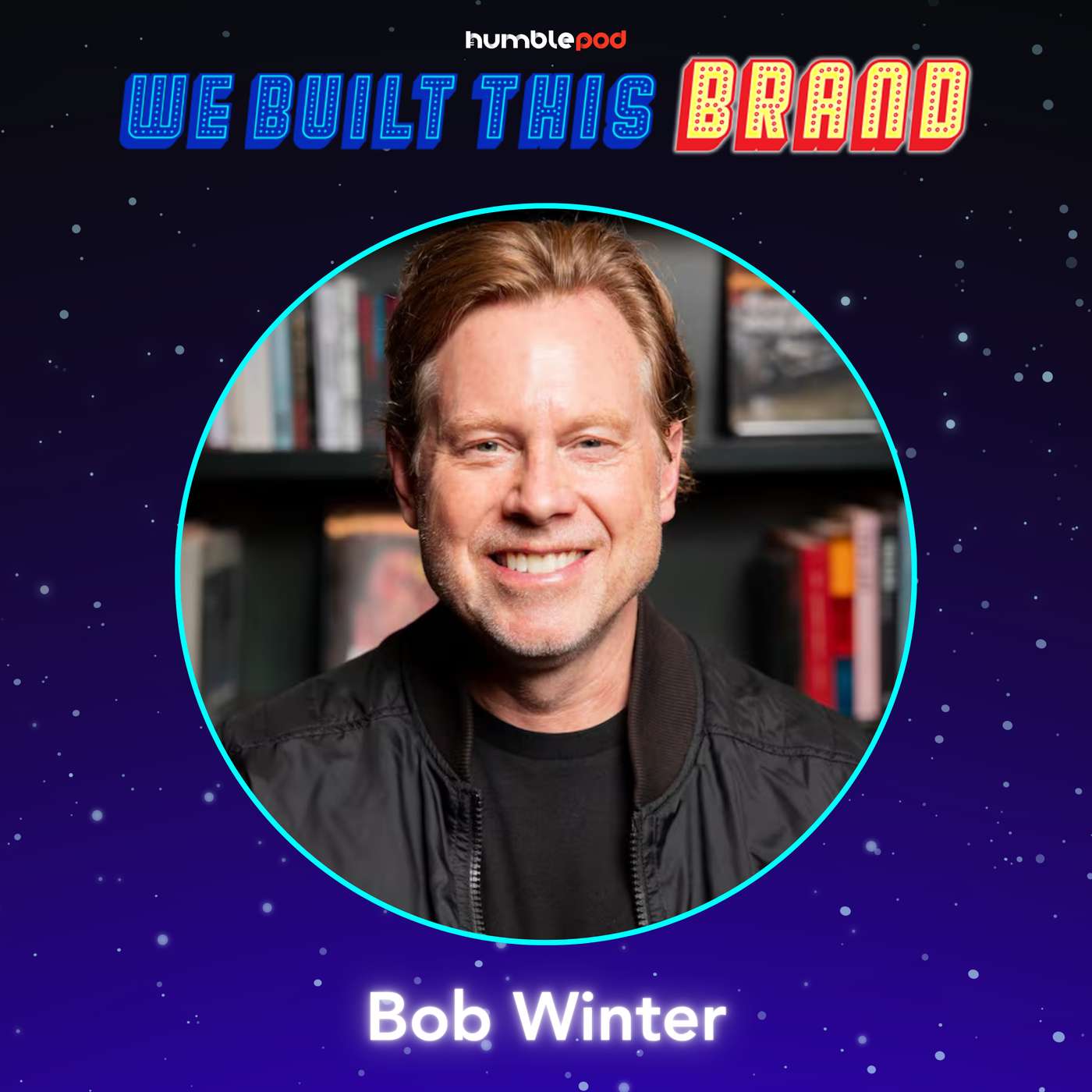


Bob Winter, Chief Creative Officer at Supergood and creator of Bud Light's legendary Real Men of Genius campaign, joins Chris on this episode of We Built This Brand to explore how AI is reshaping the creative industry. From building award-winning campaigns to leading an AI-native agency, Bob explains why human creativity remains the driving force behind great brands, and how marketers can embrace AI without losing what makes their work original.
Show Highlights:
(00:00) Human Plus AI Creativity
(00:14) Meet Bob Winter
(01:34) From Agencies to Supergood
(05:11) Journalism to Advertising
(09:44) Landing Real Men of Genius
(13:04) Client Rejection to Breakthrough
(17:02) Rebranding After 9/11
(20:18) What Makes Supergood AI Native
(24:26) Humans in the Loop
(33:24) Future Vision and Wrap Up
About Bob:
Bob Winter is one of advertising's most accomplished creative leaders, with a career spanning some of the industry's most iconic agencies and campaigns. He has led award-winning creative work for brands including Budweiser, McDonald's, Nintendo, Altoids, Greenpeace, Ace Hardware, and Netflix.
Throughout his career, Winter has served as Executive Creative Director at Leo Burnett Chicago and Crispin Porter + Bogusky before becoming Chief Creative Officer of Leo Burnett Detroit. He is perhaps best known as the creator of Bud Light's legendary "Real Men of Genius" campaign while at DDB, one of the most awarded campaigns in advertising history, earning multiple Cannes Grand Prix awards and a Grand Clio.
A longtime collaborator with Whitehouse Post, the renowned international post-production company behind work for brands like Nike, Coca-Cola, Samsung, Adidas, Disney, McDonald's, and Porsche, Winter helped redefine the traditional creative process by developing campaigns alongside directors and production teams from the very beginning rather than following the conventional agency handoff.
That philosophy led him to found Majestic Beast in 2023, where he serves as Chief Creative Officer, creating a more integrated approach to storytelling and production in partnership with Whitehouse Post and its family of companies. Today, Winter leads all creative work for Supergood, an AI-native creative agency continuing to push the boundaries of creativity, technology, and modern brand storytelling.
Links:
Supergood: https://gosupergood.com
Start a podcast with HumblePod!
https://www.humblepod.com/our-services/
Sign up for our newsletter!
Bob: Nothing that we create is created without human interaction and human input.
Chris: Welcome to We Built This Brand, where we pull back the curtain on the people, the ideas, and the sometimes challenging process of building something that matters. Today, I'm joined by Bob Winter, chief creative officer at Supergood, an AI-fueled creative agency built by industry veterans to tackle modern marketing with speed, creativity, and serious firepower.
Now, Bob is creator of Bud Light's Real Men of Genius campaign, the most awarded radio campaign in advertising history, and he has also served as the executive creative director at Leo Burnett and Crispin Porter Bogusky, working with brands like McDonald's, Nintendo, Netflix, and even PETA. In this conversation, we trace the arc from one of the advertising's most iconic campaigns to the frontier of AI-powered creative.
So without further ado, here's my conversation with Bob Winter from Supergood
All righty. Well, Bob, welcome to We Build This Brand. It's great to have you here.
Bob: Hey, thanks for having me.
Chris: Really excited to talk to you today about, um, I mean, some of the great campaigns you've worked on, some of the exciting things you've done in your career, and about your time at, um, Supergood, and what you're doing today.
Um, would love to just dive in. Typically, where we get our start is just learning a little bit more about you. So tell me as simply as you can, um, just a little bit about your background and, and what got you to where you are today.
Bob: Well, first of all, thanks again for, for having me. This is really exciting.
Like you said, I'm Chief Creative Officer at Supergood, which is a new model creative agency, an AI native creative agency, uh, based in New York. I'm in Chicago. We have people all across the country, uh, which is pretty exciting. But what got me here is, um, I've always been interested in kind of pushing the boundaries and, and, and looking to see if there's a better way to do basically everything.
And I had started, uh, after being with Leo Burnett for a long time, and other tr- traditional agencies like DDB, where I had great success and loved, loved my time there, also Crispin Porter. I had seen sort of things changing, and things wanting to change so badly in this industry, and people being frustrated with the way things were going and not having an alternative.
And so I took the, um, took the initiative to go and start a new kind of creative agency called Majestic Beast, which I did in partnership with Whitehouse Productions. What the concept was, um, combining creative and production in one company. So, creatives would work right alongside directors, uh, producers, editors, uh, for all the way from, like, briefing to ship, just one team that was thinking and making.
And while I was doing that, I got a call from an old buddy of mine, John Elder, who's the CEO of Supergood, and he said, "Hey, we have an opportunity to go and show some ideas." We didn't know it was a pitch at the time, but to sh- show some ideas to, um, US Bank which is now our biggest client. And so I said-- he said, "Would you wanna do it with us?"
And I said, "Absolutely," because I had worked with John at Goodby, and he's one of the best account people and just leaders that I've ever, uh, been lucky enough to work with. And then I met Mike Barrett, who is the chief strategy officer, uh, who also founded Supergood, uh, with John. Um, and we went and pitched this together, and I had such a great time, such a great experience.
It really was a good reminder of, like, it really is all about the people. You know, n-not much else matters in, in advertising and in life, I guess, right? Surrounding yourself with great people can really bring out the best in you, and that experience really showed me, like, oh my gosh, this is, like, something I've been wanting to have for a long time, a gr- an incredible team.
Um, so we went and pitched this and actually won it. And, uh, s- weeks later, we were in Vancouver shooting a six-pot giant brand campaign, which was really exciting because it went from, like, this little glimmer of an idea to, like, "Hey, we might have a chance to show some ideas," to like, "Oh my gosh, we just won this big, huge..."
I mean, it's a giant brand, as you can imagine, like the fifth lar- largest bank in the country, and we won it from, you know, it's a giant holding company agency. So to go in, like, s- basically six people just went and won this giant brand from, from a massive agency was really, really exciting. And at that point, um, I think all of us kind of decided, like, "Wow, I think maybe we should make this official, and, like, we should all work together."
So they offered me the opportunity to come and be their chief creative officer, which of course I jumped at. I was so excited. Um And that's how we got here. And then since then we've been lucky enough to have launched some really great campaigns for US Bank, but also other brands like Tito's Vodka, C4 Energy Drinks.
Um, we just won, it's really exciting, we just won a new brand called Second Nature Snacks. Um, and they have a brand called Sanders Candy that we actually went into the pitch with finished work, like produced work that we made via AI. And, um, not only did we win the pitch, but they actually bought the work that we brought to the pitch, and they ran it like weeks later for Easter.
So it was, it was really exciting. So anyways, now we're here and we're doing it, and, uh, it's really exciting. I'm so happy that it all worked out.
Chris: Wow, uh, that, that leads to so many more questions that I, that I have now. I'm gonna, I'm gonna put a pin in some of them from now because, you know, just, just as you talk through your story, um, you know, I always find it interesting when people go from being, you know, in one, one thing that they say, "This is what I'm gonna study," and then they end up in a completely different field.
So, um, and I, I think over time I've noticed this actually has a pretty natural bridge, but I am curious. You studied journalism, I think, at Drake?
Bob: Yes. Yeah, yep.
Chris: And how did you end up in advertising after that? Like, that, that seems like a bit of a jump. I mean, I can understand it's all writing, but like what, um, what made you make that jump?
Bob: It's funny. In high school I had this aptitude for art. I was doing really well in art classes, but for some reason my dumb brain didn't think that that could be like a job. I think it was probably because of like the people around me, and all my friends were like business majors and doing smart guy things.
And so I went to college and I was like, "I'm gonna be a business major," because that's what responsible people do, right? And so I went, uh, I went, I got to school and I got absolutely toasted in all of my business classes. Like, my brain does not do well with math. Uh, my brain doesn't do well with science.
I mean, I had a stat- statistics class where my, my poor professor would meet with me regularly after class and try and help me 'cause he knew I was struggling. And one day he kind of like closed the book and he's like, "Bob, statistics is not for you." I was like, "Yeah, I know. No kidding. Tell me something I don't know."
I, I go, "I, I know. Like, what, what should I do?" And he goes, "Well, do you wanna take a look at the course book?" And I was like, "Absolutely." And like, how cool was it that he did that, by the way? And he, so he sat there and we went through the course book and he's like, "School of Medicine, school of law, school of journalism."
And I'm like, "Whoa, what's that?" And he's like, "I don't know. Let's look at the classes." And, but the classes were all like creative writing, advertising, marketing, you know. They're really interesting to me. And honestly, I had no idea that that even existed. So for me to find that in that moment, like, and then all of a sudden college went from being like a chore where I was barely scraping by to all of a sudden I was just on fire, like loving it, like loving my classes.
Then from there, after I graduated I got offered a job at, um, it was actually a, a small ad agency called BBDS, Bender, Browning, Dolby & Sanderson, in Chicago. Um, great place to start, and I actually didn't get a job in the advertising part of the agency. They also had a PR part of the agency, and they were looking for a creative writer in the PR department.
Um, and so I said, "Well, that's great. I mean, I'm gonna be using my, my writing skills, and I'm gonna be in an ad agency, not in the advertising part, but I'll be exposed to all of that." And my f- my first position actually was, uh, m- one of our clients was, my, my boss was childhood friends with Davy Jones from The Monkees.
And so- I,
Chris: I actually know who that is.
Bob: Of course you do. Um, but he had just published a book called They Made a Monkey Out of Me, and I went basically to every bad mall in the country with Davy Jones and s- set up his book signing tour. And, uh, so that was my first foray into the world of, uh, communications, but which was sort of a s- strange way to enter.
But then while I was doing all that, I would sit next, you know, down the hall from the advertising guys and gals and, and they would sort of, like, feed me briefs, 'cause I kept going down and saying like, "Oh, I'm really interested in being, you know, like a, a copywriter." Um, and so they would like lob briefs over at me, and I would just like on my spare time, you know, pitch in ideas, and eventually they're like, "Yeah, you should do this.
You should move down here." So they convinced me to move down there. So that's kind of how I landed in advertising, and then from there, I was really lucky and ended up at, um, at DDB. So I sent my portfolio, which back in the day, this is gonna tell you how old I am, back in the day it was like a, a black case full of laminated boards with all your ads in it.
And I remember taking it around to all, all these agencies that I had dreamed of working at, and, like, they would sometimes make suggestions on it s- an ad. Like, "Oh, I think maybe the copy should be like this." And I would go, "But it's laminated." It's already done. But yeah, that's, that's how I ended up, um, you know, going from journalism into advertising, and I'm so glad that I found it because I honestly never knew it existed, but I love it so much.
Chris: That's a cool transition, and, um, I feel like I've heard that story a number of times with folks. I didn't know it
Bob: was cool at the time. I was just doing, following where the road took me.
Chris: Yeah. And, and it becomes, it becomes an interesting, um, you know, story because ultimately, like, that creativity led you to doing some really cool campaigns.
When, and tell me more about the Real Men of Genius campaign. I have two reasons why it's important to me. Number one is I was a lifeguard in the early 2000s, so I heard the radio all the time, and I cannot tell you how many times I heard the Real Men of Genius campaign.
Bob: That was obviously such a big break for me, and I think, um, when I look back on it, I think a lot of it was just right place, right time kind of thing, which a lot of people have stories like that.
But it's also the ability to kind of like- Have your ears and eyes open for opportunities and, and to be willing to say yes to some things that maybe you might be uncomfortable with or scared of. And at the time, I was actually working, I was at, this was at DDB, and b- at that time, DDB was really just rocking it, like, ah, the Super Bowl ads, like, they were just on fire.
It was really a, a really exciting place to be. It was an exciting time in advertising. Like, there was just money and and just big, huge, giant productions and, like, big swings at big, bold, creative ideas. And, and DDB, as you know, like, kinda stood for that and was sort of a flag in the ground for, you know, people who wanted to do that kinda work.
So I was so lucky to get there. But anyways, I was working in the, the McDonald's group at the time, which was, uh, a- also an amazing brand, like, so lucky to work on that. And then, um, I heard that they w- they had an assignment in the, in the Budweiser group, which, like, a lot of young writers were just, like, dying to get into the Budweiser group 'cause they were doing all this really exciting work.
Not that the McDonald's work wasn't exciting, but you know what I mean. Anyways, so but then they, they basically asked if I wanted to chip in on a brief, and the brief was a radio brief that all the creatives were just completely burnt out by because it, they had gone through, like, round 45 and everything was dead, and they took stuff to clients over and over again, and the clients were like, "No."
And so they were like, "Let's get some fresh people in here." So they offered me the opportunity to jump in on the brief, and oh, it, it was one of those things, like I said before, where it was a little bit, like, s- intimidating and scary and like, "Oh, this is kind of what I always wanted, to get into this group, and now here I have a chance to show what I can do," and like, "Oh, what if I don't do it right?"
It was re- it was very scary, but I, I kinda just took it. In a way it was good that I wasn't in the group because it was just all, all me on my own, kind of like off in my own head, like, coming up with crazy ideas and, and trying to do something that honestly that I loved, that I, that I, I thought was interesting and fun and, like, could be sustainable.
And then I remember bringing it to, uh, my creative directors at the time, Mark Gross and Bi- Bill Cimino, who are amazing creatives and great leaders. And, and I remember that they asked me to, like, leave the scripts with them and then shut the door, and I- so I left, and I didn't even get to, you know, go over it with them at the time 'cause they were just looking at a lot of work.
But I kind of stalked the office, and I was going up and down the hallway and trying to listen, and I just remember them la- hearing them laughing a lot. And I was like, "Oh my gosh. Oh my gosh. Oh my gosh. This is gonna be great." So, um, they eventually called me in and said, like, they, they thought there was some real merit in this, and they had some great ideas for, like, how to plus it up.
But next thing I know, I was, like, writing, like, f- I think I wrote, like, f- the first 10 to take to the client, and we went and presented it to the client. I didn't go. I was too young and junior to go. But other people went and presented it to the client. But I remember hearing the story that, um, I don't know, maybe you've heard this, but the first time that this was presented to the, to the Budweiser clients, they hated it, like, really hated it.
And 'cause if you think about it, it was very unusual that campaign, um, I was gonna say at the time, but really any time really, but it was really just about the joy of cel- like celebrating the audience and, and doing, uh, doing, like coming up with an idea that connect, that could connect with people, um, just on a human level that wasn't really about the product and selling RTBs or l- you know, how, why it's better than any other brand or anything like that.
It was really just about the pure joy of like connection and celebration of the audience. And so it's understandable that they would be like, "This isn't b- what we would want. Like, it's not saying anything." But it, in a way it was saying a lot about the brand because it said, you know, we get you and we understand you and we want this to be fun for all of us, which is great.
But what was really cool is after the client didn't like it, um, Bob Scarpelli, who was our chief creative officer at the time, amazing human being by the way, amazing man, amazing leader, great, I'm so lucky to have worked with him. He is so patient, thoughtful, kind, but also just so driven. And he basically said like, "We're gonna produce these."
And so he like paid to have these produced. So we produced I think the first three, and then sent that tape, at the time it was tape, sent that tape to the client who was in LA and then like held our breath while we were waiting to hear and, uh, didn't actually hear anything, like for days. And we're like, "Oh, well maybe he didn't get it.
I don't know what's going on." And everybody's like, "Oh, s- I don't know what's going on." So we finally heard back. They were on the ph- phone with him about some other things. They, "Hey, by the way, did you get that tape with the, the..." It was ac- it was called Real American Heroes at the time, the first iteration.
He goes, "Oh yeah, yeah, yeah, I got it." They go, they go, "Well, what'd you think?" He goes, "I think it's on the side of the fucking 405 freeway right now. I threw it out the window of my car."
Chris: That's tough. That's a, that's tough- That was it ... rejection right
Bob: there. I was like, "Oh, wow. Oh, okay." You know, like that didn't go quite the way we wanted, but- Um, credit to the agency and the, the leaders of the agency.
They were just so, like they really believed in it and they just kept at it, and they just kept going back and like bringing it back and like we wrote more and, and like revised it and came up with other ideas like adding in like the background singers and stuff. Like just kept pushing it and plussing it and making it better.
And eventually they paid for like the production of I think like the first 10 spots, and then that went really well. And like it was awesome to see that like the agency believed in it and they believed in it so much they didn't let it go until the point that the client was like, "Okay, let's try it." And then it actually really did well, and then from there it was like the next year it was like, "Let's do 10 more."
And honestly, I was like, "That's it. I don't... There can't be any more." But there was like, there, you know, then cut to like 10 years later and we'd done 200 of them and made it into a television campaign as well. Like just really, uh, bloomed into this amazing campaign that I feel so lucky to be a part of.
And, and, and what was great for me too is not only like seeing a little thing that my dumb brain came up with, but also like seeing how it can like turn into something that w- started as a radio brief that everybody didn't wanna work on. You know, like it was just, it was just everybody's burnt out on it.
It started as that, and I always tell younger people Um, that, you know, you just have to look for those opportunities, and it might be something that nobody's paying attention to, or that people don't wanna work on, and sometimes those can be the best. And, and same with brands, right? Like, maybe overlooked brands can be, like, really exciting, you know.
Maybe, maybe it's not always the big things that are the m- the most exciting. But look, you know, try and keep your ears and eyes open for opportunities to do something a little bit different.
Chris: Yeah. So you said, you said that it was Real American Heroes when you started. Uh, that was around, what? 1998 or so, I think.
Yeah.
Bob: Yeah, yeah.
Chris: And then after that, it had to be rebranded, obviously. I know it as Real Men of Genius. What was that transition? Why did that name change come about? Was it just part of the branding process, or-
Bob: It was because of 9/11, actually.
Chris: Oh. I could see that.
Bob: Uh, 9/11 came, and we had this campaign called Real American Heroes that was sort of like a tongue-in-cheek spoof of odd jobs in America.
It didn't feel right, you know. It didn't feel right in that moment. So that was actually n- it's funny. There were so many moments where I was like, "It's done. That's it. We had a great run." There were so many moments, and it just kept going. And honestly, credit to, to Mark and Bill, they were like, "Let's come up with a different name.
We can rebrand this." So, um, Real Men of Genius became the new name, and it, and, and then it just took off again, which was great. But again, like, ba- back to, like, the point of people just being unwilling to let things die or to let things stop when we know we really believed in it, and, and, and, and the people that I worked with really, you know, pushed for it, which was great.
Chris: Yeah. Uh, I like the way, like, the whole campaign kinda lets people in on the joke, too. It kinda gives you that idea of, like, "Oh, I know why these are real men of genius."
Bob: Yeah. E- yeah, exactly. I mean, I think that's part of it, is like, like I said, like, I just wrote them for myself 'cause I thought they were interesting, and it was just interesting to me that, like, this brand that sort of was the, the brand that celebrated sort of the working class Americans, like, to be able to celebrate- Those that have like, these peo- they're, they're real jobs.
Somebody really is a driving range ball picker-upper. Somebody really is a bowling shoe put a- giver-outer. You know, like, those are real jobs. Like, but it's really, it's interesting to, to look at that and s- and, and to let everybody be able to laugh with us about it, right? Like, we all do ridiculous things.
Advertising's a ridiculous thing. Working in a bowling alley is ridiculous, too. Like, and if we all kind of like have a moment to not take ourselves so seriously, maybe this could be, like, a pleasant experience, you know?
Chris: And that, I mean, I think that's what, that's what the, the genius, pun intended, is of the campaign, is that, um, that you are kind of like honoring real people in amongst it as well.
It's not just silly. It's not just funny. It's something everybody can connect to, which is really, you know, a core part of what Budweiser is. So I could see why the f- why your team would be like, "Oh no, we're gonna make this work," and try as hard as they did.
Bob: For sure. For sure.
Chris: So y- you've, you've done that.
You've grown. You're now at Supergood, and so tell me more about your, your time at Supergood, and I really wanna know, when you say you're an AI-first agency, what exactly do you mean by that?
Bob: Want to launch a podcast
Chris: without the hassle? HumblePod makes podcasting easy. From concept to launch, we'll help you create a professional, engaging show.
Already have a podcast? We handle editing, show notes, transcriptions, and even video production, so you can focus on your content. With our tailored services, you get high-quality production, seamless publishing, and expert support at every step. Whether you're starting fresh or leveling up, HumblePod ensures your podcast sounds amazing and reaches the right audience.
Visit humblepod.com to get started today.
Bob: We started the agency with the notion that there m- there, there might be a better way to do this whole thing called advertising, and I think a lot of us had come from more traditional backgrounds and just been sort of frustrated with the process and always wondering if there's a better way to do this whole thing.
And, and the, the whole notion of Supergood is to basically ... We're all very restless. All of us who are the sort of the, the, the principals of the agency, we're restless people by nature. We are constantly looking for a better way. I think the idea of Supergood is that there is a better way to do this whole thing.
There's a better way to do, um, briefings. There's a better way to, to get data. There's a better way to do research. There's a better way to actually, like, concept and create advertising. There's a better way to produce advertising, too. So I think that was sort of the notion that led us to, to, to make this thing go, and it's been really exciting to watch it take off.
And the AI part of the agency and why we bill ourselves like a AI, AI native creative agency is because AI was ... AI has always been kind of, like, central to what we do. It started out, like, when I started with them, it was ... I would have said, "I think we'll use it for everything but actually making creative."
Like, "I think we'll use it for research. We'll use it for data. We'll use it for making everything go a little bit faster and getting to answers quicker." But I didn't think at the time that it could be ... That it would be pr- appropriate to use it for actually creating in-market work because at the time it was, it was not there yet.
It wasn't quite ready yet for that. But what's crazy is that wasn't that long ago, and it's already now to the point where we've actually created a whole AI production studio. So now we have, like, we've hired a incredible, like, AI director, a guy named Andrew Robertson, who used to work at Wieden+Kennedy.
He was their in-house editor. He's a filmmaker, but he also is amazing with AI. So he's kind of like a secret weapon for us because he, he's an amazing creative person, period, but he also has the ability to think in AI, but then create in AI, then edit also, so he can ... We have, like, this great studio that's sort of a secret weapon now, and we're al- also, like, building a team around Andrew so that that can really be its own machine.
And what's awesome is, you know, as a creative person, I used to limit my thinking to what I thought was either possible or responsible. You know what I mean? Like, you would have a filter over things that would be like, "Ah, I could never propose that. That'd be preposterous." You know? Like ... Or, "It would just cost too much," or, "It would take too much time."
Well, now I kind of, like, am able to take that off of my shoulders and just go like, "But what if?" Like, because now we ... There's a really good possibility we can make it, and we can make it ourselves, and we can make it way faster and for ... And way more efficiently than we ever could have before. So, you know, part of why I think we're getting a lot of traction right now is it, it allows us to
First of all, none of it's gonna work if we don't make great work, period. But it allows us to make Hopefully, knock on wood, great work a lot faster and a lot more efficiently. So, you know, one- when you, and when you put that together, it is something that basically every brand is looking for right now. And, and while they might not be saying like, "Oh, I need AI," they are saying, "I need faster, more effective solutions to creating work that goes out in the market."
And also, you know, we're big enough that we can do some really big things. We're g- creating giant brand campaigns for US Bank, for example. Um, but also, like, not so big that we're not nimble and approachable. Like, all of our clients get direct access, like, all of our s- uh, the leaders, so we work on every single piece of business, and we do all...
We work on every piece of work. So it's not so big that, you know, we're removed from things and we don't show up when we're needed. We're all in it together, which honestly, like, I love too, just as, as a human being, but as, as a creative too, I, I get energy from being around those people. So, and it's great that we're kind of like a, a small but mighty team who really has a shared goal of making great work out in the world and, and like, being good humans while we're doing it.
And so it's just a good group to be around that is making some, some real waves, which is pretty exciting for us.
Chris: That, that is a really great approach. When, when you think about how you're developing the agency AI first, where does the creative brain begin? Where does it, um... How much of it is, you know, talking something into existence, so to speak, or prompting it into existence versus, um, actual execution from your team or from other creatives you work with?
Bob: Nothing that we create uh, is created without human interaction and human input. So there's, at no point is it, like, just automated and we go, like, "We input the brief and just hit a button," and like, out comes work. Like, that just ... I mean, honestly, even if we could do that, we wouldn't wanna do that because- It's a
Chris: recipe for disaster
Bob: it, it is, but also because we're kind of, like, I was gonna say control freaks, but that's not it. We might be a little bit control freak, but we also, like, uh, have real pride in the, the level of creativity and of the output of our work. Like, it matters a lot to us. And so in order to, to make sure that things are crafted the way they need to be, that everything hits all the right notes, that we're not, not only, like, on-brief and, like, on solving the business problem, but we're doing it in a, in a way that's really, like, artful and beautiful, and that, that the, the craft is there in all of it, and that has to require human beings.
So at, at no point is it all just, like, autonomous. It, it, uh, it always works in service of the idea, and I think that's something that's been very important to us because we don't want people to think at any point that this is just automated or that it is made by chance. You know what I mean? It's all
And because there is obviously, like, an element with AI that is a little bit of chance, and that's part of the excitement of it, is you p- you put in some prompts, you don't really know what you're gonna get. But part of the b- you know, what we believe in is you d- you as a human being need to craft that.
So you have to take that output and you have to shape it and you have to re-prompt it and go at it again, and com- keep, you know, filtering it, refining it, pushing it until you start getting output that you really like. And sometimes that requires not only, like, the use of different technologies, but the d- different skill sets of people too.
So we're constantly looking for the best production partners, the best partners to make an- any, uh, any of our music, our audio, our filmmakers. Like, we ... Those are actual people that we wanna be, uh, working with so that we can complement our skill set and our technology with real human skill.
Chris: You don't wanna be in a place where you just press a button and send it out, or you'll end up like the, the, what is it?
The New York Post article that I saw recently where it was, the headline was something about Meghan Markle, and the photo was of an Amazon drone dropping a package, and all the copy around it and the link was to the Amazon article and had nothing to do with Me- Meghan Markle. And I was like, "Oh man, Meghan Markle's turned into a drone now?
Like, I don't know what's going on here."
Bob: Yeah, no, we don't wanna do that. But also to be honest, like, it's- We're, we're like the crazy people who actually think this is fun. Like, I think we would be sad if we c- even if we could automate it and it would be beautiful, like it would not be as fulfilling. So I think we really enjoy the process of it, and I would be really sad if I d- if I was just a leader who was pressing buttons and not in there.
Like, I still write every day. I write, I concept work and get in the thick of it, and we're in the middle of like a huge production and e- editorial process right now where, like I love getting in the thick of it with editors and looking at cuts and talk, thinking about things like music and voiceover and all of that.
Like, it's, it's a passion for all of us, so we would be sad if we were removed from the equation.
Chris: Right. That's, that's part of the fun of doing it, is actually being involved and having your hands in the mix.
Bob: Exactly, yeah. Exactly right.
Chris: So then from, from that perspective, being, being AI fueled and everything that you're doing, where does, um, I guess where does AI sit in the creative process for you then?
Bob: It's in the middle of it. I mean, it's there, it's in it. Uh, this is like a overused phrase, but it's a tool. It's a tool that we all use and we're all fluent in. We all use it differently 'cause it's very personal. Like, some people use it for inspiration, some people use it for data, some people use it for actually creating comps and things like that, and we do all of that.
And, and we're, we're constantly looking for ways to improve that as well. Like, you know, and that's part of why we hire people like Andrew, who has come in and said, like he's, he's really proficient in all of the AI tools. He also will sit us down and be like, "Here's how I made this. Let me show you the process."
Like, he oftentimes will use multiple tools to create one piece of output, and it's really interesting his process, because it is very iterative, like I was... Iterative. That's easy to say. Um, like I was saying, but it also is, you know, it's, it's something where he is himself, you know, like looking at the output and, and not being satisfied until it's really exactly what we want.
And so for us as creatives, that, those tools are vital to what we do, but they are a tool, you know? And, and you know, people say things like, "Oh, there's too much AI slop out there in the world." But honestly, like, there's been slop in advertising forever. Bef- before it was created with AI. Like, there's been a lot of junk and garbage put out in the world, and so it still remains the same in that we, we wanna make sure our output is really great, really great ideas, but that they're brought to life in, in ways that are really, you know, beau- beautifully produced, beautifully crafted, and that they solve the business problem.
Like, none of it works if the business problem isn't being solved, because then we don't get more jobs and we don't get more work. Like, so we really kind of put that, put the problem at the center and then use the tools, all the tools that we have, not just AI, any, any technology that we have, to help solve the problem and then bring it to life in ways that maybe we couldn't have done before there was AI.
Chris: Oh, that makes sense. Um, and, and I like that that... I like that approach because what, what I find is, like, when people are pressing the button, it just, it doesn't work. And I think you're right, AI slop, I always think of the, um, what do you call it? The graphic design is my passion meme, if you've seen that one probably a time or two.
Like that, you're right, that, that type of thing has been around a long time, working in smaller markets and things like that myself, like you, you just come across that all the time. Um, I think the difference is the challenge with AI can be sameness, things looking the same, feeling the same. That's one of the biggest critiques I've heard about Claude's new design AI, which by the time this comes out, it'll have been out for a little while, it may have improved, but like that's the complaints I hear.
So yeah, so it sounds like you all have processes in place to keep things from looking the same and being unique.
Bob: You know, to your point, it's just a level of, like, commitment and a level of taste. You know what I mean? Just we will not be satisfied with something that is below par for us in terms of what, what we expect out of the output.
Um, we wouldn't have an agency called Supergood if our work was just good.
Chris: That is- that's a great point. So, so to that name, your name is Supergood. What, where did that name come from?
Bob: Kind of like all of us have a restless nature and a belief that there's gotta be something better than just good, and having seen sort of the world around us feel like everything's good, but just good, you know?
And good enough, and that was unsatisfying for us. And so looking at things and saying like, "Why do we do it that way?" You know, why is production, like, done in, like, an assembly line fashion where everything just goes like you pass it, pass this stage, and then you pass it to the next stage? Why can't it be collaborative and iterative and much faster and more efficient and therefore, like, a lot more exciting?
Like, that's kind of the genesis of it. So basically, it means we're not gonna just settle for good anymore. Um, and we need it to be super good. There's also something about the name, I think, that is kind of a... It's approachable. It sou- to me, it sounds like human beings wrote it. It's not, it doesn't sound...
And I think that helps, um, offset a little bit, like, our tech nature and the fact that we are, like, very technology-based, but it helps, I, make it feel, I think anyways, a little bit more human, a little bit more approachable.
Chris: I like the name. It's a fun name. You know, you want your, you want your brand to be super good, right?
You don't want it to just be good. You want it to be super good.
Bob: Oh, yeah. Exactly. It,
Chris: it definitely has that simplicity to it. I think you've nailed that on the head and... So, so tell me a little bit more, like, what, um, what have you learned about, like, going through this process of moving into AI for you? Has it been something you were kind of using as you came into the company yourself, or has this been a, a new, um, new process for you?
Bob: Yeah. It's, it's b- largely been new. I mean, it's been something that, like, I would say, like, has been on my radar for a long time, but not anything that I've been proficient at. And t- for me, it's been so exciting to surmount- surround myself with people who are real experts, and that I myself can learn from.
Like, it's so interesting to be at a point in your career where, you know, you're very senior in your position, but you're still learning, and I love that. I love that it's like it's teaching me new skills. It's helping me open my eyes to things that I didn't think was possible. Like, that's what's really great about it to me.
Chris: So Bob, as you, as you think through all of this stuff and, and kind of look towards the future, what do you see? Like, what's top of mind for you as you're looking at what's coming down the pike?
Bob: I think the biggest thing, like for us as an agency is, is growing and continuing to grow, but to grow responsibly and to put the work first.
I think that's what's been exciting for us is we're, because of the, the nature of our business being somewhat unique and like our proposition being pretty unique in that we do things two times faster, two times more efficiently, but we make great work, and we're small enough to be nimble, but not so big that we can't be, you know, approachable and accessible.
I think that's sort of leading us down a path where we're growing, but we also wanna grow responsibly. We want the sa- clients who are like-minded, who want the same kind of work that we do. And then growing out our team. Like, that's a big thing for me too is like making sure that we're surrounding ourselves by, you know, with people that we love and respect, but also who are bringing something to the party that we don't have, that are bringing new skill sets, that are pushing me even.
And, and, and I think that's what's really exciting. And for me it's about, you know, not just growing the agency, but growing, you know, not, you know, like in billings and stuff like that, which is obviously important, and we are growing, but also just growing the type of agency that we are and continuing to look at...
You know, right now we are AI native and we are very tech-focused, but there's gonna be new technologies. I mean, they're, they're coming out all the time, every day. So staying at the forefront of that and making sure that we're harnessing the power of all that's available to us and doing it in a way that is leading to better work and a better culture.
And for me, if we get the right people in, and we stay on top of all of the technology and, and tools that are available to us, and we have this vision to create great work using all of those tools, like we're gonna, we're gonna be successful. I hope so. Yeah,
Chris: I mean that's, that's really the only way you can do it, right?
Bob: I think. Yeah. That's kind of the game. Yeah.
Chris: Uh, well as we wrap up, I always like to ask this question, which is, what brand do you admire the most? And maybe right now in the moment, doesn't have to be all time. You're, you're in Chicago, we've been talking Budweiser. You know, I was, um... I've always heard the quote, you know, "The best beer is the one that's in your hand."
So, like, maybe the best brand's the one that's in your hand, too. But, like, what, what is it for you?
Bob: Yeah, no, that's cool. I mean, obviously I have so much passion and heart for Budweiser and McDonald's, which is what I grew up on. Um, and then I love the brands that we're working on now, our clients. I mean, true- truly, I really do.
Like, US Bank is an amazing brand and even better people. They're some of the best clients I've ever gotten to work with. But I think when I look at, like, just brands out in the world, things that really inspire me right now, I would say Liquid Death is one that's been really fun to watch, and it's been so exciting to me because, like, they took on a category that was kind of sleepy and it was full of, like, yoga and daisies and, you know?
Like, it was... The bottled water category was not what you would call exciting, right? It was all about, like, flowing mountain waters and all of that stuff. And here they came out and they basically introduced a brand. First of all, the name is insane. Like, I look at all of it and I'm like, "How did any of it get approved?
How did any of it go forward?" It's crazy to me. But some of the best things in the world are like that, where you're like, "How did that even get made?" So to get, to get a, a brand called Liquid Death, which I think I understood that the, the genesis of the name was basically it was, like, death to plastics, I think, and so that's why they had the aluminum cans.
But even e- even just, like, having the, the courage to come up with a name like that and put that in market, but then, like, do the branding. You know, they have that sort of, like, heavy metal branding, and then they have cans that look like they're beer cans and, and all the things that they do are really smart, but also, like, really pushing the envelope.
Like, you know, they did... Like, even their product names are, are, are hilarious. I think I was just at the store the other day and I saw they had, like, um, I think it was called ... Uh, it was a iced tea lemonade, and it was called Armless Palmer, which I was... Which made me laugh. But it's like, okay, but that's again, like, who got that approved?
How, who had the courage to actually name a product that, which was so great? And then, you know, they're constantly doing really interesting and provocative things like that in the world. Like, I think they just not too long ago did, um, like, a Spinal Tap collaboration, you know, with the- Mm-hmm ... with the water, which was great.
And, uh, again, like, n- a place you wouldn't expect a bottled water brand to show up. So the fact that they just keep pushing it. And, you know, they did great Super Bowl work, where it was so sort of like they made fun of, like, drinking on the job and stuff like that, 'cause it looks like it's beer, but it's actually water.
So just to be, to be able to be irreverent, but also to be wildly successful, that's what's cool. I think I was reading an article the other day about how it's, like, a brand that's actually loved by moms. And I think it's because moms wanna feel cool. They wanna be in the cool club too. And so, like... And they just wanna be around, like, exciting, fun brands, which is a good reminder for all of us, right?
Chris: I hear them so often, um, come up, and I keep, I keep trying to find, like... We need to make a pitch for them, because I've had it so many times said on this podcast, it's like, we, we just need to pitch them and then see if we can get them on the show. That's funny. They owe you. They owe
Bob: you.
Chris: They do. I mean, at least, at least a f- you know, at least a case of- Yeah, please
something. If there's a rep watching, I would love to have you all on. So please, if you're watching or listening, please join.
Bob: You guys heard it. You guys heard it.
Chris: You heard it here first. Anyways, um, well, Bob, great having you on today. Really appreciate it. And, uh, yeah, before we go, always wanna just promote you, um, and anything else you wanna, you wanna share or make sure people are aware of.
So, um, where can people find you? Where can they find out more about Supergood?
Bob: Uh, well, you can look for us on the internet. We have a website. Go look for, uh, gosupergood.com. Yeah, please, anybody that's interested in working with us, reach out to me. Any brands that would like to have us put our talents to good use for you, please reach out.
But, um, thank you so much for the opportunity. It was a great chat. It was really fun. Mm-hmm. And, uh, I hope it all goes well.
Chris: Thank you, Bob. I appreciate it.
Bob: Thank you. All right, buddy. Have a great day
Chris: Thanks for checking out this episode of We Built This Brand. Don't forget to like, follow, and subscribe on your player of choice.
You can also keep up with the podcast on our website at webuiltthisbrand.com. If you like this episode, please give the podcast a five-star review, and make sure to tell all your friends about it so we can continue to build this brand.


