
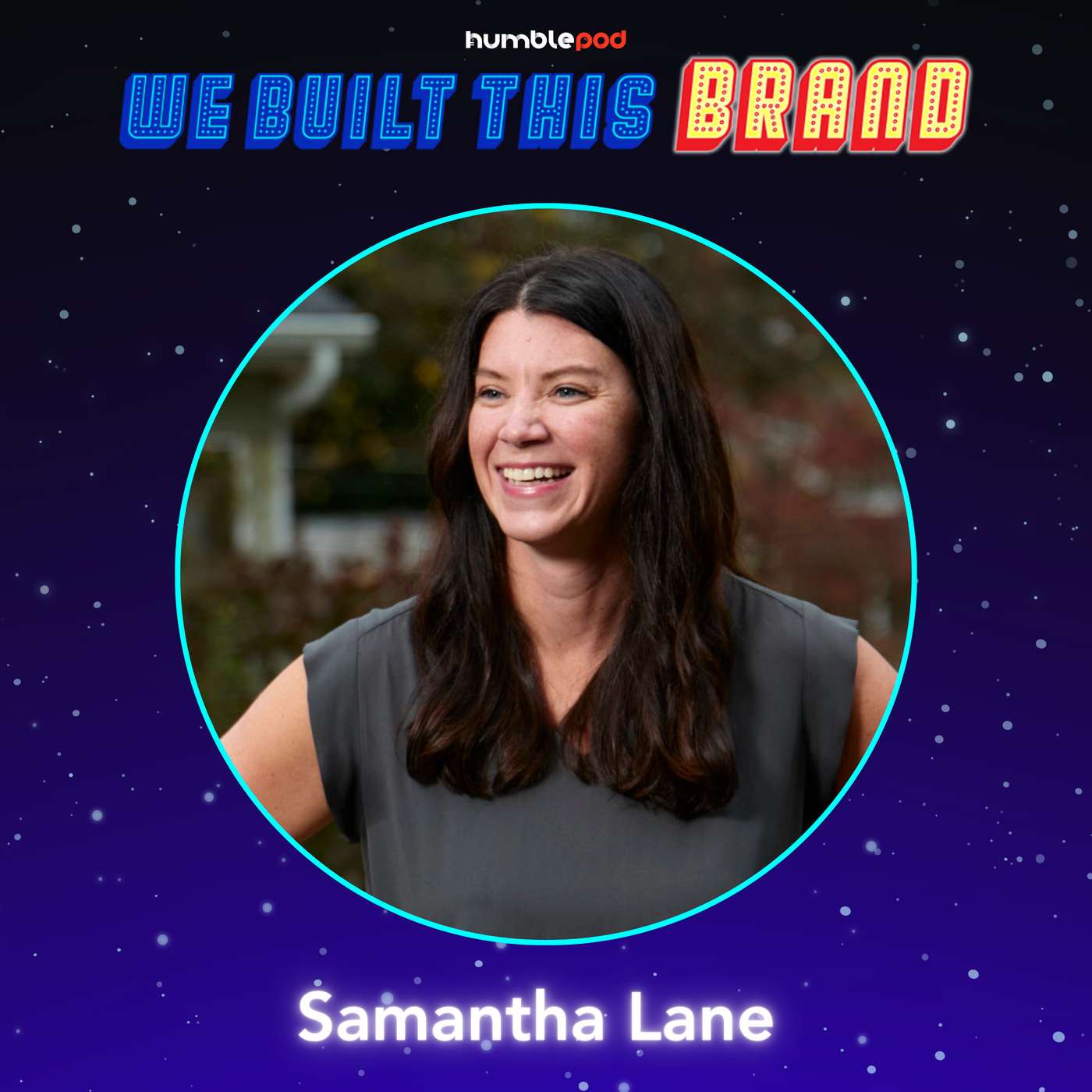
Building a Better Life, One Day at a Time with Samantha Lane


 Youtube Music
 Podchaser
 Pandora
 Goodpods
 Podcast Addict
 Deezer
 PlayerFM
 Castro
 Castbox
What if better time management isn’t about doing more, but making room for what matters most?
In this episode of We Built This Brand, Chris sits down with Samantha Lane, founder of Origami Day, to discuss how a life-changing surgery reshaped her relationship with time and inspired her to build a business around helping others escape overwhelm.
Samantha shares the story behind Origami Day, her “Prioritize, Plan, and Protect” framework, and why doing less can sometimes be the key to living, and working, better.
Show Highlights:
01:35 From Workaholic to Wake-Up Call
04:04 The Time Management Breakthrough
08:09 Frameworks That Actually Work
17:08 Origami Day Tools and Planning System
25:24 Measure Time Honestly
26:31 Science Over Planners
27:13 Travel Buffers That Work
28:38 Friction Beats Procrastination
32:42 Origami Day Growth Story
36:39 From Products to Consulting
37:45 Delegation and SOP Systems
39:32 Future Plans Book and Coaches
43:11 Brands They Admire
44:45 Where to Connect and Wrap
Links:
Start a podcast with HumblePod! https://www.humblepod.com/our-services/
Sign up for our newsletter!https://www.humblepod.com/newsletter-sign-up/
Samantha: I want more people to, to realize that they can manage their time better and not lose the productivity.
Chris: Welcome to We Built This Brand, where we pull back the curtain on the people, the ideas, and the sometimes challenging process of building something that matters. Today, I'm joined by my good friend Samantha Lane, the founder of Origami Day, where she helps individuals and teams escape burnout through better time management.
In this conversation, we get into how a serious surgery turned a workaholic into time management's biggest fan, and what's coming next as the work keeps evolving. So without further ado, here's my conversation with Samantha Lane of Origami Day.
Samantha, welcome to We Built This Brand. It's great to have you with us.
Samantha: Thank you. It's a joy to be here today.
Chris: I'm so excited. Um, we've known each other for quite a while.
Samantha: Yes.
Chris: And, um, you know, I was reminded of that when we had our pre-call.
Samantha: Yeah. I love that.
Chris: And, and, and I think it's really cool because you're, you're one of the people that I can say, like, "Thanks to your help, I am where I am today."
Samantha: I love that.
Chris: And I don't know if you've ever thought of it that way, but-
Samantha: I really haven't- Yeah ...
Chris: but
Samantha: I love that. But- But that's also why I loved that job.
Chris: Yeah, yeah. You helped me get into King University and helped me through getting my MBA and all that. So thank you.
Samantha: You're welcome.
Chris: Yeah.
Samantha: You're welcome.
Chris: So since King, you've gone on to have quite the career.
I like to start these conversations off by just talking about your background and where you come from. So I would just love for you to tell me, like, where you got your start, how we got to King, and then what happened from there to start Origami Day.
Samantha: After college, I started working in the creative industry, and I loved my job, and I had a little bit of some workaholic tendencies.
When I met you, I was working at King, higher ed, helping adults go back to school, really fulfilling work, so very easy to work all the time. But then when I was 29 years old, I had to have my chest cut open, and it, uh, was a planned surgery, but it was a wild experience. I had a ton of complications. I almost died, and that sort of was a huge fracture in my life and sent me down the world of time management.
And in 2017, I officially started a time management business and slowly built that from, you know, part-time, two hours a week, to full-time with a team, and that is what I do now. I teach time management.
Chris: So you got to the point where, you know, ob- obviously, you were at King, and then you had this... Was it d- while you were at King, you had the surgery then?
Samantha: Yeah. So, and I'm happy to speak more about that. I was diagnosed with a condition called pectus excavatum. Mm-hmm. It is not that uncommon. One in 400 people have it. Mm-hmm. Uh, but most people don't have it to the severity that I did. And so if they require surgery, it's usually done in adolescence. Mm-hmm. So my diagnosis came later as an adult, and I was prescribed as being medically severely deformed, which is not- Whoa
not what a young woman wants to be marked as. But the doctor said, "You know, y- y- this is why you have poor breathing, and if you don't have this corrected, you'll end up with a heart defect." So they said, "You know, we, we should cut you open and fix it, and you'll be good to go within four weeks." But unfortunately, four weeks after the surgery, I was not better, and I had a lot of complications, including a staph infection in my chest.
So like I said, it was a wild ride, but it really taught me how uncertain our time can be. Mm-hmm. And it really was the, the catalyst for me to say, "Life is short, and I'm doing it way wrong." Yeah. And so then I set out on this mission of Figuring out what was important or reflecting on what was important, and then saying, "Well, what do I do once I know what's important?"
My husband, I married for love. My husband was working as a firefighter. So I kind of said, "Well, I've sealed my fate- Mm-hmm ... to work forever." So that sort of sent me down this sort of like, if I know what's important and I have to work, what is the way I do this? Mm. And it, time management really was the key.
Chris: So how did you realize that time management was so important? I mean, obviously a surgery makes you realize the limited amount of time you have, and if you have a job that's like a sales role or something where it's income related, like that's a big challenge. Um, and very scary to be without potentially your income during that time, 'cause you're not making commission or things like that.
But what was it for you?
Samantha: It was a lot. So from the ti- my surgery was 2014, and my business didn't start until 2017. So there was a good two and a half plus years where I was in what I would call a really significant existential awakening. I was questioning everything. I was uncertain about everything. I felt very lost, and I really thought that I had s- somewhat been misinformed.
Like, I thought we have this American dream. We work hard, and we hustle, and then if we do that right, we eventually make it, and we get to a place where we don't have to do hard things anymore, and suddenly we're there. And somewhere along this journey, I was like, "I think all of that is not real at all." I think we never make it.
Chris: Mm-hmm.
Samantha: I think that's a lie, and I think what's, what's maybe more important is we, we in, we stay involved now. We be fully present now, which I was not doing. I did not do a good job, you know, calling my mom or my grandmother or going to lunch with my husband when he had a day off. So I guess, like, how did I get to time management?
Well, I realized, like, the one thing we all have is time. The, the issue here is time. And I remember going to a workshop, a time management workshop, after the surgery during my recovery. I was able to go to a workshop with my Rolla King, and the presenter was so good, and he shared a quote by Annie Dillard that says, "How we spend each day is in fact how we are spending our lives."
And I was floored by that. I was like, "You're right. This is life." What we're doing right now, Chris, this is, this is life. This isn't a test run. This isn't, you know, a trial. This is it.
Chris: Mm-hmm.
Samantha: This is our life.
Chris: Mm-hmm.
Samantha: And that just weighed so heavy on me. And then I, I was like, "Well, there's gotta be a way I manage it better."
I l- I tried every app, every planner, all the things, and I couldn't find that magic bullet. And so that's when I created my own tools based off of what I learned. And so my business really started as a product-centered business with the tools that I created to manage my time better.
Chris: I can understand that, being a bit ADD.
Like, I tend to find a rhythm or a process that seems to work for me, and then doesn't, and then does, and then doesn't. Like, from the time management perspective, I feel like I'm okay on time management, but, like, I definitely can understand what you're getting at with not finding something that's satisfying in terms of time management or managing your own, um, priorities and things like that.
So that's, that's fascinating. And what's more, like, talking about, like, the American dream. I mean, come on. Like, I think you're spot on. We, we spend a lot of times, I think... And I, I think this is more, like, our parents' generation and prior, but there's a lot of people that have this perception of, like, "Well, I'm going to work, and when I retire, then I'll live."
And you don't always get to that point. You pass away before that, something happens, or, or you end up in an economy where you, where that, your, all your savings go away, and that makes a big difference in how all that works.
Samantha: And I think about sometimes when people say, "Well, I'll do that later." And I'm like, "But later's not real.
Later is a unicorn. Later's fake." Or, like, "Well, I'll get to do that when I'm older." And it's like, "Well, who told you that?" Mm. Like, "Do you know someone that I don't know, and they've told you that you have a certain future?" Yeah. 'Cause I don't know that, you know? And I know that sounds really heavy, and I usually, when I do trainings with teams or speak at events, I try to disclaimer.
I'm like, "I understand that what I'm talking to you about can be really dark and really heavy really fast, but that's how important it is." Yeah. Like, that to me underscores how important it is- Mm ... is that we just have this one wild and precious life, and, you know, our time is passing whether we're living a fruitful life, a happy life, or not.
Mm. I guess I also came to a place after my surgery where so much had happened in that recovery that I was kind of at a place where I didn't care if my guesses were wrong. So what I mean by that is it felt a little bit like a gamble to manage my time differently. You know, the biggest thing I learned is what I now teach.
Time management comes down to prioritize, plan, and protect. Understand what's important, plan your time like a resource, same way you'd plan your money, and then protect your plan and your ability to execute it. Protect yourself as an asset. So that's really what I, my biggest takeaway from that experience.
So when I started trying to execute that in my day-to-day, I was like, "I could be wrong. I could be really wrong." But I was kinda like, "But I don't care. I'm willing to try it, and if it doesn't work, then I just change course." Yeah. But the wild part was how much it worked. Not only that it worked to make my life better, but I started seeing how much it helped other people, and then the most significant part to me was realizing when I wasn't a frazzled, stressed out workaholic, I was better in every aspect of life.
When I said no more, things got better. When I had more boundaries, things were better. When I did less things, everything was better. It was like this, this magical realization that we're all doing this one thing because we think it's the right thing, and I opted to go the other direction, and it turns out the other direction was awesome.
Chris: It's easy to be in the market that you're in and just go, "Oh, uh, this, this problem has already been solved. We have Franklin Covey. We have, you know, we have all these other things that exist out here in the world about time management. Why do I need to do another time management tool?"
Samantha: Well, so here's the thing, though, about that.
So- If we have solved the problem of time management, then why would the planner industry still grow year after year? Why would we have more and more brands on the market? Why would we have more consultants, more hacks, more downloads, more, more tips? We've not solved the problem. And so a lot of times, you know, in, especially in the marketing and business space, "Who are your competitors?
Who are your competitors?" Well, I don't know that my competitors are other planners or apps or even other time management resources. The way I see it, we're all actually on the same side of the battlefield- Mm ... and we're fighting against overwhelm and stress and people not living their lives. So the fact that we still haven't solved the problem, to me means that we're all on the same team.
Chris: That's a great way of putting it, because anytime I'm looking, as a consumer looking at time management stuff, it's always, how can I better manage my time- Mm ... and what product is gonna help me do that best? And I might try something new for a little while or try something else, but it's always fighting against time.
I'm never thinking about it in terms of, oh, this company sucks or this method is terrible. I'm thinking of it in terms of like, what can I do to better improve myself? Which is probably part of that cycle you go through or see of people going to one thing and then another and then another with time management.
Samantha: Which is why I think we're actually not addressing the right problem. So in addition to the th- the 3P framework that I teach, I really hone in on what I think is the formula for success. Mm. So if you see professional athletes, successful business owners, anyone in your life that you're like, "Man, they're succeeding," when you really pay attention, their success is a simple formula of two parts- Mm
mindset plus habits. Mm. What is happening in their, their head? What's going on in the space between their ears? Do they have clarity on their goals? Are they thinking about things the right way? Are they taking care of their mental health? And then what are their daily habits? Mm. You know, how do they show up every day?
What drives their actions? Where is their attention going? And those are two huge buckets and deep wells that, that require a lot. But part of what I believe in, and this is, was the topic really of my TEDx was we're overcomplicating time management. It doesn't have to be that difficult. Easy and simple are not necessarily the same thing, but we can simplify the way we're addressing our time management, which makes it a lot easier for us to succeed at.
Chris: That's a great way of putting it, and a great approach to it because it, it helps you get beyond that habit or that problem of, um, just finding something new to go onto. You're, you're addressing a deeper root cause.
Samantha: Right. So for me, when you and I first met, I had really strong time management habits in a lot of ways.
Yeah. But my mindset was the thing that also created some negative habits. So what I mean by that is I didn't think I was allowed to say no, and I thought I had to say yes to everything. Which then created too much on my day-to-day. So I was chronically overbooking myself. When I got to a place where I realized saying yes to something is saying no to something else, I utilized the psychological tactic of cognitive reframing, and I started changing the way I looked at my time, and then it helped me to lean on the good habits that I had by adjusting my mindset.
So a lot of people who are your most burnout, most ambitious professionals, they tend to be strong in habits, but they could use a little bit of the mindset formula. Versus the other population I work with a lot is c- highly creative folks. Mm-hmm. And they tend to be really strong on the mindset side, but the habits could use fine-tuning.
So I think, like, I love that formula because if you're not getting to where you wanna be, and by the way, I don't define success for other people. Right. You know, you know what success is for you.
Chris: Right.
Samantha: My point is just, if you don't feel that you're succeeding in the area that you want, which side of the formula do you feel like you're stronger in, and which side do you feel like you need some tweaking in?
As silly as that sounds to connect to time management.
Chris: No, uh, it doesn't sound silly at all. I mean, I think that those are things that you have to, have to really think deeply about as you're, as you're going through your time management planning and processes. So yeah.
Samantha: Yeah. And I think the deep thinking was really what, what the first few years of my business were- Mm-hmm
is I incubated. D- um, did you ever read the book Zero to One?
Chris: I've heard of it. I've not read it.
Samantha: Very good. One of my biggest takeaways out of that book was, you know, there are no overnight successes. You think about a chicken, they use the example of a chicken hatching from an egg. That chicken spends time in the egg growing legs and lungs and wings and a beak that's strong enough to break through.
Mm-hmm. But we just get excited about the chicken hatching. We don't think about all that time it took to incubate. And that was one of the first books that I consumed in my, you know, sort of existential awakening. And it really made me think, "You know what? That's great. I'm gonna embrace the season of incubating, and I'm going to let myself learn and grow before I expect to do any big changes."
And I think that's a really helpful thing for anyone who's trying to do any sort of habit changes. Give yourself space- Yeah ... to t- to, to change, to just incubate and figure out what's good for you before you really put pressure on yourself- Yeah ... to make big changes.
Chris: I heard, um, James Clear actually, I don't know if you know who he is.
Samantha: Yeah, for
Chris: sure. I was at a conference where he was, and- Cool ... he said that, you know, the one thing we don't think about a lot is that everybody grows at different rates. He was talking about he ... him, him, and then the founder of, it was Kit's conference- Yeah ... Crafting Commerce. And, um, he was on stage with, um, uh, Nathan Barry, the founder of Kit.
And so they were talk- Somebody had asked a question about, "How do I become successful, or how, how do you view each other's successes with James being the most successful publisher right now, and, you know, you all being at these different stages?" And, and he just said, "Everybody moves along at a different pace."
Yeah. And so you have to think about it in that way. Like, just because I'm not being successful in the moment doesn't mean that I'm not gonna be successful later, and it's more important that you focus on what you do and your successes, you know, related to the work that you're doing as opposed to just leaning into, oh, well, they're successful, and, um, being jealous of them in that regard.
Samantha: And also, what are the goals? Yeah. I just had this conversation with an- another business owner this week. For a lot of businesses, he said there were, you know, there were three or four different kinds of goals for businesses. You know, you have a legacy business. You build something to leave behind for your family.
Or you have a, a sell it fast, like grow it fast, sell it high business. Mm-hmm. Or you have a lifestyle business. And I was like, I said from the beginning, I was never planning to start a business. I just accidentally figured out how to have a better life through time management, and then I felt like I was mean if I didn't share that.
So I sort of am ... I joke that I'm a reluctant business owner. But so when I finally committed to, okay, well, let me give this a try and go ahead and see what, what I can do here, I sort of said, "I'll make a lifestyle business." So- The reality is business can be life-giving. And I think setting that goal for myself took some of that pressure off, so it made it easier for me to feel comfortable in my own success.
Because maybe certain things looked really good from the outside, or maybe certain things looked not as cool from the outside. But I... It worked for me. You know, my revenue, I feel like I was not... I had no investment dollars. I was self-funded. My first round of planners, I paid for out of my own personal savings account.
I convinced my husband we need to take out, like, $1,100 and to buy these planners. Wow. I ran the numbers. I did all the things, and he was just like, "I trust you. If that's what you think we should do, let's do it." And so I self-funded my, uh, my first round of planners. And so then my goal was just, like, grow it, just a little bit at a time, just a little bit at a time.
And so to me, like, that would be unsuccessful to a lot of business owners probably. Mm. But to me, it also gave me a life where I spend time with my family. I am active in ways that make me happy. I get to look people in the eye when I talk to them, and I get to, you know, go to the grocery store as a form of self-care.
I, I get to do all those things, and so to me, that's successful.
Chris: So you named the business Origami Day. I think there's a lot in the name of any business, and there's always some level of intentionality behind it. So I'd just love to know from you why the name Origami Day? Want to launch a podcast without the hassle?
HumblePod makes podcasting easy. From concept to launch, we'll help you create a professional, engaging show. Already have a podcast? We handle editing, show notes, transcriptions, and even video production so you can focus on your content. With our tailored services, you get high-quality production, seamless publishing, and expert support at every step.
Whether you're starting fresh or leveling up, HumblePod ensures your podcast sounds amazing and reaches the right audience. Visit humblepod.com to get started today.
Samantha: So the long story short is when I was in the throes of my recovery trying to figure out how to manage time I created a folding weekly planning sheet that became the cornerstone of my business, a p- product that still sells and is an- our, our main lead generator for people who wanna start managing their time differently.
And I started using that sheet every week, and that's really what changed my life. And I also grew up in a Japanese American home. My mother moved to the United States from Japan when she was a little girl, and I lived also with my grandmother, who was from Japan. So the Japanese culture has always been part of my life.
Um, and the Japanese word for folding paper is origami. And so I felt very much that the, the, the tool was divinely given, and part of the Japanese culture is respect for your ancestors. And so to me, it felt that it was the appropriate thing to do to name the business. It was originally called Organizational Origami, and that is such a mouthful that it morphed and changed into Origami Day, you know, with a lot of, like, shape your time messaging and, like, um, sort of, like, folding or unfolding the life you want, shaping a day at a time, which is really great and beautiful when you know that story and when you know that product.
Mm-hmm. But outside of that, it has been a branding challenge.
Chris: Yeah. But I do like it. And w- when you, when you describe the fact that there's a folding method to what you do during the day, it makes total sense. That's, that's really cool. So I, I have actually never been through your program or any of your stuff.
So tell me a little bit more about this product that you have, the actual origami paper, and, and what that approach is. Yeah. I'm really curious.
Samantha: So, and if I can, I'll even expand that out into, like, a full overview-
Chris: Yeah, go right ahead ...
Samantha: of the- Yes ... the brand if I can. So it started with this folding piece of paper.
Chris: Mm-hmm.
Samantha: And originally, it was even delivered in, like, subscription boxes. That's what was hip back then. But it eventually is... There's, there's a folding piece of paper that helps you plan your week, and then you fold it down to only look at one day at a time. So that's the main thing that, that we encourage people to do, is fill that out every Friday for the week ahead or once a week to sort of have an overview of your week, but then focus on one day at a time.
Mm. And the companion product to that is a 14-month undated calendar that also has a year preview and 88 blank pages. So that's a planner. And I do have the tools with me. I'm happy to, to share about or pictures of them. Um, and so that combo gives you weekly and daily in one piece, and then two years' worth of planning.
Part of what I discovered in my recovery was that w- when we plan only on digital- Mm ... it's much easier to overbook. So there's so much value in paper planning, especially for people who wanna say yes to everything, people who are high achievers, people who are visionaries. Sometimes we need guardrails, and so that's one of the reasons that I really created the tools the way that I did.
They're all very intentionally designed through what I've read about productivity, efficiency, and human behavior. And so they really force you To say no to more things so that you can focus on the important things. So th- those are the products. And then there's also, eventually we released a productivity pad, which is designed to help avid note-takers to write all those things you want, but then have one really clear action column for the things that are important.
And so that's the system. And so that's a huge part of what really launched the business, and that, that makes up the Origami Day brand. Eventually, services became a big piece of it, and then that was a spinoff brand in itself.
Chris: That's really neat. Um, and I totally see what you're saying about the, the calendar and digital planning.
I sometimes feel like I'm just a slave to my Calendly, and whatever people book with me is when I have to meet. And sometimes I've been doing, like, outbound lead generation and development, and so sometimes I just have to take the calls when they get booked because I have no control over that. But even learning to control that system is really helpful.
But yeah, it's a big challenge for a lot of people, I think, to plan through their, their day or to let, you know, let their calendar drive their decisions through the week without even putting any controls on it.
Samantha: Ooh. And I'll just tell you, I know the focus of this podcast is more branding- Uh-huh ... versus time management.
Right. But there are 97 things I could tell you about what you just said that would make your life better.
Chris: So many red
Samantha: flags, I'm sure. I'm, I'm, you know, I'm just, like, fighting the urge to rant about time management, 'cause the weird thing is, like, I laugh all the time that I'm like, "I had this surgery, and I believe God put me on this earth to preach the gospel of time management."
And I'm like, "How random is that?" Yeah. I was not a little girl who was like, "You know what? One day I wanna grow up and I wanna teach time management." But that is now what I love doing because I, I hear what you're saying, and I'm like, "I know exactly what we could do to make that better for you."
Chris: Well, I mean, honestly, the people who listen to this are other creatives.
They're people that are in marketing and branding. So if you wanna share some advice, feel free. I'm all ears.
Samantha: Okay. So a lot of people in your field and my field, the majority of knowledge workers, which is a population that, uh, the largest population that I tend to work with. It's people who you're paid to use your brain.
Mm-hmm. You've gotta use your brain. That's your money maker. You're not necessarily, like, reading an SOP and turning a wrench on a production line. I do surprisingly work with a lot of manufacturing, but, but, um, you know, your brain is your, your project. Knowledge workers tend to have work that falls in three buckets.
You have deep work. So this is, you know, Cal Newport wrote the book on deep work- True ... and all that's true. So this is that work. The, the work is brain intensive. You don't wanna do it interrupted. I kind of joke you don't wanna do it with a hangover. It requires high level concentration and focus. You have the opposite of that, surface level work.
So this is something that it's fine if you do it with the TV on in the background or on the side of your kid's soccer game or with a hangover. Like- ... it doesn't require as much of your brain.
Chris: Right.
Samantha: And then the last piece is people work. So this is synchronous. It's not asynchronous, like a text message that is sent by one person at their convenience and received by the other person at their convenience.
Mm. This is like what we're doing, syncing up. It's a meeting. It's an event. It's a podcast interview. Most knowledge workers Those are, that's all their work. It's one of those three buckets. So what I try to encourage my clients to do is understand how much time do you need in each of those three buckets Look at your calendar, which is for each week you've got 168 hours.
Figure out if you need 50% of your week to be in people work, plot it out, pre-populate it, and then that's where your Calendly link goes to. People don't get carte blanche of all of your day. Right. They can have carte blanche within your people block. And so just something simple like that- Mm-hmm ... can help put you in the driver's seat of your time, and that's one of the many things I would say in response to you.
But, but it is really simple, just saying a big thing that came out of my, uh, my experience was just realizing that time is not a vague concept. Right. You know? Sure, it's infinite, and it's just this thing we can't fully understand, but it's actually really not. Like, in our lives, we understand what a minute is, what an hour is.
We know what Thursday is. The, the weeks and the months are sequential. So what helped me more than anything, what I really try to help other people understand is, let's stop thinking about time as a vague, intangible, can't-quite-grasp-it concept, and let's think about time in the same way we'd think about dollars or, you know, uh, gallons of gas in a tank or cups of flour in a recipe.
Mm-hmm. Let's measure it more. You know, when I lived in Knoxville, I believed that you could get anywhere within 15 minutes, and at the time that may have been true. I don't know if it's true now. It
Chris: still feels like it is, even though it's probably not.
Samantha: I love that answer. Because you're like, "It feels like it's true."
So then- That's how
Chris: I plan my day.
Samantha: Excellent. I'm sure a lot of people do, but then here's my question to you, Chris: How often are you five minutes late? Because the reality is you might say, "I'm gonna go from downtown to West Knoxville, and it's gonna take me 15 minutes" or you could actually execute a weekly planning practice- Mm-hmm
which is what I encourage people to do, and you could plot how long is it gonna take me to get from downtown to West Knoxville. Oh, turns out it's 18 minutes. So instead of thinking about it like a vague 15 minutes, let's... what is it actually?
Chris: Yeah.
Samantha: You know?
Chris: Yeah.
Samantha: It's like if you went to a restaurant, and you were like, "Oh, dinner will be $15," and you only bring $15, and then they bring you the check, and it's $18.
This is our time.
Chris: That'd be a great dinner at this day and age, but yes.
Samantha: Yeah, true. Except then you're still $3 short.
Chris: Exactly. That too.
Samantha: You know? Yeah. So, like, that's... I know that sounds like kind of a rant from where we started in this conversation, but- No,
Chris: but that's good ...
Samantha: but that's, I think, to me, the thing.
That's why we still have growth in the time management space because we're just changing the outside of a planner, but the inside's all the same. Yeah. And we're still leaning... We're onl- only going farther into this, this space of digital, where your calendar will let you put 97 things on your day, but you can't execute 97 things well.
Right. So I think there's gotta be this alignment with how people work.
Chris: Mm-hmm.
Samantha: And the fact that time, if you really dig into time, which I have- Yeah ... guess what time is? It's a combination of mathematics and physics. That's how we understand time. And so why are we not putting that type of science into how we manage it?
I'll get off my soapbox now.
Chris: No, no, th- that, that's, that's really good. Um, actually, as far as time management goes, if I'm going meeting to meeting, um, one of my favorite things to do is to make sure that my calendar apps actually have the physical address in them. Oh. I don't know. I think Apple's iOS does it.
I've been using Fantastical for a long time. Ooh, I've not heard of that, no. Huge fan of that one. Okay, look into that. You can look it up later. Maybe we'll sh- put it in the show notes- Yeah ... since we're talking productivity here. The great thing about it is I can put that in, and it will tell me exactly, like, how long it will take me, and it'll prompt me.
Like, if I, it takes me 20 minutes to get there, it'll, it'll message me like 25 minutes before and say, "You need to leave now to be there on time."
Samantha: I love it, and it gives you buffer time.
Chris: It does.
Samantha: I love that.
Chris: Yeah,
Samantha: yeah. And that, the difference is, like, so, like, what that is doing is that's not taking this 15-minute vague concept- Mm-hmm
and it's saying, "Guess what? Point A to point B, it's very specific, and let's give you a little bit of extra 'cause you never know what happens." And, like, that is such a simple thing. It's not over-complicated. It's not complex. But how many of us are making that pivot versus how many of us are just like, "Eh, if I just leave 15 minutes early, I'll be fine"?
Yeah. Or you'll be five minutes late.
Chris: And it's really helpful for me 'cause I'm a pro-crastinator.
Samantha: Oh, yeah. Yeah.
Chris: Uh, love using that terrible pun. Um, but, but I'm, I'm really good at putting things off, so if I see it's coming in five minutes, I'm more likely to be like, "Oh, I have time. I can finish up this one thing," versus, "Hey, you need to leave now to be there in 15 minutes," or just getting a 15-minute alert when it's 20 or 30 minutes away.
Samantha: I love that you said that. I don't know your audience intimately, but I would be willing to put money on the fact that if not every single person listening to this- At least most of them have had that thing where they're like, "I can just do one more thing." Like- That's
Chris: me so often.
Samantha: Oh my gosh. Yes. That was past me all the time.
When, when, when current me tries to do that, I've gotta shut that down, 'cause I'm like, "You don't need to. There's no reason." And that's why I do love having a fr- a plan, and then I literally will plan my work a week in advance, and then I'm like, if it's not on my plan, like I gotta really give myself some friction.
Like, do I need to be doing this? Not really. Like, what my plan says is, "Finish this task and get out the door."
Chris: Yeah, and I, I think that's extra hard when you're, like in your position or my position, where you run your own business. Because it's like, I have to do these things, and sometimes it's like, there's a priority here, and I know if I don't get it done, it's gonna be a problem.
But sometimes it is better just to realize they are not gonna open the email until the morning. If you do one more thing in the evening and it's already past 5:00 PM, they're probably not even gonna see it. And so do it later at night if you have to, but like, manage your time better and-
Samantha: And that's an example of that mindset plus habits.
Like, you're, you're having to do that mental trickery or that reframing to say, "I don't need to do this right now." And then, you know, we've already touched on James Clear, but like w- one of the biggest takeaways I got out of Atomic Habits was friction. Create friction so you're not doing those habits that are not good for you.
I feel like in the show notes, by the way, there could be definitely James Clear and Cal Newport, so. Yeah,
Chris: and, and by the way, Cal Newport's one of my favorite-
Samantha: Love his stuff ...
Chris: I love, that was, especially because I started working remote years before I started HumblePod, and one of my first big problems with working remote was feeling, and this is pre-pandemic, I started feeling really guilty about- Mm
how I was spending my time. I wasn't cheating my boss, I wasn't doing anything wrong, but there were just periods of time where there would be gaps, and I wouldn't, I would feel like I hadn't done enough just because I have this, you know, desire to achieve and to do things. And realized that after reading Deep Work, that oh, there are actually maybe an hour and a half to two hours a day where I actually am gonna get deep work done, and the rest is service level.
Oh, and I'm also not in an office with coworkers. So I'm, I don't have a water cooler to go to. I don't have these things. So if I send a message to a friend, or I take a brief look at Facebook, as long as it's not my entire day ranting online about politics or something crazy, then it's probably okay to take a breather and do those things.
Samantha: It's probably also productive. It probably is. So then if we add onto it Daniel Pink- Mm-hmm ... and his book When. Yes. Uh, we would probably argue that it's productive. Yeah. So, so many things I could comment on this. So let me just say this. Uh, one of the things I've discovered in my years of, um, being time management's biggest fan is that, uh, time management is actually just a combination of attention management and energy management.
And if you can manage those two things well, turns out you're crushing your time management. Yeah. So the other thing too, if you've not read Cal Newport's other books- Mm ... besides Deep Work-
Chris: I have not ...
Samantha: they're very good. Okay. I would say the next one should be Probably Slow Productivity, and then after that, A World Without Email.
I love all his books. He's great.
Chris: Oh, I need to check those out.
Samantha: And check out Daniel Pink when... If it, if it... Um, I actually have a book list I can share with you. Please do. Yes. Of all... Like, I pretty much breathe in books. Uh-huh. It's, uh, one of the things that when I, when I sort of set on this journey, I was like, "Well, I know what I don't know, and that's a lot."
Mm-hmm. So then I was like, "But I know I can figure it out." So I started, um, I got a subscription to Audible, and I just started listening to books on my drive to work. Yeah. When I was driving from South Knoxville all the way out to Hardin Valley, I would listen to books in my 27-minute drive, and, um, it really helped me a lot to just learn everything I could, and there's really some great books out there.
So then I started... People eventually would be like, "You always talk about these books. Do you have a list?" And I was like, "I do now." So now I started a list of, like, all the books I consume, and then I always note my favorite time management resources.
Chris: Yeah, I'm very much the same, listening to audiobooks. And the, the challenge I have with productivity books on audio is sometimes there's, like, a practical application or something like that I wanna go back, so I get the book trophy.
Samantha: Mm-hmm.
Chris: You know?
Samantha: Yeah.
Chris: Um, but I, I definitely do that so that I can go back and reference it physically or share it with people, um, when they're in similar things, but that's awesome. Yeah. That's
Samantha: awesome. Books are great. We're so lucky to have them.
Chris: Absolutely. So you started Origami Day. When was what, what I would call the moment of validation for you?
Um, what, what I like to say is, like, we all start this thing going, "Oh, I hope that maybe it sells a few copies, or I at least make my money back." You know, you're, you're just testing the waters with it. And when did you get to the point where you realized, "Oh, this is a real business. Like, this is more than just, you know, a planner that I'm selling.
This is a whole community. It's a whole consultancy," like? That's a good
Samantha: question. I'm kind of perplexed by this. So I feel like there was one initial validation very early on. So my surgery was 2014. By the beginning of 2015, I had most of the products already created, and I was using them for myself personally.
The beginning of 2017, people said, "You short- you should enter this business pitch competition-" Mm. "... through the Knoxville Entrepreneur Center." Mm-hmm. So I was like, "Sure." Threw my name out. By that point, there were a handful of people using the weekly planning sheet. It's, like, just mostly friends, coworkers using this sheet.
So I threw my name out, and they selected me as a finalist, and so then I got to do this 48-hour business launch. People came and helped me. And I remember just my team, Tommy Wynn.
Chris: Mm-hmm.
Samantha: Do you know Tommy?
Chris: Yes, I absolutely know Tommy.
Samantha: Tommy and a couple other guys, uh, they were my team, and they were my mentors.
And they helped me sort of talk through things. They'd listen to my crazy idea, and they helped me get ready for this pitch and essentially, like, start my LLC, all the things, like, make my idea a business. Mm. And then I pitched to try to win funding, and I did not win, and... But that moment of validation, I remember this was, like, a Sunday night pitch.
Monday morning, I woke up, and I remember just sitting there for a minute being like, "Did that just happen?" And I was like, "I think I'm supposed to do this." And it was, there were so many people who came to me in that weekend, after that weekend, and just said, "This is a great idea. We need this." And so that was probably the first real validation, which was not deep into it, 'cause I still barely had a business model.
I had... I didn't even have a way to make money at that point. It was really still a concept. I guess I'm trying to think where the other validation came through. It was probably a few years later when, um, I was n- not just selling the products, but also doing a lot more services. The pandemic was shockingly a good thing for my business because people suddenly were confronted with, "Oh my gosh, how do I manage my time and how do I work at home?"
Chris: Yeah.
Samantha: So a lot of people-
Chris: Exactly what I went through.
Samantha: Yeah. Yeah. And a lot of people turned to me and said, "How do I help?" Like, "H- can you help?" And so that, that really sort of like skyrocketed the services side of the business. And so it was probably somewhere after that where someone said, "Oh, you're Origami Day?
I've heard of you. Your business is great." And I'm like, "Okay, people are talking about me. They're talking about my business. I've become a, a, you know, a Knoxville urban legend of something that was, you know, built on the, on the periphery," so.
Chris: You, you have. I'm not, I'm not joking. I have heard your name dropped so many times over the years- I
Samantha: love that
Chris: um, doing this or doing that or talking at these things, or, "Oh, I'm going to something with Samantha Lane- Oh, that's great ... and Origami Day," and yeah, you're, you're a bit of an urban legend around here.
Samantha: Well, I love that. Well, and then what was cool was to go out into the, the vast world beyond Knoxville, and then to be able to be in rooms with people whose books I once listened to.
Right. And for them to pour into me and give me guidance, and that really was validating, to be in a room with businesses and, and leaders, thought leaders that I only w- ever dreamed about meeting, and for them to say, "I love your business," or like, "You're an excellent guide," or like, "This is a cool concept," or, "Your planners are beautiful."
And so, you know, it's... It... Over the years there's been, I'm very thankful, consistent validation that I'm on the right path. But it still doesn't stop the inner critic that every business owner has- ... just to be perfectly blunt, that says like- Of course ... "Am I doing what I'm supposed to be doing, or do I just need to like call it, call it quits and move on?"
Chris: Yes, I feel that, so I totally understand. So how did it go from a product then to what you're doing now with the consulting side of it?
Samantha: Yeah, great question. So it was... It started with I had the products, they were starting to sell, and, um, someone came up to me and said, "This is so great. Can you teach me everything you know?"
I was like- Sure. 'Cause I, at this point I was like, "I need money." So like yeah, I don't know what to charge, so I started doing one-on-one coaching. Then I started doing that for more and more people. Then people said, "Your coaching has helped me so much. Will you come teach my team? 'Cause they need to know what you know."
So then I started doing corporate training, which has become the largest part of what the business is. Um, the bulk of my time is training teams now. And then eventually people said, "Wait a minute, you did all this 'cause you almost died?" Which I previously didn't talk about, and they said, "Come speak at my conference."
So that brought in the speaking. So now the bulk of my time is spent, uh, training with teams, speaking at events, and then I run one group coaching program, but then I don't really do that much one-on-one coaching anymore. I'll do it for a select few people. But I have two coaches who I've taught my framework and I've poured into, and they help teach people on a one-on-one basis, and the bulk of my time is, is really the, like, group work.
Yeah. Um, and then the products are kind of doing their own thing.
Chris: As, as a business owner, that's one of the hidden, I think, secrets or realizations as a business owner of, like, having other people helping you, is, unlocks a lot of the ability to be better about time management as well. Mm-hmm. When you're not, when it's not all on you all the time, and you learn to delegate, which is just as hard as running your business was before.
Samantha: Yeah.
Chris: But learning to let go of things and trust other people to do it, I think brings a whole new level of, um, just time management in, in and of itself there, if that
Samantha: makes sense. Absolutely. And, and being able to explain to someone what to do- Right ... also requires a certain amount of, like, it can't just live in your head.
Mm. You have to have an SOP. You have to have some sort of structure. Like, the passwords can't all just be in your head. The structure can't all just be in your head. And so that was something that has been fun to develop over time. Like, you know, I had one of my first bosses in Knoxville, he had this whole, like, y- everyone needs a hit by a bus plan.
And he was like, "If you get hit by a bus, someone's gotta know how to run your business." And that was great advice, and I took that to heart. And so I believe in that, and so that's one of the things that I, any time I work with business owners, I make sure they have. Like, that's an investment of your time, not a spend.
Yeah. It's gonna save you time down the road. Yeah. If you can think about, like, what c- what do people need to know beyond you? And plus, like, at some point I realized I'm just one girl ranting about time management, and I'm gonna hit a, a capacity really fast, and if my goal is a culture shift, then I can't do it that way.
There's got to be a bigger reach. Now, to me, that's not, like, scale. Like, you know, 'cause scale sometimes to me is a, is a weird world- Mm ... in terms of, like, higher revenue, more reach. Like, I see the pros and cons of that. Um, and scale's always a place that I'm trying to figure out where do I belong in that scale, but to me it's impact.
Like, I want more people to f- to realize that they can manage their time better and not lose at productivity.
Chris: So what do you, what do you see as the future for Origami Dave?
Samantha: That's a great question. So if you'd asked me that three months ago, maybe my answer would've been different. But right now, I'd say I've been working on a book kinda quietly in the, in the shadows for the last year and a half, and I, I think it's gonna come out in some way.
I'm still figuring out what is the right publishing method. There's lots of different ways to get a book out into the world. So, so that is coming. And then growing the individuals that we have both in the coaching programs, in the team trainings, and then growing the coaches that we have. The goal is for the two coaches that, that teach the framework to not be the only two coaches.
So to be able to have more people who are empowered to teach this 3P framework so that we have a bigger reach. So that's really the way that we see the scale going and what's coming, is products are still always gonna be part of the, the method. I will still always go speak at events. I will always go train teams.
But again, that has a, a certain capacity, so what I'm working on doing is, is developing the people who get it, who love it, and who wanna help spread this message through coaching.
Chris: Yeah. I, I mean, I feel like that's a natural progression for where you're at. In fact, I was wondering when you were gonna tell me you were writing a book.
Samantha: Yeah, the book. Yeah, and it's... and honestly, I never wanted to, 'cause I thought, "Well, nobody wants to hear from me." But then I realized, but wait a minute. I'm, I'm the guide. You know, so one of the frameworks, uh, that's been really instrumental in my business is the StoryBrand framework by Donald Miller.
Chris: Yep.
Samantha: And, um, realizing that I could talk about my story without being the hero. Mm. I could talk about my story from the position of a guide, and so I could help keep the focus on the individual and still share what I know. And so that's helped me to embrace a little bit more that what I went through had a reason and had a purpose, and I can talk about it in a way that is not self-serving, but in fact really helpful for someone else.
And it's taken me a long time to get behind that, but now I understand that more.
Chris: Yeah. I think Donald Miller has a great model, too, and something you probably would, I would see benefit from emulating in terms of, like, if you're gonna have guides and train people, like, the StoryBrand guide program that he has and all that, like, has a lot of value to people all over the world now.
Samantha: For sure. For sure, and he has been a huge influence in my business. Mm-hmm. Um, not just from the books, but being able to, to meet him and work directly under him has had a huge influence in, in my business and his, his really, you know, saying like, "Yeah, I think having guides, like, you should do it." I think it's the future for the business t- so that we can reach and help more people.
I
Chris: only ever caught one thing from Donald Miller, and that was a cold.
Samantha: Did you really?
Chris: I think I did, yeah. Um, I met him at a conference, and he was sniffling and dying, and we got to shake his hand, and he was a cool guy. Um, but, but that was, like, that was actually pre-StoryBrand, in his Blue Like Jazz days.
Yeah. And that was, that was really cool to meet him then, but I f- I was always bummed 'cause I was like, "Man, I wanted to hang out with you, but you were, like, dead sick." "And then there was no way to hang out," but yeah.
Samantha: That's, but that also shows what a ch- what a trooper he is.
Chris: He was. A lot of respect for him.
I-
Samantha: A lot of respect for him.
Chris: And he, that conference was crazy, and I have a lot of respect for him coming in and doing and saying what he did during that conference.
Samantha: You know, they always say, "Don't meet your heroes."
Chris: Uh-huh.
Samantha: And when I first was going to meet Don- Mm ... I was, like, really afraid he was gonna be a bad person-
or suck or have some ego. And then when I met him, I was like, "Oh, thank God. He's a really good human."
Chris: That's good
Samantha: to hear. I was really afraid of that, but no, he's great.
Chris: That's good to hear. Yeah, he's a, he's a really cool guy. But yeah, so that's, that's exciting for your future. Sounds like you've got a lot going, um, going your direction.
Um, as we wrap up, I always love to ask this question at the end. This is a marketing branding podcast. We've talked a lot about the Origami Day brand, um, but what brand would you say you admire the most right now?
Samantha: Oh, gosh. There's so many brands I admire. Do I have to pick one?
Chris: You, you do have to pick one.
Samantha: Shoot.
Chris: And i- actually, no, it can be multiple. I, I take that back. It can be multiple.
Samantha: Okay. I'm gonna just pick the StoryBrand brand, because that is one that I think has, has shown the reach of what we can do when we're not the hero. And so to me, I think that's a really respectable way to grow a business, and I do think their branding has been consistent, you know, rolling out different things and experimenting while still staying true to the core, uh, which is that story brand, marketing from the place of a guide.
Mm. And so that's probably a brand that I, I admire a lot right now, and for the years there... I haven't come to a place where I stop admiring that brand. Mm. So I'm gonna say that's my answer. If I can do an honorable mention?
Chris: Yes, please.
Samantha: I'm gonna go Robert Glazer.
Chris: Okay.
Samantha: Um, because I think he's underrated. I think people know him, uh, but, uh, more people need to know him.
Chris: I don't know who him is.
Samantha: Oh.
Chris: So
Samantha: tell, tell me. Robert Glazer. He has a phenomenal email that comes out every Friday, and it's called the Friday Forward, and he's just such a really spot-on thought leader. He's written a couple books. He's really in the leadership and team space, and I just think... He's got a, a podcast as well.
Um, and he is j- It's called Elevate. Mm. And just his brand, the Robert brand, I just only have good thoughts when I think about it, 'cause the man is just solidly good.
Chris: Awesome. Well, where can people find out more about Origami Day and you if they wanna connect with you?
Samantha: Yeah, so we sort of now call it the family of brands.
So we have Origami Day, which is the product, so origamiday.com has all of our products. Then the services became their own brand of Present and Productive. Mm. So presentandproductive.com gets all of the details on team training and... So then thesamanthalane.com is where a lot of my content and speaking and where the books, all of that, will originate from.
So the family of brands, origamiday.com, presentandproductive.com, thesamanthalane.com.
Chris: Awesome. Well, Samantha, thank you so much for coming on the podcast today. This has been a lot of fun, and- Thank you ... I'm sure we could talk for hours- I know ... on planning out- outside of this, so.
Samantha: It would be worth the time, though.
Chris: Absolutely it would be. Thank you.
Samantha: So thank you.
Chris: All righty. Thanks for checking out this episode of We Built This Brand. Don't forget to like, follow, and subscribe on your player of choice. You can also keep up with the podcast on our website at webuiltthisbrand.com. If you liked this episode, please give the podcast a five-star review, and make sure to tell all your friends about it so we can continue to build this brand.


