
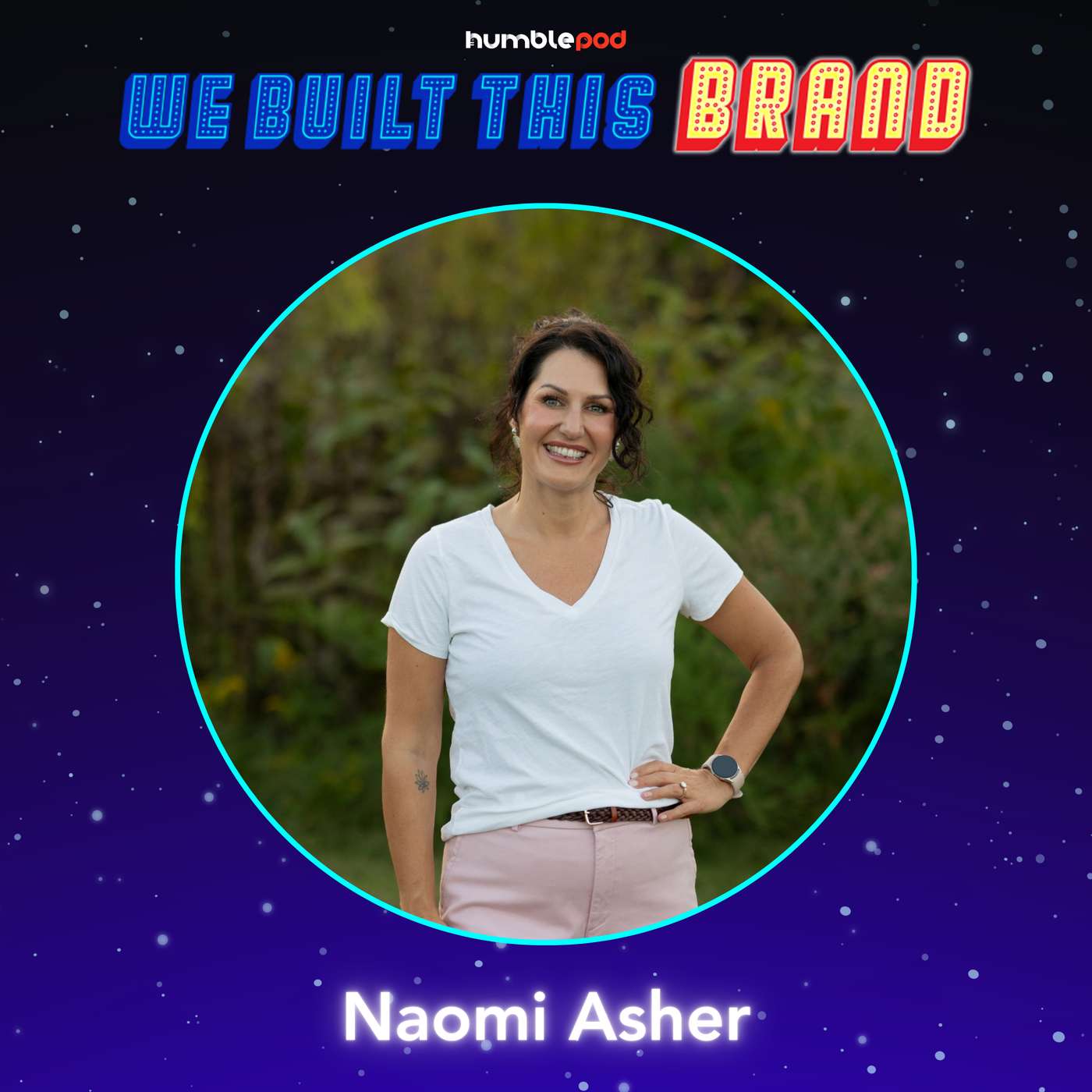
Burnout Isn't About Working Too Hard: Building Better Leaders with Naomi Asher


 Youtube Music
  Podchaser
  Pandora
  Goodpods
  Podcast Addict
  Deezer
  PlayerFM
  Castro
  Castbox
 What if burnout has less to do with long hours and more to do with misalignment?
In this episode of We Built This Brand, Chris sits down with Naomi Asher, founder of The Maven Consulting, leadership consultant, speaker, and author, to unpack the real causes of burnout and why so many organizations are missing the warning signs. Naomi shares her journey from nonprofit executive to entrepreneur, explains how values alignment, conflict, and leadership development impact organizational health, and discusses how tools like the Enneagram can strengthen communication and build healthier teams. Plus, she shares the story behind her company, her book Take to the Bed and Bring Cake, and the lessons she learned while building a business rooted in purpose.
Show Highlights:
(00:14) Meet Naomi Asher
(01:27) Nonprofit Roots to Consulting
(02:09) Why a PhD
(04:04) Burnout Breakthrough Story
(05:21) Three Burnout Drivers
(09:52) Stereotypes and Risky Behavior
(11:32) Training Boards and Controls
(15:49) Building Maven Consulting
(19:47) Enneagram Not a Weapon
(21:41) Leadership Tensions Reframed
(23:42) Consulting Tools for Nonprofits
(25:09) Conflict Story and Lessons
(26:18) Naming and Launching Maven
(31:21) Books Branding and Wrap Up
Links:
The Maven Consulting: https://naomithemaven.com
Naomi: It helps us anticipate where we may get frustrated or dysregulated. So using the Enneagram for me has helped anticipate some of the problems that are going to come up down the road.
Chris: Welcome to We Built This Brand, where we pull back the curtain on the people, the ideas, and the sometimes challenging process of building something that matters.
Today, I'm joined by Naomi Asher, the founder of The Maven Consulting, a leadership firm helping fast-growing companies and nonprofits build the management muscle they're missing. Naomi spent years as a nonprofit powerhouse before going out on her own, and she's now an author and speaker who studies executive burnout for a living.
We get into why she left a career she was winning at, what her book Take to the Bed says about carrying less, and how you build a brand around a single simple idea. So without further ado, here's my conversation with Naomi Asher from The Maven Consulting
Naomi?
Naomi: Yes.
Chris: Thank you for coming on We Built This Brand. I'm happy to have you here.
Naomi: I'm so excited to be here. Thanks for having me.
Chris: Yeah. It's, it's great. I mean, we, we went to college together.
Naomi: Mm-hmm.
Chris: Well, our master's program together at King, and it's been, it's been a while. Um, you've been into a lot of stuff.
I mean, when I remember working with you at King, you were involved in Casa, I believe. You were heading up Casa, and you were coming back, getting your MBA. And yeah, a lot has happened since. So, um, always like to start by just getting to know a little bit of your background. Doesn't have to be long, but, like, just take us through kind of where you started and where you're at today.
Naomi: Sure. So Um, I've got almost two decades of experience in nonprofit leadership and management. I- my undergrad was in music and theology, which is why I went back to get my MBA so that I felt like I was actually qualified to be running an organization, and then finished my, my PhD this year, and now I'm transitioning into full-time consulting.
So I've had a lot of fun in, in the nonprofit leadership world and learned a whole lot, um, but now I'm, I'm ready for something a little bit different.
Chris: You mentioned going back and getting your doctorate. You were involved in a lot of, um, you know, CASA, United Way, Boys & Girls Club. Yeah. Um, what led you to go back?
Why did you decide to leave all of that and all those awesome leadership roles and go back and get your doctorate?
Naomi: So funnily enough, I did it because... Well, two reasons. Number one, I did not feel burned out at the time. I don't know really what it was. Like, I'm the first of the females in my family to really be as career-driven and educated as I am, and so I, I felt strongly about continuing that.
A big call for me is to continue to set an example for my foster kids, and especially other girls. And so the idea of getting a PhD was kind of fun for me. I thought, yeah, why not? Even after I made my husband promise that he would never let me go back to school, I just didn't tell him- ... was the problem. Um, so enrolled and started school, but then I was looking around at other nonprofit leaders and seeing burnout everywhere, but I didn't feel it, and so I was really interested and kind of curious why that was.
And so the idea of getting to do some really interesting research was, was exciting to me. Um, so it was understanding burnout, but then also understanding stereotypes, which has always been a big part of what I was interested in and cared about through the nonprofit work that I did.
Chris: Oh, yeah. I, I mean, 'cause I can imagine with what you did across all those organizations, there's a lot of people that just assume things about the people group you're helping or the person that the...
You know, the child you're even taking care of. So, um, that's interesting. For some reason, when you, you said earlier that you had started learning about burnout and all this, I was under the impression that you were gonna tell me you had some big burnout story to share. Is that not the case?
Naomi: So I do now.
Okay. When I started my PhD, I did not.
Chris: Hmm.
Naomi: And interestingly, so when you look at it, I had 17, 18 years of... I was one of the lowest paid executive directors in the state, especially for, for United Way and the United Way standards, and I was consistently working, I mean, 50 hours a week or more, and never felt, felt burned out in that.
And I took another role where there was s- pretty significant values misalignment. Um, it just was not a good fit for me, and after maybe five or six months, I didn't even wanna get up anymore. Um, but I was... I had doubled my pay and cut my hours that I was working. So it, on all sides, I should have been so incredibly engaged and excited and just living my best life, and I was miserable.
Hmm. And couldn't really understand why until I started combing through my research and looking at it through a different lens and seeing the pieces that answer so many questions that I think leaders are asking themselves every day right now.
Chris: So as someone who has experienced burnout in their career and their life, what are some of those things?
Tell me a little bit more.
Naomi: Yeah. So there's three major factors that impact burnout. The first is values alignment, and this isn't just, "I wanna work for something bigger than myself." It's not like, "Oh, I wanna go change the world and, and work for Charity Water." This is more about, am I being treated the way that I need to be treated to function well?
So the level of autonomy or the level of support, the level of transparency within an organization, or the flip side of that would be, "No, I actually want a little bit more protection. I don't want to know as much." And so w- we've got to start looking at that. None are right or wrong. It's just about being somewhere that you're comfortable, so values alignment is first.
The next one, um, would be conflict. So what happens is, if I think I know how you, how to interpret the words that are coming out of your mouth, because that's what communication is- Mm-hmm ... I'm going to be speaking in some assumptions. When you think about the way that we communicate, a lot of it is non-verbal, but a majority of the way that we talk to people is written-
Chris: Mm-hmm
Naomi: or maybe on the phone, and so a lot of that is very verbal alone, which means we're probably missing a lot of context clues. So we're making these assumptions. 87% of workplace conflict is based in misunderstanding. Hmm. I think that's part of it, is that we're not really with people the way that we used to be.
Um, but then also, it's because I, I'm gonna wanna treat people the way I want to be treated- Hmm ... not necessarily the way that they want to be treated. So this then creates a low level of conflict. We also have gone from a world where we all experience the same thing, mm, to an extent, to a world now where everybody's lived experience is completely Catered to them
Chris: Mm.
Naomi: And we don't even realize it. There are things like the way that the Alexa in my house operates, um, my Netflix algorithm. Um, this isn't just our social media, which I think we all think about, yeah, that's gonna be tailored to me. This is every aspect of our life. It's my, it's my shopping cart for the grocery store.
Everything in my world is now an echo chamber, and it's all catered to the way that I already think, and believe, and expect things to be. So all that begins to create conflict as well. And then the third one, um, after you've got your values, then you're living in this constant conflict. Probably what's gonna happen is you're gonna lose a lot of confidence.
And so it's confidence and competence. It can happen two ways. If you're living in conflict, you're gonna feel like you're not good at anything, and so that's gonna cause, um, a lack of confidence. The other, with competence, is we put people in roles without any kind of education, training, support. We just say, "Oh, you're good at frontline- Mm-hmm
supervise everybody else on frontline." Mm-hmm. And so when those three things happen, so this is what we'll see a lot with executive directors, is they're never given any kind of training, so they come from program background. They're amazing at feeding people, serving people, helping people. Then they become an executive director, no skills or very few skills, which is again, what happened to me, which is why I went back to get my MBA.
That lack of competence to be able to do the job is gonna create that burnout. So any one or all three of these factors, and they do all play together, that's gonna create burnout.
Chris: Nails my experience to a degree. I mean, especially on the, the conflict side. Like, I think when I'm constantly in a situation, especially having been in a sales role, that's where I experienced the most burnout, was a lot of the conflict I was getting was just pressure, and like, having a boss that wasn't very direct with me.
And, I mean, I hate to say it, but even pressuring me to do some unethical things. And, um, having to push back against that, fight that, feel like I was getting the bottom of the barrel. Like I- we had one guy who would go out and s- close deals, sell a client on a product or service, and then it would become my customer after the fact, and they'd be mad at what they were sold.
So that was the rhythm I was living in, and just it was too much. I had to be done with it. So I, I totally get that. Yeah. Well, that's, that's really neat. So you've, you've learned all that. Yes. You've, you've developed all this. What have you done with it since?
Naomi: So I just finished everything in May, but what I'm doing with that is a few different things.
So I do a lot of keynote speaking, um, and then also organizational assessments. So the... Going back to the stereotype piece, I really wanted to understand why some of the stereotypes exist. And this is gonna sound terrible. Like, don't pull this as, like, just a quick clip. But, um, you think about why do we have these stereotypes that police officers walk through domestic violence at home?
Wow. Why do we believe that or hear that doctors and pharmacists struggle with substance misuse? That nonprofit directors embezzle money? So that third one, obviously, was the f- was the reason why I wanted to understand that stereotype. As a nonprofit director, in a world right now where I think nonprofit is being very, um, targeted and looked at very carefully, it's important that we understand how these stereotypes exist.
What happens is when burnout sets in, you're so much more apt to lean into risky behaviors. Those risky behaviors are gonna be the ones that, that have the least amount of consequence. Therefore, you're going to be more open to falling into things That don't have the checks and balances in place, and things that you are exposed to more.
In my time as a nonprofit director, I knew of two people that did embezzle and actually died by suicide because they had got themselves in that kind of situation. That is far higher than the average for other industry. When we think about that, we have to consider those checks and balances and what's being put in place to make sure that it's not gonna be possible or that it will be caught sooner.
Like, there needs to be that level of transparency and have all of these things in place, because generally with nonprofits, who's gonna do that? A, a volunteer board. Who's training that volunteer board? Usually nobody. How do they even know to be putting financial controls in place? So there's this huge missing piece of education, which is where I absolutely love being when it comes to nonprofit anyway, is in that business side and helping boards understand their responsibility for burnout for their professionals, but then also for the checks and balances and, and putting those pieces in place, um, with those executive directors, with mid-level management, all of that.
We've got to start doing a better job training, supporting, developing leaders within our organizations.
Chris: I've served on nonprofit boards. I've helped with that stuff over the years, and yeah, you're right. Like, nobody trains you on what to do. A lot of times they come from either being a volunteer already in the organization, or sometimes they just get pulled in from the outside because they're, they want their name or they want their donations or what have you.
So yeah, that can lead to a lot of problems when you have even that disconnect between the people doing the work and the people who are serving on the board.
Naomi: Yeah, so these organizational assessments are so important just to reevaluate job descriptions. Yeah, for the burnout piece, but then also so that boards really understand what's going on because they are fiscally responsible.
They are, you know, it's more than just your name on a list. You have a huge amount of responsibility within that organization. And all of this translates as well to public sector, to government. Um, and so taking all of these concepts and writing curriculum and training and development programs that's applicable for pretty much anybody, because you've got to think about the nuclear renaissance that we're going through right now.
What happens when you're burned out and you're on the front lines of the health and safety of not just your company, right? Mm-hmm. Like, it's not just the modular reactor you're building. It's that entire community, region, multi-state area, because what's gonna happen if, if something is mistaken and read wrong, those burnout factors set in, and if you don't have the right checks and balances, what's gonna happen?
Chris: Yeah. It could lead to disaster, I'm sure.
Naomi: Absolutely.
Chris: What do you put in place to do, like, to help people with that?
Naomi: So a lot of it is training. It's change management. We've got- businesses and, and organizations that are growing so fast, and we have to do a better job of, of bringing people into the process, helping them feel a part of it so that that change management piece works well.
And then again, that values alignment. If we don't have people in the right seat and they're not being treated the way they need to be treated to be a good functioning employee, then we've made a mistake. And so outside of just making sure processes, policies, procedures, all of those things are intact and in the right place, we have to make sure that people are engaged and, and really connected with their organization.
So, um, that's all kind of my- the burnout part of my world right now. Um, but yeah, it's, it's r- it's really interesting. I'm finding it more and more fascinating the more I get into it.
Chris: I mean, it's definitely an interesting area of topic, and we don't have enough time to dive into it now, but I'm just thinking through the different things that I've had on my mind even in recent months about burnout, about, you know, how we're connected as communities and people, and what kinds of things.
I mean, you mentioned disasters, but even a simple disaster like the executive goes to ChatGPT to try and solve their problem or something like that because they can't reach out to the board. They don't have anybody to share that struggle with or that challenge with. Like, there's, there's a lot there.
But that's- Absolutely.
Naomi: Absolutely ...
Chris: that's really interesting stuff, and I, I'd, I could nerd out about it with you for a while, I'm sure. Um, but you've, you've done more than just learned all this stuff. Like, I think you've written a book now, and you've also started your own consulting firm. So tell me first about the agency that you've built.
Naomi: Doing kind of what I was just talking about. I do a lot of organizational assessments. Uh, that conflict piece has really been somewhere, which it's funny because people know that I'm not, I'm not gonna sugarcoat things, like, I'm pretty upfront. And so putting me in a room to help alleviate conflict sometimes may sound funny, right?
So, like, you don't usually take somebody that's not afraid of conflict and say, "These people are in conflict." You would think, "Oh, we need a peacemaker here." But what it does is it helps when you are so conflict averse and you've got a group that doesn't really know how to navigate The honesty, being very clear, being very, you know, just let's lay it on the table and move forward.
Mm-hmm. Um, it's really interesting. It's really fun. I've, I've really enjoyed getting into that space where I didn't think that I would. Hmm. So it's fallen into my lap more and more. I don't know that there's a t- a ton of mediators or facilitators for that kind of thing. Um, so I am Enneagram based, which is why I was asking you before we started recording about that.
Uh, but because that helps us recognize behavioral patterns, it helps us anticipate where we may get frustrated or dysregulated. Mm-hmm. So using the Enneagram for me has helped anticipate some of the problems that are going to come up down the road. So we can work through what's on the table right now.
Mm-hmm. But do you wanna call me every time you get into something? Right. Do you want to have to have me come down and mediate these meetings every couple weeks? Probably not. I mean, I'm happy to do it, but-
Chris: I, I would say that's also a very unhealthy organization- Yes ... if you're having to do that.
Naomi: Yes. Yeah.
But when we begin to understand the hidden rules of our workplace- Hmm ... when we begin to understand some of the reasons why people may react one way when you would expect them to react another, it just helps us to be able to anticipate, and therefore we can adjust the way that we talk to each other.
Chris: I think as I've used, like, I mean, like I was telling you earlier, like Myers-Briggs is more of where my brain is because that's what I learned for so long, and then Enneagram came along, and I respect it.
I, I like the way you described it today 'cause I had never thought about that before. I kinda considered it, pardon my cynicism, you may hate me for saying this, but I kinda considered it the, um, church, the, the church horoscope in a lot of ways.
Naomi: I get that-
Chris: You know ...
Naomi: all the time-
Chris: Yeah ...
Naomi: about
Chris: it. It's church astrology- Yeah, yeah
is what I've seen it as. Yes. And that's what I don't like about it- Absolutely ... is people that are like... 'Cause I've seen it in my church and in other places where people are like, "Oh, well, you know, I've used it for this," and they just, they throw out the number, and I'm like, "I don't know what that means."
It's like, well, I'm a Sagittarius, what do you have to say to that? Yeah. Is that witchcraft or is this? I know it's not, to be clear, but how do you, like, as you think of stereotypes, how do you keep people from being in that place of, "Oh, well, it's because I'm a seven," or, "Oh, they're just a, they're just an eight and that's why they're that way"?
Yeah. Like, how do you manage that since you know both sides of it? Want to launch a podcast without the hassle? HumblePod makes podcasting easy. From concept to launch, we'll help you create a professional, engaging show. Already have a podcast? We handle editing, show notes, transcriptions, and even video production, so you can focus on your content.
With our tailored services, you get high-quality production, seamless publishing, and expert support at every step. Whether you're starting fresh or leveling up, HumblePod ensures your podcast sounds amazing and reaches the right audience. Visit humblepod.com to get started today.
Naomi: Absolutely. The first thing that I say when I do anything with the Enneagram is it is not to be used as a sword or a shield.
Chris: Hmm.
Naomi: Never. This is to understand yourself, and it is to understand the people around you. Mm-hmm. No one type is better or worse than another. But if I recognize that as an eight, personally, I'm gonna fight for authenticity.
I'm gonna needle people and push people until I get an, what I believe to be an authentic reaction.
Chris: Mm-hmm
Naomi: When you put that against an Enneagram 3, this is a person who wants to be seen the way they want to be seen, that always puts their best foot forward, that wants to frame a conversation and frame a situation.
When you put those together, what do you think is gonna happen? If I don't know that what I'm doing is, is trying to expose your biggest fear, but you don't understand that if you don't give me authenticity, it's not gonna end, right? Because I want to know, but how do you really feel about this? The person on the other side is saying, "I don't actually want you to know how I feel about it.
I want you to know how I want you to think that I feel about it."
Chris: Mm-hmm.
Naomi: We're going to be in this huge fight. So for example, if I'm working with a nonprofit, if you've got a 1, a 3, and an 8, 1s believe in very clear right, wrong, justice, morality. We're doing the right thing, so we're gonna frame our organization to do the right thing because it's the right thing.
The 3 is gonna say, "Well, if you're doing the right thing, but it looks like the wrong thing, the community's not gonna believe in us anymore. Legislators are gonna turn their back on us. We won't have an organization anymore. So we need to make sure that if we're doing the right thing, that it also looks like the right thing.
We need to reframe this and make sure that we're marketing it correctly, that we're putting it forward in the best light." The 8 is gonna say, "If you're doing the right thing, you're framing it, but ultimately the clients that we're serving are not getting service, there's no point in doing it at all."
Right. The 8s burn the building down. Like, ultimately it comes be- it comes down to the most vulnerable for an 8. They wanna protect and push for authenticity and push for that, for that reality so that they can protect those that they, that they feel need it the most. And so when you think about those in, those personalities in place in a leadership team for a nonprofit organization, it becomes really clear then how we get to where we are with some of these organizations with these big fights when the most important thing is these clients that everybody loves and cares about, but we've got these dynamics, same situation, three very different viewpoints.
Mm-hmm. And so what it comes down to is really figuring out, okay, well, now I recognize we've got to be doing the right thing, and it has to be framed correctly, but we also have to make sure that the bottom line stays the bottom line, and that our clients are getting served. And so when we do that and we can refocus back, everybody feels heard, and then everybody's on board.
Chris: I mean, that's heavy. That's a lot for, for teams to carry and understand, and I'm sure it's easy to get stuck in the work and not... And when then, then something comes up and creates tension, that's where it becomes a big issue, I'm sure, for you. So that's, that's really neat. So that's your job, then, is helping people-
Naomi: I do spend a lot of time doing that.
Yeah, it's really fun. I actually really love it. So, and because when you think about it, it impacts strategic planning. So if I go in to do strategic planning with an organization, I'm not gonna push anybody to do Enneagram testing or anything like that. But when I go in, it's always interesting to, to get to know all the players and to s- to begin to anticipate where we may have some of these tensions moving forward.
Organizational assessments, same thing. There's usually some low-level conflict somewhere. There's something going on. You're not just gonna call me and ask me for an organizational assessment out of nowhere. And then walking through change, expansion, all of those things. So how do we understand the community that we're going into better?
Mm-hmm. How do we frame this in a way that's gonna work well for this community? How do we make sure that we're serving the people that need to be served? All of those pieces, and then the training development, making sure that within your organization, everybody is trained for the job that they are in. Do we have the appropriate job descriptions?
Do their, their actual day-to-day reflect their job description? Do we all have accountability and those pieces put in place? Clear communication and clear, um, expectations. When all of those things are put in place, suddenly we see our capacity increase, and we begin helping each other and supporting each other in ways that That we didn't see before.
Chris: That's such a, an important thing. I mean, I, I've been in, involved in an organization that pretty much fell apart after... You mentioned conflict and being in the room with conflict. Myself and a coworker have the same personality in that, like, when we get heated, we can talk very angrily- Mm-hmm ... and not actually be that mad.
Yeah. I'm sure you know that personality type. That's very much me. When I get passionate about something, be it politics or work politics or just life, like, it can sound like I'm angry, and I'm like, "No, I'm really not. I'm just w- I'm just having a good time having this conversation sometimes." And I'm at least passionate about it.
And, um, my friend and I were, and coworker were talking, and, uh, the boss overheard us. And we were saying some not nice things 'cause we were very burnt out, frustrated, dealing with all that, and I wish we would've had this understanding because after that, everything just kinda fell apart. Mm-hmm. Um, now there's more to the story than that, but, um, having seen that happen in a negative way, like, I could see where you have a lot of value coming into organizations and, you know, keeping small, probably not small, small business is what we were in, but organizations and nonprofits doing that, so it's very important.
Um, so how'd you come up with the name Maven?
Naomi: I have a good friend, and she and I were just talking one day, and we were talking about what's a good word that means kind of carrying expertise or these kinds of things. And she, she kinda came up, up with it and said, "Oh, this is a fun..." Like, we were just going through a, a thesaurus or whatever looking for different words, and she said, "Oh, that's kind of fun."
And then I started looking at it more, and then I started looking into different definitions, and I saw that it, one that, um, is, 'cause it's a Yiddish word and that it means bringing timely and relevant advice to people when they need it from lived experience and from, from knowledge, from, from life-earned knowledge.
And I just felt like, boy, if I can... I've learned so many things in the trial by fire, right? So many things I have learned the way that I don't want anybody else to have to learn. If I can bring that now- Mm-hmm ... to somebody so they don't have to go through what I had to live through- That's what I wanna do.
Yeah. So that's where it came from.
Chris: That's exciting.
Naomi: Yeah.
Chris: So how did you get off the ground with Mavyn? I mean, I know that's always a challenge starting a business. Was this something you started as a side hustle, or was this something where you left an organization and started it?
Naomi: I always knew it was something that I wanted to do.
The timing, uh, was very unexpected for me. Um, like I said, I found myself kind of in a position where I was very unhappy just in an organization that the alignment was not there. It just, it just was not gonna get better. I found myself, for the first time, and I talk about this in my book a lot, but I found myself for the first time since I was 12 years old without a job, without having somewhere to go.
Um, it felt a lot like I didn't have a purpose. My trust in the world was very broken at that point, and my trust in other people. And so I got up and, and I had a meeting that was not, not intentional about the business, but I had a meeting with a friend that we were working on a project related to the other organization.
We ended up just started talking, and I was telling him kind of what was going on and, and he hired me on the spot to do a short-term contract. He said, "Listen, I g- I get it. You don't wanna come work for us full time right now, but would you do this short-term contract? Because honestly, this is what's going on."
It was a fractional event management type job. Mm-hmm. I said, "Yeah, I would love to." So by the time I got to the end of that contract, I'd picked up a few others, and I was like, "Well, I mean, I was just gonna kinda do this short term while I figured out what was next, but I'm really enjoying it." Kept working again through, through the dissertation process.
Started doing some different things, a little bit more public speaking, a little bit more over here with training and development, a little bit over here with some organizational assessments and, and putting some data collection pieces in place, and a few more strategic plans, and then a little bit of development f- um, fractional development support.
And it, it just kind of kept rolling, and I was like, "Man, I'm, I'm really enjoying this. I'm, I'm really having a good time." So it's been more than a year and a half, so we'll be, I'll be at two years in November, and I'm so happy. Like, I just wake up every day so excited to work with the clients that I have and, um, to think about what I could be doing next, and it's, it's just really fun.
So started as a short-term endeavor that has now turned into, into my whole life.
Chris: It's amazing how that works sometimes, isn't it? Yeah. So what was that moment where you realized it wasn't just a short-term endeavor? I like to say, when was that moment of validation for your business, like when you knew it was going somewhere else?
Naomi: Honestly, somebody said- To me, and I can't remember what had happened, but they said, "Oh, so you're really doing this? Like, this is your, this is your job?" And I was like, "I mean, yeah, I've put a lot of time, money, effort, sweat, tears into this." And I think it was as I was saying, "Well yeah, of course this is what I'm doing," that I actually believed it.
Um, I, I mean, I was putting all of the, the blood, sweat, tears, time, investment, all of that stuff into it because it... I don't do anything halfway. Mm. And so if I'm gonna do it, I'm gonna do it all the way. And I, I just kinda thought, "Well, I may take something else, but always come back to this. I wanna have my business established and kind of have it as a side hustle."
But when that question was there, like, "Oh, so this is your full-time deal?" Yeah, of course it is. And I just knew as the words came out of my mouth, yeah, this is it. Yeah. I love it.
Chris: Yeah. And it's been growing ever since, and sounds like you've got some exciting prospects for your future too with it, so.
Naomi: Yeah, I love it.
Chris: That's exciting. I love
Naomi: it. It's very
Chris: fun. And on top of that, you've written a book.
Naomi: Yes.
Chris: Tell me about the book. 'Cause it's not just one book you're writing either. I think there's more to come, but maybe I'm getting ahead of myself.
Naomi: My first book, again, like, my favorite joke is just that it, it was a therapy exercise that I decided to publish.
It's very kind of walking through my journey. I do hope that other people find it valuable, maybe have a few, a few chuckles in there. Um, and, and I think... So it pivots in the middle from my story to what does this mean for you, um, how do you evaluate your values? Um, it's not... So it's called Take to the Bed and Bring Cake.
And it's not just about this idea of rest, although it is very heavily focused around the need to take rest and reflection. It's not just a call to... I always say, if you wanna bring wine, cake, Chinese food, vodka, whatever it is that you want, bring it, take that break, take that rest, but use it as a time to evaluate.
And so I hope it is a call to evaluate those values and to find our self-worth in something that is not achievement-focused. Um, I start the book talking about the cupcake hustle. When I first got into nonprofit management, I loved small business. I love my town. I love the city I grew up in, and so I'm very passionate about that.
Loved small businesses in my, in my town. There was a small bakery Of course I love cake. So I would go to the bakery, get the, whatever cupcakes were left at the end of the day, and I would run them around town and just say thank you to people that I'd interacted with that week. Tellers, somebody's assistant.
Like, this wasn't, you know, CEOs. This was just anybody that I'd had an interaction with that week. And what started happening, which, you know, you can read networking books and see how this was working, but this was figuring out just in the minute, what I started seeing was I would go to make an ask for a donation, or I'd go to try to set a meeting, and they'd go, "Oh yeah, we love the cupcake girl."
And so this cupcake hustle began to be this series of favors and overextension. What can I do for others? Because if I don't do it, I don't have worth. Mm. And my ability to do my job is not based on whether or not I'm good at it, it's based on how much I'm doing for others. And I didn't even understand that that was what was happening until years and years and years later when I started really reflecting back on it, that my worth has always been measured in terms of The hours I put in, the impact that I make, the outcomes that are there.
When you're in nonprofit work especially, of course that's how you measure it. How many people did you help today? If you're not helping people, how do you justify your salary? So it was just kind of this realization as I was waking up and having nothing to live for anymore, feeling useless and worthless and stupid and all of these things, that I had to really come to the realization that my worth is not divi- defined by the productivity or the achievement.
It is there because I am a human, and all humans have worth and value.
Chris: I think that's, that's an important lesson to learn for everybody. I've been fortunate to have someone in my life that early on came to me after... It was actually a boss, and we had had a hard conversation, and he came to me and had this conversation about identity and value, and he was like, "Your identity should never be your work.
Like, Chris in his role is what I'm talking about. It's not you as a person." And learning to distinguish the two has really helped me at times when, um, I can take things way more personally than I probably should, but I think most people do that. Um, I know people very close to me recently have had similar issues of identity crisis almost because something was taken away from them.
But helping them realize, like, it's not about that. Like, that may be what you want to do, but that does not determine your worth or your value to your family and, and to the, those around you. Um, you know, I think having kids helped with that, too. Yeah. Yeah. Makes you realize there's something greater out there than just career advancement.
But yeah, it's, it's hard because you wanna, you wanna succeed, you wanna look good, you want everybody to be happy with you, and when you derive satisfaction, I assume probably from gift giving, I would imagine it's probably one of your love languages, then, then you probably are in that place of like, "If I don't do this, then I'm failing others."
I can see how that would be tough.
Naomi: Yeah, and when you think about it, too, is if you're finding your validation in your work and in your outputs, how do you delegate? So we see this then tie back into not only personal burnout, but in how you're treating other people and what that burnout begins to look like, where that conflict does begin to set in, where there is that misalignment.
So the next book is, um, it will be called Get Over Yourself, and it's going to be a call to view the world through other people's lenses. Mm. And so kind of all of that piece that I, that we've been talking about, but that conflict. So the first one really leans into values. The next one will be conflict, and then the third one will be, uh, in that, um, competency space of leading.
And so how do we lead, taking into consideration these first two? How do we build that competency and confidence in ourselves so that we can be effective leaders? Um, and this three-part book series is gonna align with my burnout research, but it's, um, it's also gonna work really well together. So one hard copy book eventually.
All digital until then.
Chris: Well, it takes time to find the right printer and, and all that stuff. Um, side note, I was actually at a conference where they had selfpublishing.com or something there just recently, so it's, uh, definitely a way to go, but that's- that's really neat. That's really something that people need to know about, and I think you're, you're creating some really cool stuff in that regard.
Naomi: Thank
Chris: you. So that's awesome. Thank you. That's awesome.
Naomi: Yeah.
Chris: Well, Naomi, as we wrap up, this is a branding podcast. We talked a little about Mavens brand. I always like to ask at the end of every episode, you know, what is the brand that you admire the most right now? Doesn't have to be, like, all time, but just is there a brand that's real top of mind for you or that, that you really admire?
Naomi: I've gotta tell you, and this is so funny because I've talked about this quite a bit recently. I love the Spanx brand.
Chris: Okay.
Naomi: And I hate wearing Spanx. Now, with that said, these jeans are Spanx. I love the clothes. I don't like the, like, suck in your whatever 'cause for one I'm like, "You know what? Be real about it."
So there's that kind of side of it. Mm-hmm. But I am just so obsessed with this woman and her company and the way she built her company and the, like, just... So Sara Blakely, and I follow her on, on a lot of, um, socials and things, and she's just so focused on, on, "This is m- what I want to create." And I don't care if you think it's stupid."
Like, everybody was kind of like, "Nobody's gonna buy that." And she was like, "All right. Well, I'm gonna do it anyway." And look at how... It's like Kleenex, you know? Like, tissues aren't tissues, they're Kleenex. Mm-hmm. Shapewear isn't shapewear, it's Spanx. That's
Chris: true.
Naomi: And she built that from very uncompromising, focused intentionality, and now has a new brand called Sneex.
They're like high-heeled tennis shoes. I'm obsessed. What? I am obsessed. I just think she's so cool.
Chris: Yeah.
Naomi: She's just really cool, so yeah.
Chris: Yeah. That's, uh, that's interesting. I'll have to check that out. I'm curious what that looks like when you say high-heeled tennis shoe. Yeah,
Naomi: they're hideous. They're hideous?
I want them. I want them, though. The more you look at them, the more you're like, "Oh, now I kind of want to wear those. I kind of
Chris: want to wear those." But I wonder if it kind of follows the same, like, philosophy of Spanx, where it's about helping you look your best, and, like, heels do s- you know, help lift-
Naomi: Uh-huh
Chris: the back end- Yeah ... and all that. Yeah. So I wonder if it's kind of like, "Hey, but you can still have the comfortable shoe, but look like..." I don't know.
Naomi: I-
Chris: I'm fascinated now ...
Naomi: I'm not sure, but they are, I really want some. I really want some.
Chris: Even though they're hideous.
Naomi: When the next book comes out, and you have me back to talk about it, I'll be wearing a pair of Sneex.
Chris: I hope so. That sounds awesome.
Naomi: I hope so, too. I mean, they're, they're not cheap, so I'm saving my pennies right now- ... 'cause I want a pair so bad. Wow. And there's a, there's a pair that are my branded colors, so back to branding.
Chris: Oh.
Naomi: I love it when somebody says, "I was thinking about you this week." Every time I know it's 'cause you saw something pink.
Mm. 'Cause I, I do a, you know, I really lean into, to my brand and pink, so. Yeah.
Chris: I, I kind of noticed. Yeah. Thank you. You brought that in today.
Naomi: Yeah. I do what I can.
Chris: That was smart, all the way from the, the shirt to the, the Stanley Cup, so.
Naomi: Gotta have my Stanley.
Chris: That's right. That's awesome. Um, well, Naomi, thank you so much for coming on.
Where can people find you, your book, and connect with you if they wanna work with you?
Naomi: You can find me all over the internet. Um, naomithemaven.com is my website. I am on, um, Facebook, Instagram, TikTok, all of the things. So, um, I'm easy to get ahold of. I love just chatting, even if you don't think that you need anything that I may offer.
I just love getting to know people, so always open to a quick call or, or coffee or whatever. But- Awesome ... it's been so fun to be with you today.
Chris: Absolutely. Thank you for coming on. I've-
Naomi: Yeah ... I've
Chris: enjoyed it.
Naomi: Thank you.
Chris: Thanks for checking out this episode of We Built This Brand. Don't forget to like, follow, and subscribe on your player of choice.
You can also keep up with the podcast on our website at webuiltthisbrand.com. If you liked this episode, please give the podcast a five star review, and make sure to tell all your friends about it so we can continue to build this brand.


