
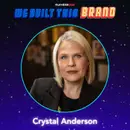
Breaking the Rules of Branding with Crystal Anderson of 3Headed Monster


 Youtube Music
 Podchaser
 Pandora
 Goodpods
 Podcast Addict
 Deezer
 PlayerFM
 Castro
 Castbox
In this episode of We Built This Brand, Chris talks with Crystal Anderson, Partner and Chief Strategy Officer at 3Headed Monster, about building bold brands in a fast-changing marketing landscape.
Crystal shares how she helped build an award-winning independent agency, why brands need to move faster, and how companies like Nutter Butter and Duolingo are finding success by taking creative risks.
They also discuss staying ahead of cultural trends, the limitations of traditional market research, and why authentic human connection still matters in the age of AI.
Show Highlights:
(00:00) Nutter Butter Comeback
(00:23) Crystal Anderson Intro
(02:43) Leaving Big Agencies
(09:31) Early Wins and Culture
(17:56) Valvoline Pitch and Fast Decisions
(26:30) TikTok Shopping QVC
(27:00) Disposable Trends Economy
(29:06) Tracking Culture Fast
(34:35) Brave Unhinged Brands
(41:07) Craft Real Life Future
Links:
3HeadedMonster: https://3headedmonster.com/
Start a podcast with HumblePod! https://www.humblepod.com/our-services/
Sign up for our newsletter!https://www.humblepod.com/newsletter-sign-up/
0:00 Crystal: -It wasn't just for funsies. Like, it impacted their business, 'cause every kid was like, "I need a Nutter Butter." Whereas before, no kid even knew what a Nutter Butter was, 'cause it was kind of an older brand. It's fabulous, but like, man, somebody over there got brave. Somebody was like, "That brand's dying. Do whatever you want." Like, it was probably one of those like, "It's fine. It's on its last leg." And then now it's one of their better success stories. Chris: Welcome to We Built This Brand, where we pull back the curtain on the people, the ideas, and the sometimes challenging process of building something that matters. Today, I'm joined by Crystal Anderson, partner and chief strategy officer at Three Headed Monster, an independent Dallas agency built to help ambitious brands wreak havoc.
0:42 Crystal cut her teeth at big shops like DDB, BBDO, and Publicis before betting on a scrappy startup agency. Over a decade later, Three Headed Monster is a two-time Ad Age Small Agency of the Year, working with Valvoline Instant Oil Change, Freddy's, Q-tips, and so many more brands. In this conversation, we get into why her riskiest career move turned out to be her safest, why focus groups lie, and how brands can make faster, gutsier decisions. So without further ado, here's my conversation with Crystal Anderson from Three Headed Monster Crystal, welcome to We Build This Brand.
1:25 Crystal: Hi, how are you doing? Chris: Doing great, doing great. Glad to have you here and talking to you today about, um, Three Headed Monster and everything you do. Crystal: Yeah, thank you so much for, for having me. Chris: Absolutely. Um, so typically how we get started with this is just love to hear a little bit about your background. I know you came up through some of the biggest names in advertising, DDB New York, BBDO Chicago, Publicis Dallas, Sapient Nitro. Um, what did you learn through that journey, and how did you get to where you're at today? Crystal: Yeah, so I am a little bit of an unusual creature that I started and continued on my path in advertising, and I was always sort of in the strategy role.
2:07 So I didn't do a lot of bouncing, but I got to experience a lot of great agencies. Uh, but starting off in New York, it's kind of like going to- Ballet bootcamp, uh, you learn the fundamentals, you learn how to do it right, and then as, you know, those lessons get formed through, uh, different agencies' perspectives, coming to something like Three Headed Monster and starting it from scratch, all of that bootcamp rigor really then allows me to be experimentational here 'cause I have all that strategic rigor, but we can be a lot more creative in how it's applied to our clients now. Chris: Where did you get your start, I guess, in terms of deciding to leave those big agencies and start working for yourself and working in these smaller agencies?
2:52 Crystal: Yeah, I mean, the trend started, uh, you know, over a decade ago, where the big holding companies were growing by mergers and acquisitions. And what that does is it means that a company like Publicis buys a company like SapientNitro, where I was, uh, and merges those two company cultures together. You get a big mess. Everybody's trying to figure out who's in charge, what form you're gonna use, what is our standard process, and really, that started to become very frustrating. And Sean Rathbone, who is our founder, ran into him 12 years ago, and he said, "I'm starting my own thing. What do you think about that?" And I said, "That sounds horrible," 'cause I love my job.
3:34 And, uh, entrepreneurship was not naturally in my blood, but he is such a smart creative. He's the CEO of our company now, so he has a business mind as well, and he, he really convinced me that, you know, when you look at what was happening in our industry with all those mergers and acquisitions, it was only going to get worse. It was only going to keep collapsing, and it was only gonna put people like us into a place where we were no longer creating our own destinies, basically. So we decided to start Three Headed Monster, uh, and create the job we wanted. And I think that the indie agency, you know, category has really boomed.
4:15 You've seen it as the mergers and acquisitions continue, and as agencies like DDB continue to now no longer exist, there's more and more indies, and those are the folks that are really doing the most interesting stuff. It's a really cool group of people. Um, and I, I think that this trend will continue of smaller, faster, more nimble, more creative agencies. Chris: Yeah, I mean, there's definitely, um- Definitely a trend away from bigger firms, and, you know, the consolidation makes it harder for people to keep consistent jobs, too, within that. I mean, when I, um, when I started, w- back before I started my career going into college, like, I had seen my dad get laid off.
4:56 He worked for Bell South, which got acquired by AT&T, and I saw all that happen right before I went to college, and I was like, "Oh, nothing's gonna be…" I, I just had this sense of like nothing in the future is gonna be as guaranteed as what my dad has had for most of his career. Crystal: Yeah, in the beginning of advertising, right, Mad Men days, they stayed forever. You know, you just stayed at a place, and now, you know, the tenure of somebody can oftentimes been on the tenure of CMOs, which is what now? Down to a year, to maybe 18 months. And the turnover, and then the, again, the mergers and acquisitions. Between all of it, there's not a whole lot of steady security. Uh, this industry never has had it, but you always had a false sense of that when you're in some of those bigger brands.
5:39 And now that I've been at the same place for 12 years, I mean, this is unheard of in our industry, uh, to stay at one place this long. Uh, and it has somehow, this scrappy experimentat- you know, experiment that we did, has become the most, you know, stable part of my resume that really doesn't exist anymore 'cause all those companies are now gone. Chris: So you mentioned that Sean invite- mentioned that he was starting his own business. Did he invite you to join at that time? Was that a little bit after the fact? What, what point did you come into Three Headed Monster? Crystal: Yeah, I was about six months into him and, uh, our other partner getting started GarageBand style, literally at like a co-working space. I think they got the legal papers going, working with some friends and family on some, some projects.
6:25 Uh, so I was pretty early into it, uh, but not from day one. And honestly, for somebody like me who is a type A strategist, having them even a little bit, six months ahead of me, like, okay, we're not gonna be in Sean's garage. We have an office. It was in the basement of a Chipotle, but an office. And, uh, it was so much fun, the three of us getting this thing off the ground and started. And yeah, it… That was when I got in, and, and we really just started working hand-in-hand. I mean, when you… It was me, Sean's a writer by trade, uh, and Mark Ford, who was our other partner, was a design director, you know, from the West Coast, so think Nike packaging, logos, products.
7:07 Like, that was very unusual to have in an agency. So that was also our secret sauce, was we're not just a creative agency, we're sort of a nuts to bolts solution for a lot of our clients. Uh, and it was, you know, yeah, it was a little bit GarageBand-y to start, and in some ways sometimes it still is. It still feels that collaborative even though we've grown. But that core essence of cross… There are no departments when you're all sitting together. You know, that was true with three people, and it's, it's true today of 40. Chris: That's, I mean, that's a great place to start too, having that… Those early days in a business are always really fun and always really nerve-wracking, too. It's like, "Is this gonna work?" Crystal: I, I mean, I could talk about it being fun now. I don't know how fun it always felt, uh, when we were not getting paid.
7:50 Chris: Mm-hmm. Crystal: There was a lot of sacrifice made in the beginning to, to get to where we are, but that also makes it feel more, uh, special. Like if you've… I mean, not only obviously I am an owner, but you feel so much pride walking in and knowing that you've built this thing. I never had that pride. I'm not having that pride for Omnicom. I mean, I love them. They paid my bills for many, many years. But there's not a sense of ownership there and a make- maker's mindset that's like, "You're gonna do whatever it takes." It's like- I was always a hard worker, but the mind shift definitely, the wins are your wins, the losses are also your losses, so everything feels much bigger.
8:30 But it's, you know, at this point I wouldn't trade it for the world. Chris: Yeah, I mean, it's, it's always, like, your baby, and there's always an emotional attachment to that. I mean, I've probably said this on the podcast before, but my, my business started right around the time of my first son being born, and that was… My wife likes to joke that we had two kids at once, so and she's not wrong. Crystal: Yes. You're not wrong. Yeah, I feel like we're in the teenage years now. We're, you know, we're 12 and a half. We're about to be 13. Getting into those, to those teenage years, it's gonna be interesting to see where, you know, what's comes next, 'cause there's no way to predict any of it. I mean, I've, that's the part of this that I've had to learn, of, like, this holding onto a sense of control that really doesn't exist.
9:13 You know, the marketplace, the category, economic factors, like, there's none of it that we can predict, but you just have to, you know, truly invest in yourself and, and the agency, and the ideas, and in our clients. Uh, and it, it just, it continues to work out for us, so we've been very fortunate. Chris: So going back to the beginning, I know it's really nerve-wracking. Six months into the company, you're joining, everything's starting. Like, what was that first moment where you're like, "Okay, I can breathe. This is really happening"? I, I like to call it that moment of validation, you know, that someone's willing to pay for your services and willing to, willing to help you all get to that next level. Crystal: Yeah, it is funny, 'cause I always say, like, I've, I've not released the breath.
9:55 I you know? Like, it's, it still feels like, okay, 'cause we're always having the next goal. Like, is that gonna happen? Is that gonna happen? But I would say, you know, where it stopped feeling like three kids in a garage band in the basement of Chipotle to a real agency was when we got that first AOR, and somebody really trusted us to bring their brand to life. Uh, and at the time, it was a fun little scrappy frozen yogurt brand out of Oklahoma City called Orange Leaf, and they let us- I love Chris: Orange Leaf, Crystal: by the way. Yeah. Yeah. Okay. Well, we did… They let us do a really fun campaign where it was an animated orange unicorn who would basically the whole strategy was you do you, because you could customize your yogurt however you want, right?
10:40 So it was, like, about self-expression, so hence the orange unicorn. He'd go around preaching, and it was voiced by this insanely not family-appropriate comedian. But to try to get him to be family-friendly for this was hilarious, and, I mean, those are still some of my favorite- videos and content that we created 'cause they just let us be so free with it, and that really got us into this path of, for better or for worse, like restaurants. Like it just, you know, we don't wanna be a restaurant agency, but we certainly know how to win in that category at this point. So now we have, you know, four or five different restaurants, and it's not unusual to- for us to have a handful of more. We've been able to parlay that experience out into other franchise businesses, so Valvoline Instant Oil Change and other things, 'cause there's a lot of playbooks that you can kind of lessons learned that you can take and apply.
11:32 So it's been, yeah, it's been a great evolution since the days of the orange unicorn, but he still lives here. He's around. The orange unicorn doesn't go anywhere. He's part of our DNA. Chris: I love a good mascot. I'm a big fan of mascots and things like that, characters. I've actually made some, which is Yeah. We'll talk about that off-camera. Crystal: Okay. Chris: But yeah, I, I love that kind of thing, and, um, bringing a character to life and telling that story, that's sounds like a really fun place to be. And that's something I noticed about your brand, is it's, it's very energetic, very interesting. It's, um, a little, like you said, like garage band-y, like kids, little punk rock. So where did the name Three Headed Monster come from?
12:15 Crystal: So Sean, being a writer, did have the name when he approached me. And, you know, I don't know if I would've joined if it was called, you know, Rathbone Anderson, like a law firm, you know? Like, we do wanna be different. We're, we pride ourselves on being an agency that's all about disruption, so we ourselves had to disrupt our own category. So having a crazy name like Three Headed Monster, it is a conversation starter. It is, you know, e- even when you're calling the credit card company and you have to say what it is, they're like, "What is that? Tell me more." Like, I mean, we can't … Swag is a very important part of our culture, you know, and I've wearing, it becomes a uniform. I wear Three Headed Monster shirts all the time. Just walking around, people will inevitably ask.
12:56 It in and of itself, it was probably the greatest branding decision that could've happened, was starting with that name. And while there were, you know, three partners, it, it is much more about the intention and the point of view of the agency, which was that story, design, and technology, uh, kind of interwoven at the core DNA. So while other agencies are working in their silos, we are just this agile beast that continues to mutate. We, again, work so collaboratively across departments, that you wouldn't know who's who. Sometimes the creatives appear as strategists, sometimes the strategists appear as creatives. It's, it's a mix of a bunch of smart, creative people solving business problems.
13:38 So hence the Three Headed Monster. Chris: I was about to say, that sounds like a bit of a three-headed monster. Crystal: It is. It is. And yes, the, the, the office is fantastic. We actually got to move into a new spa- We moved out of the basement of Chipotle into a space that was interim to this space, and we got to design the space from the ground up, and it was really fun because we got to put our branding in action. Uh, so you can see, like, I'm in a room called Drac right now. All of our rooms are named after monsters. We have Godzilla, Ghidorah, Drac, Ghost, Mummy. We, we love a good theme. Our biggest thing we do is a Halloween party called Monster Mash. It's, we invite all our clients, our vendors, our families, our friends.
14:20 It's up to 200, 250 people. We don't do Christmas around here, we do Halloween. So we, we love a good theme. We love it. We, our employees are called monsters. Like, we don't refer to each other as employees or anything. We, you know, "How many monsters do we have?" We talk about our people as monsters. We stick with that culture, yeah. It's one of our, I think it's one of our greatest assets. Chris: I absolutely love that. Um, I am a little sad that you're not coming to me today from the Godzilla room. Crystal: Oh, yes. The Godzilla room is one of the bigger rooms, so for podcasting, one of the smaller rooms makes- Chris: I appreciate you keeping the acoustics in mind. Crystal: Yes. You're good. Chris: So I love, I love that idea, like, the name is really going through the culture too.
15:02 It's not just a name that you're like, "Oh, yeah, we're Three Headed Monster because of this," and it's kind of a joke. It's like, no, you've, you've taken that and you've owned it, like, to the point of even throwing a party for Halloween every year. So you mentioned you've got some clients, um, that you're working with, like Valvoline Oil Change and, and things like that. What has led to you all growing and, and getting those types of opportunities? Crystal: What's really interesting and, you know, of course every pitch, that was a very long in-depth pitch. We oftentimes as an indie agency don't go through those more traditional pitch processes, but that one was, and it was very competitive, you know, started with 13 agencies.
15:44 We always look at ourselves, we're like, "Are we the dark horse here?" But, you know, they were looking for something new. They were looking for something disruptive in a category that hasn't been disrupted yet. But when, you know, at the end of the day, when they, when they told us like, "This is why you won our business," it was m- it was the culture. It was the people. It was a cultural fit on both sides. I think that they saw that, you know, even the partners, we are heavily involved in the work we do still. We are not absent owners, and, you know, we, we are very proud of every single thing that goes out this door, and proud to put Monster on it. And, you know, when they see that, you know, we've been recognized for our culture, well, culture makes happy people.
16:24 Happy people make happy work, and they stick around. And it's very common that we get asked, "Are the people in this room the people that are gonna work on our business?" It's one of the number one questions we get when we're doing new business. And that feeling like, "My team switched over so much at the last agency." You know, as we were talking about people leaving jobs so fast. There's a turnover, so then it's like, "I don't even know who my team is anymore." Like, we hear that a lot from clients. So when you have a culture like us, we have a really good retention rate that comes along with that. People wanna stay here. So, you know, we, again, we are only 12 years old. We have employees that have been with us for 10, you know? Like- Employee number four after the three of us is still with us.
17:05 And so they also feel ownership of it. There's, you know, they've, they've seen every iteration and every stage of building an agency. Um, and some of them, you know, are just as, as big a representatives of being what Monster means, and our clients see that, and I think that that's what they're attracted to. Yes, every- g- there's lots of smart people, there's lots of creative people in this industry, but are these people I want to work with and have a relationship with and build my business with? And they, you know, they said that that was why we won, and, and it's continued to be a really great relationship. Chris: I always like it when, when you can rely on the same people being there year in and year out. I mean, it's, it's hard, and it's rare in some cases unless you get an owner involved in the production, but, you know, it, it is, it makes such a difference when you've got that long history of someone, you know, sticking with you all and, and working with the brand.
17:55 Crystal: Yeah, absolutely. Chris: When it comes to Valvoline, I was fascinated by that, by the way. What was… Well, I'm just really curious, what was the pitch like for that? 'Cause the, the commercials I saw for it that you all have, it's just a fun campaign. I like the idea of, you know, your, your car is your steed. Crystal: Yeah. Chris: Where did that come from? Crystal: I always like to say we're, you know, a great agency needs to be paired with a really great client to make great work. Uh, and they came to the, to the table with a great brief, and it was this category is boring, rational. Like, let's take a playbook, uh, page out of insurance. Like, nothing is more boring than insurance, but h- how fun are those commercials? So there was sort of this idea of how can we learn from a different category, or how can we just think a little bit differently?
18:40 Again, disruption, uh, to break category conventions. So a character, uh, we obviously know, is always something sticky. Um, so what's our Flo? What's our, what's our Jake from State Farm? What does that look like for us? And what really embodies what their strategy was, which is, you know, they have… It's Valvoline Instant Oil Change. They have Valvoline, which is a known brand name in the name, but the retail space of Valvoline Instant Oil Change is a relatively new brand trying to gain traction. Jiffy Lube, I would say, you know, everybody knows what a Jiffy Lube is. You know, Take 5 was coming up on the scene. Even though they had the big name, they really were not the, the leader in the category yet.
19:23 So with this campaign, it was lean into the fact that we're the experts, like, we're smart. We have, we use, you know- The oil that everybody knows. We have techs that are trained more than anybody else. So there was a lot of good RTVs. Put it in a wrapper that somebody's gonna remember. Make it, you know, make it funny, make it memorable, uh, give us our campaign for five years. We don't want a one-year contract. We want a, we want a relationship that's gonna go on forever. That's also very unusual in any sort of process, right? So the, the process was actually very, very collaborative. They came with a great brief. We did the working session where we added to their brief, poked holes in their brief, uh, presented different strategic directions.
20:07 And, you know, sl- from there, went into creative development. They got to see rough tissues on ideas, then they got to see the full ideas. They did wanna put ideas through copy testing, which was new for us. Um, again, we don't traditionally even go through a pitch process that is this long and meticulous, uh, very often. Uh, so, you know, we, we stand by our work. We're like, "Great, let's put it in." You know, our campaign did fantastic in that space. Um, so that is where we won the business. Yeah, so it, you know, officially started in January. The campaign kicked off in June, and, uh, it's been really fun to watch, and we're already starting on next year.
20:51 Chris: Well, congratulations. Crystal: Yeah. Thank you. Chris: That whole campaign just seemed really clever. And the way it was done, like I, I totally see what you're saying about the insurance feel. Like, without it being insurance, obviously, but, like, just the fact that you have, um, a memorable character. I don't know what his official name is. Like- Crystal: He's the Ride Wrangler. Chris: The Ride Wrangler. I love it. Um, you know, having, having that I think will, will take the brand and the recognition of that a long way. Crystal: Yeah, I mean, the basics of branding haven't changed. Chris: Right. Crystal: We have so … And that's why when we say, like, what are the three essentials of modern marketing, our three heads, they are very timeless words. They're not- SEO, and now it's GEO, and social, and whatever.
21:33 No, it's storytelling. It may be various forms of storytelling. It may have, it may be moving off of traditional TV into other various forms, but storytelling is at the heart of branding. Uh, you know, along with good strategy, knowing who you're talk- Like, the basics of strategy have not changed, and the basics of r- really beautiful, good design, whether it's… Has that moved from physical design to digital design, and now back to in real life experience design? Absolutely. But those basics stay the same, and that's where I kind of talk about, like, all that experience leading up to this point of, like, boot camp. You gotta become really good at the foundation so that you can be wild and crazy and do stuff like a six-foot-tall Q-tip, and be like, "That's wacky," you know?
22:17 And p- people trust us because we're good at the basics of what good branding looks like, and we know how to make brands win. That then they allow us to do the crazy stuff, and the wild stuff, and, "Oh, you're gonna stick a guy on, on a car and have him ride it through the str-?" Yeah, that's what we're gonna do. Chris: Yeah, it, it takes building that trust first, and helping them see that it works. You, you mentioned something earlier about, um, and, and even in our conversation from y- um, earlier last week too when we were doing the pre-call for this, about making fast decisions, and how, again, like the, you mentioned earlier how doing the testing and stuff was kind of new, and a lot of that's because you all really work off of this philosophy of making fast decisions.
23:01 Tell me more about that. Crystal: Want to launch a podcast without the hassle? HumblePod makes podcasting easy. From concept to launch, we'll help you create a professional, engaging Chris: show. Already have a podcast? We handle editing, show notes, transcriptions, and even video production, so you can focus on your content. With our tailored services, you get high-quality production, seamless publishing, and expert support at every step. Whether you're starting fresh or leveling up, HumblePod ensures your podcast sounds amazing and reaches the right audience. Visit humblepod.com to get started today.
23:45 Crystal: Everything moves much faster now. That, that's a huge difference than when I first started my career, where strategy had a year to come up with a strategy, 'cause we had to do the segmentation first, then we had to do some positioning testing, maybe a conjoint study. Eventually, we'd get to a brief and some creative, and you would test the creative. And that was a very typical process, and it would take up to a year, year and a half to get the new campaign out. Culture moves too fast now. People's attention spans are six seconds, right? The scroll has changed everything. Uh, and I think that while, again, those fundamentals are the same, now you gotta find a way to gain attention in a very short attention span world that's very, very crowded, and everybody's attention is very splintered.
24:31 So if you're making decisions based on how it has been 10 years ago, I should say five years ago, you're already behind. You're already behind. Your competition will get there faster than you. You know, consumers will get past faster than you. And it used to be like, I mean, I wanna take CPG, which was a lot of my history was in the CPG world. Chris: Mm-hmm. Crystal: That's, I mean, heavy testing. I mean, PepsiCo, Krafts, you know, these companies are very used to getting all that data. But then look what's happening. You have brands like Grillo's Pickles and Fish Wipe Tin Can who just come out of nowhere. It's, like, literally a person who's making these things, and they're blowing up, and the big brands can't keep up 'cause they're not moving fast enough.
25:16 These startups are toppling giants because they're just willing to move faster. They're willing to look like they're more agile. And so we've been trying to encourage our clients to get smart so that when you make gut decisions in the moment, they're based on something, but they're not paralyzed by, "I need research to tell me which direction to go at this point." It's like, "No, no. We've been smart enough, and we've learned, and we're listening, and we have our eyes open, and we have our hands, you know, on the pulse of culture, that we know this is gonna work." And guess what? It's, it's digital, it's social.
25:56 It's, it's, it, it's no longer risking multimillion-dollar TV campaigns and, "Oh my gosh, what if it doesn't work?" Like, a lot of times it's, it's this more disposable mediums that, like- Allow you to experiment. And the, I think the brands that are winning are the ones that are willing to experiment, move faster. It's design thinking. It's fail fast. You know, it's how can we iterate, learn, move, keep going. Okay, now on to the next thing. Uh, and like I said, if the br- big brands don't do it, startups will. And they're … The, the direct to consumer thing is, it's working. With TikTok, everybody can be a star. Chris: And everybody can be a QVC salesperson, too.
26:37 Crystal: Yep. Yep. Yeah. It's turned into … With TikTok Live and shopping, my goodness has it turned into basically just our version of QVC. I was like, "I don't think the kids know. This is, like, what our moms used to watch." But yeah, it's just now TikTok Live. Chris: Yeah. I, I have that thought every time I go, and I'm like, "Oh, I should buy that," and I'm like, "Wait." Crystal: Yep. I've been suckered into a thing or two. Chris: I was … I talked to somebody, um, a year or two ago about this and about impulse decisions, and it was really interesting because they talked about how, like, it's just such an emotional buy right now for people. Like, people are buying more emotionally, and they're buying without much information, but if the right person influences and says it, they're gonna go and, and be prompted to do it.
27:20 Crystal: Absolutely. And I think that, like, I don't know. There's just this sense of, uh, disposableness. I don't know if, uh, if that's the right word, but you know, things like Shein. Uh, you know, disposable fashion has been a big thing. It's like the risk is low. Like, if you don't like the new pickle brand, that's fine. You tried the pickles, and you move on, you know? And, like, clothing trends, and, uh, they're not investing, especially, like, younger generations, they're not, like, looking for the next Louis Vuitton. In fact, they, like, almost are turned off by those big luxury brands. They're looking for, like, little luxuries, like the bag charm thing. They're looking for … It's very fast-moving, and those trends move very fast. Uh, and they're just … They're looking for something that makes them feel good in the moment, and then they're onto the next thing, you know?
28:05 Right now it's a, it's a unicorn frappuccino. But if you've not- I don't know if you saw this, that they were buying them, so their sales are up. They had a great … Starbucks had a great sales day, and then pan over and people were throwing the whole, like, whole ones away, 'cause people aren't actually wanting to drink them. They're just buying them for the 'Gram. They're just buying because they look aesthetic. I mean- Tell me kids don't have money. I mean, they're $10 apiece, and they're, like, taking their cute pictures and then tossing. So that's the g- it's, it's a very fast-moving mentality, and so you don't have time to build a brand over years. You have to win in this attention economy very, very quickly. Chris: Yeah, and grabbing attention is probably the hardest thing right now because of how much is put in front of us.
28:48 I mean, just going to TikTok and the buying experience, like, I swear sometimes I get on there and it feels like it's just QVC. Like, it is ad, short, ad, short, and I'm just like, "I'm done. I can't do this anymore." Crystal: Yeah, you're like, "I cannot watch this person tell me how delicious that shake is again." Yeah. Chris: Yeah, exactly. Exactly. Um, we, you mentioned something about keeping the, the pulse of culture and, and s- being tuned into that. How do you do that as a team? I mean, obviously you could just stay on TikTok and Instagram all day, but I'm sure there's a better way to do it. How does your team stay on top of the pulse? Crystal: Yeah, it's a, it's a couple of things. I mean, it is honestly a lot of living and breathing and social. Thankfully, we have people who are s- sort of dedicated to that discipline, um, and keep the agency abreast of like, "Okay, this is happening." And we have, I mean, as silly as it sounds, we have Slack channels that are like, you know, every morning it gets populated with news, category news, uh, trends, memes, social inspiration, like who's doing what, tech news, you know.
29:52 So we all just try to… We do a lot of, uh, sharing, and a lot of people, everybody sort of tends to take part in that. So those don't come from just the strategy team. They can come from anybody. Um, but there's places like Reddit, Substack, uh, Social Listening, all of those, there's tools now that can pull all that information in, and you just have to be ears open and eyes open, um, to paying attention to the cultural conversations that are happening. And culture is one big pendulum, I like to say. Something's gonna become popular. Watch it. Give it a second. Give it. It's gonna come swinging back. And, you know, you're seeing that now with like, okay, social sucked every child and everybody into their phone, and now you're seeing like this trend of in real life experiences and anti-digital, and I want a phone that doesn't have anything but numbers on it, you know.
30:45 Like, there- there's this want for the opposite, and that will continue. Those swings are gonna continue to happen, and you just sort of have to watch them. It's a pattern. If you've watched it long enough, you know where it's kinda going, and you can say, "Okay, I think this is gonna come up again next." Um, and that used to be you could sit back and again hire a company that was like a trends company. You could probably do some focus groups. Like, you're already done. It's, it's already done. It's, it's because the world is globally connected now and things are being shared in real time, the trends are m- the cycle of trends is much shorter. So you have to, as a brand, be able to stay on top of that without getting bogged down in traditional research methods.
31:28 I also like to say the best focus groups are the streets. Like, you gotta go out. You've gotta go out and experience what's happening. And, you know, I'm a big… Personally, I love to travel, and I will go to other countries because stuff usually trickles to us in America, and you'll see like what is the fashion, what are the trends, what are people doing over in Europe or, you know, South America, and you're… Orange Leaf Yogurt, for, for instance, 11 years ago, I told them about açaí bowls. I was like… 'Cause I went to Brazil, and I was like, "There's these things. You guys should do them And, and it blew up many years later, but I was like, "Oh, man, I'll pat myself on the back for that one.
32:09 I was on top of it." But the trends come from other cultures. I mean, that's where the trends start. If, like, it's in the street, and it's usually urban culture that drives a lot, if you're not paying attention to that and you're just really living in your own world, you will miss a lot of really amazing opportunities to see where things are going, because it always starts somewhere and then gets to the mass. And if you're waiting till it gets to the mass so that you can have a focus group with a suburban mom that's gonna tell you something's cool, like, pfft, don't try it. Don't do it. Like, it's gone. Like, it's … By the time you get it on air, it's dead. Chris: Right, because not only do you have to hear that from the suburban mom that you paid to do the research for and schedule the meeting and do all that, but then that has to find its way to a research paper, and then that has to be suggested to your team, and then that has to be recommended, and then the ad has to be built, and that's six months from now.
33:00 Crystal: Exactly. We've lost it, yep. Chris: And, and I mean, I, I completely agree. Like, it, it takes, like, actually being in the media. That's the one thing I hate about, you know, to a degree, what we do is, like, you, you have to, on some level, have all the social channels, and you have to be everywhere, because you do have to see and know how people are acting and reacting and what's trending right now. And, um, I always pride myself, my wife's a middle school teacher, if I know something before she does, I feel like I'm really in the know. Crystal: Yeah. I do that with my friends who have middle school children. I'm like, I send them stuff. I'm like, "Okay, you're gonna hear these words. Here's what it means." Like, you know, so they, they sort of look to me to, to be the forefront of some of those things.
33:44 But it's, that's, you know, again, that is where it happens. I mean, it's amazing what vocabulary becomes mass that starts with 10-year-olds and a meme. And it's like, if you're not paying attention to that kind of stuff that seems so insignificant and a little silly, it's, it's gonna be everywhere. You know, we're, we're past Six7 at this point, but that started in a Ju- That's kids. Those were … You know, it started with, like, a, a song. It usually starts with a song or a meme. Chris: Mm-hmm Crystal: Or a video that comes from a song, or an influencer video, or something that happens, the kids adopt it, and then it spirals, and then by the … The mom hears it and thinks it's fun, and then by … Again, by that point, we're on the other side of the trend curve, um, 'cause now it's cringe, right?
34:28 So th- you've g- you've gotta get in there early. You've gotta be listening. You've gotta be like, "That's … Is that a thing?" And I'm not sure if it's a thing. And again, it takes a brave brand to get in that early. We, you know, our brands tend to still be middle conservative, where it's like, "Show me five other brands are on it, and then I'll do it." And, like, we'll do that. But there are some brands who are out there taking the leap, um, and making sure that, you know, Dunkin' is one of them that's always comes to mind of some … They're just not afraid. But I promise you, suburban moms are buying Dunkin', but they're still, you know, not afraid on their social to always kind of be on top of things. Chris: That, I mean, it's, it's a challenge, right?
35:09 Because you don't wanna be, like, unless you've just got a wild hair, you're not gonna be like Nutter Butter if … I'm sure you're probably familiar what they've done. Crystal: Oh, yeah. We've ch- we've presented it many a times to our clients, and you should see their eyeballs. 'Cause most of them actually have never seen it. They're like, "What is this that you're showing?" And they're like, "W- why does this work?" And honestly, as a Gen X-er, I c- I don't know. I don't know why the kids think it's funny. They love it, though. And, you know, when we talk about it, it's this unhinged, uh, it's, it's not produced, it's not polished, so it's like a backlash, again, against what Instagram was. And it's, it's Gen A nonsense. And, uh, they just think it's the funniest thing ever.
35:50 And actually, you know, I saw a case study presentation of Nutter Butter where, uh, they actually had sales results, and they showed where the actual im- business impact came once they started doing that crazy, unhinged social. And it, it wasn't just for funsies. Like, it impacted their business, 'cause every kid was like, "I need a Nutter Butter." Whereas before, no kid even knew what a Nutter Butter was, 'cause it was kind of an older brand. I mean, it's It's fabulous, but like, man, somebody over there got brave. Somebody was like, "You know what? That bra- I, I…" In my mind, the conversation was like, "That brand's dying. Do whatever you want." Like, it was probably one of those, like, "It's fine. It's on its last leg," and then now it's one of their better success stories.
36:31 Chris: I'm always a fan of a, a brand that's brave enough to be unhinged, and impressed by the ones who do it successfully, because there's, there's always that risk that you're going to do something so dumb and so embarrassing that you're gonna have to walk it back, or it's gonna end up in the news, and, ah, it's such a challenge. Um, locally we have, um, Thombers is one of the agencies near us. Oh, yeah. Crystal: They're a fantastic agency. Chris: Yeah. And they, they, they did the Moon Pie campaign that got famous. Um, and I, I just remember that being the first time I think I was clued into like… I mean, not entirely. There have been social media commentators online before, but like this one was one of the first ones where I remember, like, oh, I can tie that to a person, and I can tie that to a brand in a way that I really like, and then watching other brands try to repeat it.
37:17 Crystal: Yes. Chris: Sometimes it can't be repeated. It's just you had the right intuition at the right time, and you managed to make a joke that happened, and then all of a sudden that account became unhinged and hilarious. Crystal: Yeah, absolutely. I mean, and there's a lot of that, like of either clients coming to us and being like, "We want this," and you're like, "Okay, it's… You can't just get that." Like, you have to look at, you have to sort of diagnose what worked about it, and it's not just the output. It was, you know, the thinking, to your point, right time, right place, right, you know, strategy, right client, you know? So s- a lot of times we spend dissecting, you know. If I… One more client coming to me, and I, it's like, "I need that Liquid Death. I need that," and you're like, "Okay, we can't all be Liquid Death.
37:59 Let's talk about why it works for them, and what is the right version of that strategy for you," you know? And recognizing that there's lessons there that you can take and apply, but i- it's just 'cause that's working for them, it's n- that's not you. That's not gonna work for you. So a lot of strategy is, is leaning into those best imp practice, best practices and, and what's interesting about it, but a lot of what's interesting about Death Water is just they're just not afraid. Like, that's what I tell them. I was like, "That's the lesson. So what is your version of not afraid?" Like, and what is your version of unhinged in your category, um, so that it doesn't look like you're trying to rip it off? 'Cause that's the other thing, authenticity. I mean, you're just gonna get dragged. I mean, there's so much of brands belong in the hands of consumers now.
38:44 I mean, look what's happened with Neutrogena this week. Like, it is not good, and it's It is taking over any great brand equity that somebody can have. You, the brands can get canceled very quickly, or, you know, PR crisis, at least once a week you hear some brand getting into it, and it starts in social. So the brands belong to the people now. Like, that's where you have to foster, and you have to do what you say as a brand. You have to, you know, live values. You have to… You know, you're not just selling stuff anymore. So the job has definitely gotten harder in that respect. Chris: I, I would imagine. I mean, and I, I think it all goes back to what you were saying earlier. It comes back to building trust. Like, you had to build trust with your brand.
39:25 That brand has to build trust with the, their audience, and they have to have that as one of their key components to making, you know, to being able to take that risk. And either they start with something unhinged enough to where you go, "Oh, that's weird. I like that," or it has to be something where consistently this brand has moved in a direction that you go, "Okay, I understand why they've gotten here." Um, this… I'm so embarrassed. I'm blanking on this one, the owl. Crystal: Oh, Duolingo. Chris: Duolingo, thank you. Yes. Like, that's another good example of one where, like, they just started on a whim, and it started being funny, and it turned into this whole thing about the owl being unhinged and crazy. Crystal: Yeah, they will absolutely… There'll be another one that go down of, like, social media history, that, you know, that brand.
40:10 Which, again, I, like, think about, it's not an exciting product, you know? Like, uh, for what it is, and it's not a… There's plenty of apps, actually, you can probably learn languages on, right? And somebody over there was brave enough to go, "Yeah, go over there and play in social," and kind of recognize it can be experiment, you know, it can be an experiment. It's, it's low risk. It's social. Kind of go. And yeah, that social strategist, um, you know, I know she was on the speaking circuit for a bit, but to hear her talk about it, it's just, you know, it's opportunity, it's braveness, it's smart enough to suggest it, and a lot of things working for them. But yeah, you can't replicate that. That was, that was that. So what comes next for, you know, our people is, I, you know, that's what we're always trying to push for, of like, okay, yes, learn and adapt.
40:57 What's the next thing? Chris: Well, and to that point, what is next? What do you, what do you see as being top of mind right now that you're looking forward to in the next year or so? Crystal: Yeah, I think, as I talk about pendulums swinging, I think there's a real backlash brewing over- Obviously, AI is a hot topic, but, you know, a year ago, I think everybody was panicked it was taking all our jobs, and it was … And I think now it's the consumers are rejecting it. It's very interesting to watch in the marketplace. We do use AI. We use it as a tool, uh, not a replacement. It, it helps us be more efficient in a lot of ways, but we are still big fans of craft.
41:41 And I think what you're seeing is that people are going back to that need for like, prove to me it's real, right? So you see a lot of social that's a behind the scenes, like, "Look, it's real people shooting, and it's real food." Like, they're … Like, brands are now trying to prove it's real, and I think what that's translating to is also in real-life experiences, which obviously, like, COVID killed, right? We all thought that was dead for a while. Um, every poor experiential agency had a tough run of it, and that's, that's booming again, and I think that that's gonna continue, where people are just craving to get off of the, the digital, uh, experience and back to f- tangibility.
42:26 You know, so you see a lot of brand activations, um, you see a lot of, like, old school crafting and knitting and candle-making and, like, all this stuff coming to start popping up. And, you know, here, here in Dallas, uh, there's … And I, I think I've seen it sort of happening in other cities too where online dating is just like people are revolting, and now there's brands here where they've created meet-in-real-life opportunities. So, you know, one girl just started her own little thing where it was like, "Okay, we're gonna meet on the Katy Trail," and it's, you know, just where people go walking. Um, and it was called Dady. She started it. It's just like, "I'm gonna be there with five of my single friends," and then, like, it's … She has built a brand.
43:10 Like, it's happening. And it's like, man, there was that many desperate people for human experience. Like, that says something. Like, so I think that that desire for brands to really produce tangibility and not just live online and not just be direct to consumer and be a website, like, you have to be more than a website. Like, you have to be in real life in some way. And then that real-life experience has to tell your brand story. Like, it has to be quality. It has to, like, live up to The promise that you're making, you know, what does that, that feel like for the consumer when they're experiencing it? So, uh, I think that that's gonna be a trend that's gonna continue here as we move forward.
43:52 Chris: Yeah, I mean, we're, we're seeing it in so many ways. I mean, even, even what's top of mind where I live right now is the flock cameras, and, you know, like, that, that whole thing about Big Brother watching you and, you know, the … what that can be and how dangerous that can be or scary that can be for people, like, there's just a revolt against that. I mean, I see all over where even- even sometimes my TikTok feed is like, "Here's how, if you were to … I'm not saying you should do something about this, but here's how you could take care of these if you wanted to," and- Crystal: Yeah … Chris: it just, it's, that, there's that and then, yeah, like the, the need for in-person, I'm seeing that a whole lot right now. So yeah, that's, I think it'll be interesting to see how that develops over the next year because at the same time you have, like you said, you all use AI.
44:39 Like, I know our team uses it on some level. Um, you know, the level at which, you know, we're being transparent about that is, you know, very high, but also where, where does it make sense to use and where does it actually make sense to use in a way that's beneficial and not making a mess? I've just in the past week seen so many instances of things where I'm like, "I know this was developed by AI." Crystal: Oh, we … It's so easy to spot now. Chris: People I know are, are like, um, having to walk back things they've done on AI just because they're like, "Oh, I tried this thing and oh, that doesn't work right. I gotta No," you know? It works fir- great the first two or three times, then all of a sudden it becomes a monster and n- no offense. Uh. Crystal: No pun intended.
45:19 I know. We're good monsters though. But Chris: yeah, you're the good monsters, but yeah. Crystal: Yeah. It's, it's … So I think that's, you know, everybody's gonna continue to grapple with AI. It's the t- the topic du jour everywhere. But I do think that out of that is actually this rejuvenation of craft, and that I'm really excited about just 'cause I think it, it actually will, where it was s- scary at first, I was just like, "Oh, no, we're gonna win." I think craft will win. I think people are demanding it. Chris: Yeah. That and in-person events too. I'm noticing a lot of that. I could see brand activations and things becoming really big. Crystal: Again, people want to interact with people. They want community, they want connection, and there's just something about brands and action.
46:00 So when a … Part of our brand strategy, actually, like we don't have brand purpose, brand positioning, all those kind of, uh, traditional labels for that core brand idea, we call it a disruptive brand action because it needs to be disruptive and it needs to be action-oriented. It needs to tell you what to do, not what to say, 'cause- Uh, just like people, what you do is more important than what you say. I can talk all day long, uh, but if those values are not seen in actions that I'm providing value to somebody, like, the consumers will move on. So those are the brands that are winning, that they're actually putting their brand story into action and giving consumers something, some kind of entertainment, some kind of experience, some kind of a, you know, a tear, a cry, a laugh, you're feeling something.
46:44 That's still the core of the job. Chris: Yeah. And it's great how we keep coming back to the basics. Crystal: Yeah, I know, yeah. It, it real- it really is. Like, they're just applied in a different place, but it, yeah, it's all about the fundamentals. Chris: As we wrap up, I always like to ask this question at the end, which is, what brand do you admire the most right now? We talked about being close to the pulse, so is there one that you feel like is really feeling it and doing the best, or… Crystal: Yeah. I mean, mine is so silly, but I keep harping on it with my team, and they think I'm ridiculous. So I think one of the places that brands are winning and creating connection and creating personality is actually not in their own social feeds, it's in the comments. So it is the place where the most unhinged-ness is happening.
47:29 Uh, and, and Pillsbury, that little dough boy is everywhere. Like, just start noticing. He comments on everything. I don't know how many people they have doing it, but it's cra- it cracks me up. He's just every- he's on Dunkin's, he's on Pizza Hut's, he's on, like, he's, like, the, the… They're everywhere. And I just think that they've taken that, like, little iconic dough boy, which we all know and love, and, you know, it's been around for generations, but he's a little sassy on the social. Like, it's a great example of, like, evolving, but they just, they do it in the comments. Like, their feed isn't crazy. Like, there's nothing that crazy about what they're putting out as far as content, but, like, that they're actually acting as a person. So that brand as a person thing, I think, is clutch for, uh, to get in front of new eyeballs, too.
48:14 So you're like, it's borrowed attention 'cause you're commenting on somebody else's stuff. But that brand just is tapping into that doing really well. And then the other one that I just like, I'm always impressed by boring brands, no offense, that are, like, doing crazy… I think the TSA won the summer, like, World Cup. Like, their social media was real time, it was funny, it was like, like how fast they were to react to things that were happening and, like, the ranch phenomenon, that, like, everybody was trying to take ra- ranch home. And they were, like, commenting on it. Um, it's the TSA. Like, never in my life would I be like, "I need to go follow the TSA social account." Like, that's one of those things where you ask, "Why does TSA have a social account?" But whoever is behind that account did really well as well, just, I think, doing that real time cultural- moments and, and having a personality.
49:11 Again, you're there to entertain me. You're not there to, like, pe- most people are not going to social to read boring promotional copy. They're not going there to be sold to. So, you know, it's two really traditional brands, but that's what I'm most impressed by. I- it's not that it's easy to start up a brand and be crazy, but, like, you have no baggage. If you can turn around a legacy brand and make it relevant today, I think that's one of the hardest jobs. So I'm always, as a strategist, super impressed when brands are doing that. Chris: I like the unhinged comment section type gags that the brands can do. It can be a challenge, but yeah, it does take, uh, you know, it do- like, done well, it always is memorable and entertaining.
49:54 So I love that. Crystal: Yeah. Chris: Yeah. Well, thank you so much for coming on today. Where can people connect with you? Where can they find out more about Three Headed Monster? Crystal: Absolutely. Uh, website is probably a great place to go, so it's three, the number threeheadedmonster.com. Uh, that's a great place to connect. Uh, Kat's information up there. She's our new business developer. Um, she's fantastic, so much fun. And then I'm on LinkedIn, you can find me there. And then we also have our social media. So we are most active on Instagram and TikTok, but yeah, that's the great place to connect. Um, and happy to answer questions for anybody who has direct questions, wants to reach out. Happy to have a coffee.
50:36 I love to talk, as you can tell, so, and no short of opinions over here. Chris: I'm sure we could keep talking for, for much longer, but- Crystal: I appreciate the opportunity. Chris: Absolutely. Happy to have you on today. Thank you so much, and, um, yeah, we'll see you next time. Crystal: Sounds great. All right, bye. Chris: Thanks for checking out this episode of We Built This Brand. Don't forget to like, follow, and subscribe on your player of choice. You can also keep up with the podcast on our website at webuiltthisbrand.com. If you like this episode, please give the podcast a five star review and make sure to tell all your friends about it so we can continue to build this brand.


