
LA Trip Ep. 1: Troy Palmquist on Authenticity and the Future of Real Estate


 Youtube Music
  Podchaser
  Pandora
  Goodpods
  Podcast Addict
  Deezer
  PlayerFM
  Castro
  Castbox
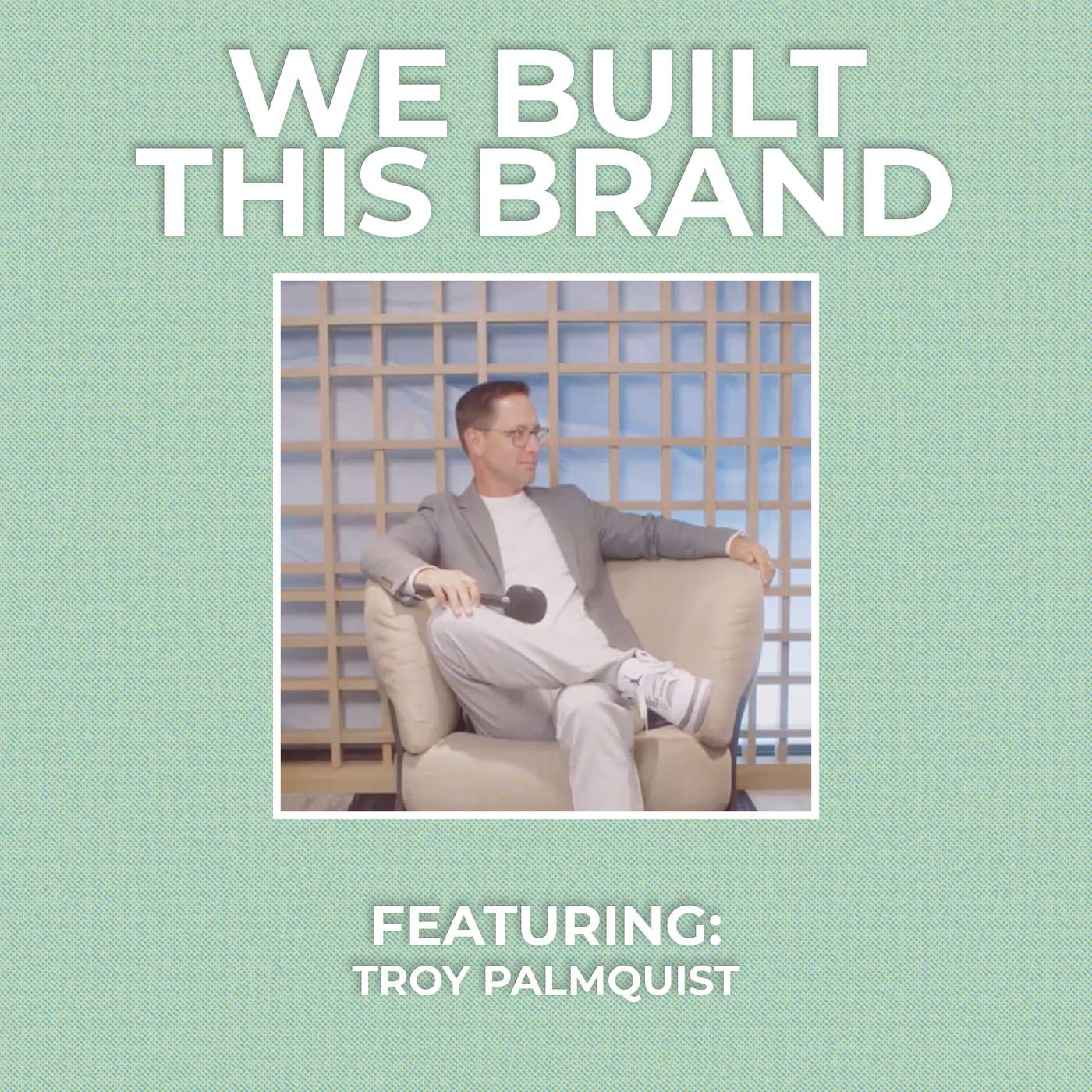
 In this episode of We Built This Brand, Chris Hill and co-host Adhrucia Apana sit down in Los Angeles with realtor, author, and speaker Troy Palmquist.
Troy shares his 23-year journey in real estate, from accidentally landing his first job at 20 to building multiple brokerages and helping shape the future of real estate tech. After a life-changing cancer diagnosis, Troy found new purpose in helping others grow their businesses with authenticity and intention.
Show Highlights:
(00:00) Introduction and Welcome
(01:08) Troy Palmquist's Journey into Real Estate
(02:58) Overcoming Challenges and Shifting Focus
(05:10) The Role of Technology in Real Estate
(09:28) Advice for Real Estate Agents
(17:29) Marketing Strategies and Authenticity
(20:11) Final Thoughts and Brand Admiration
About Troy:
As an executive-level growth expert specializing in residential real estate, Troy Palmquist brings creativity, agility, and strategic insight to drive successful outcomes for clients and colleagues. With a track record of representing thousands of home sales, Troy has held leadership roles as Director of Growth for eXp Realty in California, Vice President of Growth and Product Marketing for eXp Realty, and founder of two independent real estate brokerages. A contributing author for RealTrends, HousingWire, and Inman News, Troy shares his expertise on growth strategies, technology, and market insights. With over 2 decades of experience in the real estate industry across the western U.S., he has developed a unique and highly effective approach to working with buyers, sellers, and agents, helping them achieve growth and success in an ever-evolving market.
Chris: Alrightyy. Um, well, yeah, Troy, welcome to, we Built this brand. It's great to have you with us today. Thank you for having me. Absolutely. Glad to have you with us. And, um, typically on the show, you know, we're here to talk to you about, um, entrepreneurs and the creatives that are getting into this space and, um, yeah, it's just exciting.
Today we're actually in a different location. We're here in, um, Los Angeles, which is. Quite cool. Um, and I've got a co-host with me today, Arusha.
Adhrucia: Hi guys, how are you? Thanks for having me, Chris.
Chris: Absolutely. Arusha. It's a pleasure to have you with us. And, um, today we're, we're getting to talk to Troy Palmquist.
Um, he's a realtor, speaker and author. And, um, Troy, we're really glad to have you and just wanna talk to you about building your business, building your personal brand, building everything. Um. You know, that has made you successful. So, um, we'd just love to start by, um, just giving us a little bit of your background and where you got started.
Troy: Well, thank you so much for having me. It's great to meet you guys. Um, nice to meet you too. I've been in the industry, the real estate space, going on 23 years. So I got in at 20, so you could do the math on the age. Um, I stumbled into real estate accidentally by getting my hair cut next door to. You know, a real estate office and was looking at a house and the window and one thing led to another and ended up getting a job there at 20.
And, uh, you know, really kind of learning a lot about the industry right then and there, and kind of worked my way through and doing different stuff over the last 23 years. But it, uh, was not something I thought I was gonna stick with. Um, but, uh, it turns out I, I love it and wouldn't do a different. Sector of for a career.
Adhrucia: That's a, uh, just such a, such a, so always interesting when someone says, I'm not so sure that I wanted to stick with it, but I stuck with it. I was just giggling at the prospect.
Troy: I mean, I used to love to argue with my mom. I still do, but you know, I, so I, I thought law was like the right thing, but I hated school.
Um, so just it, uh, real estate, you still get to negotiate a lot and have all those. Best of both world, those conversations. And so yeah, best of both worlds.
Adhrucia: Ah, that's amazing. Now, did
Chris: you get a law degree or you just were pursuing that path? Okay. No, I
Troy: did like a semester at college and said, it's not the right thing for me.
Cool. So I barely graduated high school. And, uh, it, uh, just the education part, like growing up was a, a harder piece for me. So it was just, I knew that like the book Smart versus like being able to take the test, uh, law school was just never gonna happen.
Chris: Yeah. So, so you've been in this industry now for 20 plus years.
You're, um, what are you doing today? Like, where is your focus
Troy: now? Uh, my focus today is a little bit differently. So, um, in 2020 I had cancer. Um, thyroid cancer. So it's the easy one to get. Um, you know, but I, I started to look at life differently, uh, different perspective. Um, and instead of being in the, the spot where I wanted to build for myself and build for like, you know, go build another brand or build a brokerage or.
You know, a tech company. I wanted to be in a spot where I could really control my destiny and the, like, the time and the energy that I had. Um, 'cause I, I lose energy towards the end of the day. Um, and it's not something that I can control. Like, I could fall asleep with a Red Bull in my hand and be done for the day at seven o'clock, but I wanted to control like, the time and the energy and where I was spending it.
And, you know, in the real estate industry, your, your time and your energy is. What people think is unlimited. And so now what I've kind of like turned my energy and attention to is to be able to help other companies, help real estate founders that are building their brokerages or team leaders or technology companies that are, you know, looking at how do we grow to the next level.
So I get to help with that, like. That growth part, um, that creative part that, you know, how you built it type stuff, where you, I still get to go and feel like I'm, I'm building something greater than myself, but what I really want to do with the time that I have is, and the energy that I have is to be able to create a lasting impact for other people.
Gotcha. Um. And, you know, be able to provide value. So like, even on a call like this, or a video like this today, what's the one piece of information that we can give somebody watching that they can implement today that can change their lives for tomorrow?
Adhrucia: Action, action items. And you
Troy: know, when you look at technology, you look at this space, um, I think there's a lot of ways that you can provide value, provide help, provide knowledge, share, um, that can really help people get off the ground.
Hmm.
Chris: Yeah, so that's, that's interesting. So I mean, obviously cancer is a very serious thing and it changes your perspective when you're confronted with it. Um, I mean, personally, I'm even dealing with that in my own family right now, so I know. How that is. Um, so what w what was that pivot then from, you said real estate obviously, but then you mentioned tech companies.
What was that pivot into tech companies? How did that transition happen?
Troy: So I've had two real estate brokerages. Um, I started the first one in May of 2017, and then it, uh, had an acquisition in January of 22, uh, and got acquired by a larger brokerage in the Los Angeles area. And, uh, then I started another one, like an idiot.
And, uh, you know, so with that, I, I preface that because when I was. In real estate, I was always looking at different technology and you get approached by multiple companies, like all the time, Hey, do you wanna check this CRM out? Do you want this new lead source? Do you wanna do this? Do you want us to pick up your open house signs?
It just goes on and on and on. So for me, it was really, I was always looking at the new things, and it seemed to me that I was giving. Um, the sales person on the other side, more feedback on the product than like actually like signing up for it. Mm-hmm. Like, you should do this or have you thought about doing this?
And like, you know, that free advice.
Chris: Yeah.
Troy: Um, and then I started seeing people actually change their roadmap of what they were doing based on like a conversation. Um, and it wasn't until like a while later I'm like, oh, this is actually kind of cool and you can actually make money doing this and help more people, right?
Because again, my goal. In like my career over the past 20 years, I wanna help as many people have a positive experience buying and selling real estate as possible. Hmm. Well, if you're helping more people, you can do that. Like I knew what my cap was selling houses. I knew what the cap was selling at the brokerage, and now I feel like I'm able to help more.
So if I'm able to help these people understand why I wouldn't sign up to buy your product. But here's maybe why I would like, if you can change this and this, there's a, a bigger impact you can have there because I think a lot of founders, particularly in the real estate space, 'cause I think they see real estate as an open wallet for a lot of stuff.
Um, they found a company based on a thesis that they have, that the problem might not really be there. Yeah.
Adhrucia: And
Troy: it's because it's a product that they wanna build.
Adhrucia: Yeah.
Troy: Like is it really the right thing? Like I always wanted to build Tinder for real estate.
Adhrucia: Mm-hmm. Swipe
Troy: left to go to see this property swipe right.
And if it matches with like my significant other, cool, we'll see the house.
Adhrucia: I love that.
Troy: And, and two different two, I think two different companies have tried it and it hasn't ever like picked up.
Adhrucia: Yeah.
Troy: Well why, like, so, you know, if you look at it in this aspect of. You're solving for a problem that actually exists.
And that's where I think a lot of the, the great companies out there. Mm-hmm. Um, you know, there's a new one out there called Shiloh. Justin's the founder. Amazing concept because he was having this problem in his own team and his own brokerage, he solved for that problem. Mm. You have Real Scout founded by Andrew Flacker, like similar thing.
The saw a problem built for the problem, right? And that's where, over and over again, you see these amazing tech companies founded by people that were actually solving for a problem they had
Adhrucia: in the, in the current landscape. When, when, uh, a lot of the people probably watching this, they're gonna be people who are in real estate, starting in real estate, trying to build.
Real estate businesses, uh, as someone who's been there, done that grown something amazing and is now looking to the future, if you were to tell. Um, you know, real estate, uh, agents who are trying, trying to decide how to create some sort of structure using tech around their business. What are the maybe one, two, or three points you would tell them to focus on, um, uh, researching, whether it be ai, whether it be, we were talking about chatbots earlier, whether it be streamlining infrastructure.
What is the, uh. Space that you think not enough people are focusing on in the tech, in the tech integration to real estate that they should be paying attention to.
Troy: So if I was starting out or advising an agent that was starting out, I'd tell 'em to pick up the phone. Technology is never gonna replace the human interaction.
And the real estate space is 100% a relationship based business. You build trust. We're helping people with their largest investment. Of their life most of the time that isn't, shouldn't be left to technology to do that. Um, so I think that when you think about that, I think the best pieces of technology for the real estate agent was the CRM.
Adhrucia: Yeah.
Troy: And people say, what's the best CRM? Well, the one that you're going to use. Mm-hmm. Yeah. Hands down. And from there then it's like, you know, what's the email deliverability, what's the, the nurture stuff? I read an article about somebody saying that like, email marketing has been dead. Mm-hmm. But if you bring it back to life within your database and you're providing value to your database, then they're gonna be there for you when they go to buy or transact in real estate.
But you can't just be like, do you wanna buy a house? Do you wanna buy a house? Yeah. It's like, here's my favorite salad dressing. Just tried it. Here's a bottle. Like, or, um, you know, here's what's going on in the local market, or Here's what's going on for the 4th of July. Right? You're providing value outside of the transaction.
And that's where I, I think agents really can utilize that stuff. Um.
Adhrucia: I love that. I love the refocusing on the things that work. Instead of getting distracted sometimes by all this invasion of opportunities and things that you should be paying attention to, we forget that the most important part of a lot of our businesses is having a captive audience and being able to go back to them and being able to build a long-term relationship with them.
Troy: is a relationship based business. I mean, but so much is that is what we do in general. Mm-hmm. My wife and I just bought a new car this weekend. And what did we do? We went back to the person that we bought it from five years ago.
Adhrucia: Yep.
Troy: Like, because we knew what she wanted. It's a relationship. This industry, so much of life is all relationship based and you lose sight of that.
And you think that technology or this new lead source or any of that stuff is gonna replace it. It's not gonna happen. You get, you get a Zillow lead, right? You search Zillow, you probably search Redfin, wherever you are. If you're searching and you get this inbound call from a stranger that wants to see a property, the best thing that you can do is go turn around the camera, hold the phone up and say, Hey, send 'em a text message afterwards.
Hey, it was so great meeting you. I wanted to put a face with the voice and the name. I look forward to helping you with your transaction.
Adhrucia: Done. I've signed, signed with Troy. He is now my real estate agent. But now it's, but now it's,
Troy: it's, the relationship is there. It's not just this phone call.
Adhrucia: It's so important.
Technology
Troy: isn't gonna do that.
Adhrucia: It is not.
Troy: So utilizing technology in the ways that can actually help you do business is where I think that comes in, where it's, it's nurturing. Now you've got all these new email, like things cool. How busy is your inbox really, that you need an email. System to go and respond and help you think of what you want to respond.
Mm-hmm. Which is not a fan, like you mentioned chatbots. Yep. Cool. The average real estate agent sells three to five transactions a year, max. You need to tell me you need to put something on the website or on your, your signs that the person can go and chat with you. Yeah, I just haven't been sold on that yet.
Like why? Yeah, I get that. Like when I was selling, I carried a lot of houses for sale and I had online chat, you know, where the online chat went
Chris: directly to you.
Troy: Directly to me. And if I didn't respond at midnight now, and, and I know you put this on there and that actually goes on the live thing. I'm gonna get a lot of pushback on that.
Yeah. And, and again, I actually talked to a company last week that I, I talked to for the first time and I'm like. Wow, what you're saying is what it's doing is actually pretty cool because I've heard the horror stories of like, somebody's online and they get the chat and it sets the appointment. Well, the agent never got the, got the notification that it was an appointment set to see a house and it didn't go to the listing.
Appoint listing agent to set the appointment. Buyer shows up at the house, Hey, nobody's here. Yeah, well that's because the chat went and did more. And when you look at real estate, there's so many different things that. Um, we can get in trouble for, with fair housing being saying that it's walking distance for those that can't walk, that's a fair housing violation or it misquote square footage or it misquotes that it's on a sewer, but it's really on septic.
Adhrucia: You're taking on a liability. You don't leave that
Troy: up to chance by an AI bot.
Adhrucia: Mm-hmm.
Troy: Right. I don't know. I mean, and it's, and I think there's, the technology's evolving, like. I had a suit made and it's green, and I was speaking at a conference and I wanted to like people to understand that technology is evolving so fast.
It's actually evolving in dog ears. Mm-hmm. Well, the suit's got dog liner inside of it and it's little puppies
Adhrucia: and.
Troy: But like you think about it now and you think that how fast is technology evolving? It's in dog years, like technology that started a year ago that hasn't advanced with it is stuck. Mm-hmm.
Right? If you are in the real estate industry and you're not like continually looking at the technology that you're using, like real estate agents, again, I mean, they'll look at stuff and they'll buy it. Like I wrote an article a few months ago and it was that like. We need to not add more technology to what we do right now because again, it's evolving so fast.
Like stick with what you have and actually use it. But remember fundamentally picking up the phone in this industry is the best way to do it. Can.
Adhrucia: Where can people read your articles? Uh,
Troy: a lot of them publish on inman.com. Mm-hmm. Uh, and then I republish a lot of them on, uh, troy palmquist.com, which is my name.
Okay.
Chris: And, and as just as far as being an author goes, you're also writing books, is that correct? Uh,
Troy: I've
Chris: written
Troy: one. Okay. Um, that was in 2020. It was 20, 20 19, I think. Uh, it was called Independent. Uh, and it was about the independent real estate model versus like the franchise or the big boxes and how, uh, independent.
But no, I, I'm working on like getting myself to write a newsletter. It's been a, a, a long process, but that is, uh, slowly in the works. Thinking about writing on Substack, just can't get myself. We have
Adhrucia: a publishing division if you wanna publish that next book.
Troy: Oh, maybe.
Chris: Um, but yeah. That's cool. That's cool.
Um, LinkedIn, by the way, really good for newsletters.
Troy: Oh, I love LinkedIn. LinkedIn rocks. I think it's one of those things that, uh, people don't really understand Itand how to use. Yeah. And it's, there's a lot of value in, in LinkedIn, especially with your network. Mm-hmm. And being able to share your thoughts on something and connect with people.
Adhrucia: Yeah.
Troy: Way better than. Um, Instagram or Facebook? A hundred
Adhrucia: percent.
Troy: Um, especially if you're thinking about like, you know, where your target demographic is. Um, if you're trying to deal with high net worth individuals and, and market to them, they're not on Instagram like just as much as the conversation is around social media.
You want to connect with people, it's through LinkedIn. Um, and even when I was prospecting and I would go after like expired listings. Yep. It was very much through LinkedIn. Yeah. Uh, because I knew that the high fluent, you know, and that they were on there because they were professionals and I knew that if I sent them a message saying, Hey, I didn't wanna call, I didn't wanna bother you, I know your time's valuable, I was gonna reach out to you.
Adhrucia: Chris, do you have a final question or can I, can I ask one?
Chris: You can, you can go right ahead. Are you sure? I've, I've got one more final one, but you go right ahead.
Adhrucia: I just wanted to ask, uh, as you, as you're talking about tech and tech integrations and going back to the old school personal touch, tell me how that, that when we look at the world of social media and, and multiple points of contact, how has marketing changed in your world over the last.
Four or five years. Um, you know, I think that's something that a lot of people who are real estate agents are trying to tackle. And me as a consumer constantly trying to understand like where I'm finding houses, how I'm finding new real estate. What do you think is your, your one point that you would want to drive home about the changes in marketing?
Troy: Well, I think a lot of that's changed over the last month. Um, with some of the stuff with Compass and some of the stuff with Zillow and this, I wrote an article I published July 5th, if you wanna go look at it. But it's all about the industry infighting of what's going on right now, um, with our exclusive listings and our off market listings.
Um, you know, I think it, but to answer your question, you gotta market in the way that's authentic to you, if that's great advice. If it's. If you're an Instagram person and your sphere of influence is on Instagram and you're authentic with it, do it and go all in. Um, you know, back to the newsletter I recently saw that Constant Contact has this amazing platform for real estate, ab test.
You can do all this stuff within the newsletter. I'd never known about it. Um, but it was one of the things that like got me excited about doing that. So to look at like. Look at the way where the newspapers were be, you know, even five years ago, the newspaper were still a little relevant. Um, and I saw this, this empty box.
There were homes and lands, magazines was a big way like that. You would market your house and they were like the Bible, like you wanted to be in it. Depending on what market you were in, it was empty. And I was thinking to myself and I, I went on Instagram and I posted it, and it's gonna turn into an article now about like, you know, about marketing, because if that's dead, where did the views go?
Because again, it, it really defines like your marketing plan by who you're trying to get to. Um, but again, I think that the authenticity piece is the, is the critical part of, of how you reach the person that you're trying to reach.
Adhrucia: Excellent advice,
Chris: I think. I think that's great advice. I mean, that personal relationship means a lot in any business, and I think that.
Um, yeah, especially when it comes to buying a high value product to begin with, like a house or, you know, a car or anything. I mean, that relationship really matters, so. That's awesome. Well, Troy, thank you so much for coming on today. Oh, thank you for having me. Um, before we wrap up, one last question I always like to ask this is we built this brand.
Um, question I always like to ask at the end is, what brand do you admire the most right now? What brand do I admire the
Troy: most right now?
I don't know. There's a, I think there's a lot of brands out there that are doing stuff really well. Um, I think. There's brands that I would probably not ever buy that I follow on Instagram that I, I really think that their marketing and what they're doing with their Instagram is, is unique in ways that it captures my attention to go and figure out like, what is this brand doing?
Adhrucia: I do that too. Um, I
Troy: think there's. Um, you know, some of the major big brands are kind of, I think trying to figure out what they're doing with, with how to resonate and be relevant. Um, and then I think you look at just some of the, like your local mom and pop stores that are out there, that are, that are crushing it with their individual like marketing plans and the ways that they reach their customers.
I don't know if there's one that necessarily sticks out to me. Um, I think Formula One's doing a really good job right now with their marketing. I'm a
Adhrucia: hundred percent.
Troy: Um, and their partnership with like Lego and how they're expanding into, uh, younger demographics and different demographics other than like very smart, you know, very much the European race fans.
I think they've done Lego's. Done a really good job, I think with that. Mm-hmm. Uh, and I don't know who really. Drove the relationship, no pun intended. Um, but I think that that's a, a really unique way that they're doing stuff right now. I think Lego probably, um, I mean for being, almost being bankrupt, what, 20 years ago And going outta business.
Yeah. To turning around to having this massive organization and operation. Off of Little Bricks.
Chris: Yeah.
Troy: Um, I mean, you look at even now their relationships with, um, Jurassic Park and, you know, all these other things that are coming out. I mean, we bought that silly little tuxedo cat and my son had to have it to put together and I thing was a nightmare.
But I think that's a, one of those brands that you look at that's like evolve or die. That's evolved really well.
Chris: Yeah. Yeah. My son's at that age where he'll be like, dad, here's the McLaren formula one Lego set. We need to build this Yeah. Mean by we, he means me. Yeah. Well,
Troy: I mean, my wife, um, does a lot of the Legos in the house.
Yeah. Um, I somehow I did the. Technic like water dumping plane. Mm. And I swore that off ever again with the technics. Like it's just way outside of my, uh, yeah. But.
Chris: That's cool. Well, thank you so much again, Troy, for coming on. Where can people connect with you if they wanna learn more about you and your writing and you're into Yeah, I think LinkedIn's
Troy: probably one of the best places.
Troy Palmquist. Um, my Instagram is a love-hate relationship. Okay. Um, the stories are a little more fun, especially during school. My son and I do a jam session in the, in the school parking lot from, you know, eighties and nineties and early two thousands. So you get a little bit of that, uh, flashback to nostalgic music.
Chris: Awesome. Bruce Roy, thank you so much for coming on.
Troy: Thanks for having me, guys. All right. Take care.
Adhrucia: Thanks for being here.


