
From Budweiser Frogs to the Ability Machine: How Creativity Unlocks Hidden Talent with Tom Woodard


 Youtube Music
  Podchaser
  Pandora
  Goodpods
  Podcast Addict
  Deezer
  PlayerFM
  Castro
  Castbox
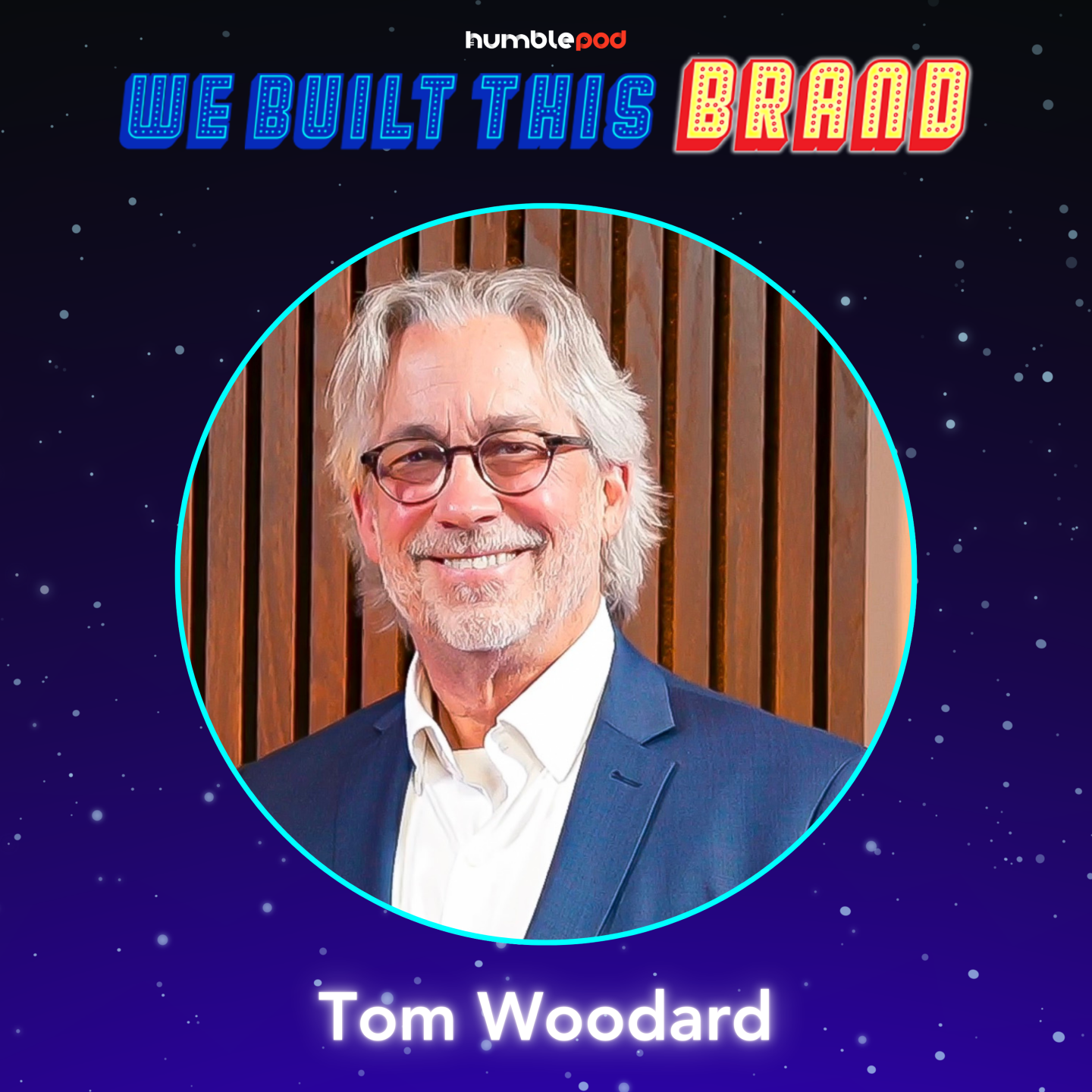
 Tom Woodard spent decades shaping iconic advertising, from voicing the famous Budweiser frogs to producing national jingles for brands like Coca-Cola and McDonald’s. Now he’s channeling that creative experience into something bigger: The Ability Machine, a marketing initiative that intentionally collaborates with creatives with disabilities.
In this episode of We Built This Brand, Tom shares his journey through the golden era of advertising, the story behind one of the most memorable Super Bowl campaigns ever, and how giving people a seat at the creative table can unlock incredible talent, confidence, and community.
Show Highlights:
(00:00) Welcome and Introductions
(00:29) From Guitar to Jingles
(02:14) Iconic Campaign Highlights
(02:42) Budweiser Frogs Origin Story
(03:44) Animatronics and Super Bowl Magic
(04:54) Building Studios and Agency Life
(07:10) Founding Ability Machine
(11:51) Aha Moment with Goo Goo Clusters
(14:35) Hiring and Empowering Creatives
(22:10) Future, AI, and Wrap Up
Chris: Welcome to We Built This brand where we pull back the curtain on the people, the ideas, and the sometimes challenging processes of building something that matters. I'm your host, Chris Hill, and today we're talking to Tom Woodward.
Well, Tom, welcome to, we Built This brand. It's great to have you,
Tom: Chris. It's great to be on, man.
Chris: I, I'll just say it. I mean, you, you've got the microphone, you've got the voice. Like I, I have a feeling you've got maybe a little bit of a background in radio. Tell, tell me about where you got started.
Tom: I'll go back to kind of the beginning, if that's cool.
Chris: Yeah.
Tom: I stole my father's guitar when I was eight. So that, that kind of was my beginning. And, uh, I would sit in my room and write songs and wanted to grow up and be James Taylor and, and, uh, you know, that was, that was kind of my goal. And I met a guy that was doing jingles in, uh, in the eighties, late eighties.
And he, uh, he said, Hey man, you ought to come to work for me sometime. It was at a party on a Friday night. I was in retail and he, um, I quit my job Saturday. Showed up at his door on Monday morning and said, uh, I'm here. And he said, do I hire you? And I was like, yeah, man, you did on Friday night. Must had a few too many beers.
But, um, uh, he said, if you can sell something, I'll let you write it. And so there was a, a beautiful moment right there in the eighties where I, I saw, uh, creativity and commerce sort of come together. And, uh, I got in the jingle business and about two weeks later, I, uh, had the opportunity to write a, a jingle with a guy at, uh, for a little school called Brunell College.
Uh, and uh, we wrote a thing called Make a Move for Tomorrow, and that was the beginning of my jingle career, which was, um, oh, I don't know, almost 30 years, 25, 30 years. All the jingle World changed in 2000 when they started using existing music. Uh, but I had a really fun career doing, uh, voiceover work. Um, embedding myself in creative teams around the country and selling and, and producing music.
Chris: Wow, that's, that's really cool to me. Um, you know, obviously working in audio and stuff as we do at Hubble Pod, there's just this, um, fascination that I always have with, um, people in the audio world, especially jingles and that creative side of things. 'cause, you know, you grow up with it, like, it's just, it's a prevalent part of your background to hear these songs and jingles that come along from time to time or.
Are there any, um, any noticeable ones that, that you may be recognized for?
Tom: Yeah, we did. Uh, you know, I've been really blessed to work with a lot of cool people all over the country. We worked on the always Coca-Cola spots out of Atlanta. Uh, Jimmy Jam and Terry Lewis actually wrote the spot, but we got to produce all the country versions and work with major artists that way.
And we did Dollywood's Jingle for about seven years, which is a lot of fun to work with Dolly every year. She's an amazing human being. Um, worked on the, somebody, uh, did somebody say McDonald's campaign with Bob Mullo out of DDB Needham. Some days were made from Michelob out of, uh, outta St. Louis. And then the thing everybody, you know, back in 95, we were called in late 94 by a creative team out of, uh, St.
Louis at Darcy that said, Hey man, can you make a frog, say Budweis. And, uh, I said, why don't we do three? And, uh, they had pencil drawings, put 'em with the audio track we created. And um, I ended up being the voice of Bud of the, of the frogs and my buddy Ronnie Brooks and Brian Steckler were the voices of Wise and her.
And, uh, it lasted about seven Super Bowls. It really taught me a whole lot about the impact of advertising at that point.
Chris: I remember that was like, and I, I'm not just saying this like. Every year when the Super Bowl would come on. Those were the commercials. I look forward to the most. I, I've always been, as a kid, I was a big fan of the Muppets and stuff like that, so the character aspect of how they built all that stuff always fascinated me.
And then as the years progressed, you know, I think they moved more towards CGI, but. It was a, it was an interesting evolution in marketing and advertising at that time, and so that's really cool to say you were a part of that.
Tom: Yeah, it was fun, man. The very first spot was done by a guy named Stan Winston, and, uh, the, the agency had hired Stan.
He had just completed Jurassic Park in Congo, and he created what's called animatronics back in the day, pre CGI and AI and all that. Got to fly out to LA and work on the Warner Brothers set. And six guys had to manipulate each of those frogs. It was amazing watching that work and, and at the time that, you know, Stan was huge.
I mean, those movies were really big and so I was just humbled as a Nashville boy to go out to LA and, and get to hang out with those guys. And then, uh, we got to work with Gore Binki and in spots two and three, who ended up doing the Pirates of the Caribbean movies. And so it's just things like that that.
That make advertising brand work, uh, audio production work really fun. It's the people you get to work with.
Chris: Yeah. That level of creativity and being able to say that, I mean, Stan Winston, I, I know Stan Winston just as someone who, um, again, on the creative side, like in addition to audio, I made costumes for years.
And so the stuff like cosplay characters and things like that. So seeing, like knowing that that was a part of it too, I could just imagine how. Magical. That was how cool that must have been to, to be a part of that. And that's really neat.
Tom: Yeah, it was really cool.
Chris: As you developed all that, have you pretty much done, I mean, was this, was this business of yours just freelance doing this all this time?
Or were you part of an agency? Like what kind of, um, career-wise, like where were you in that regard?
Tom: I started, um, with this guy that, that kind of hired me into the jingle world. I, I worked with him for, oh, probably three or four years, and then shopped different shops or moved to different shops, was sort of the biz dev guy.
Creative guy. And then I ended up starting a couple of small companies. Uh, we had studios in Nashville, Chicago, uh, and so yeah, I was always on the production side of things. We worked with agencies, they were our clients. Um, I always wondered why agencies didn't have in-house broadcast and in-house music.
And my, my bosses and partners would always say, stop wondering that and let, let them hire us. And so, um, we had a, a little, uh, a studio apartment in, uh, downtown Chicago and that became sort of a base for us to get to work on a bunch of great Kellogg spots and McDonald's spots and SeaWorld and some, just a lot of fun stuff up in Chicago.
One of my favorite broadcast, uh, agency markets in the country.
Chris: Yeah, that's, that's, that's a good way to put it. 'cause I've often wanted the same thing running a podcast production company. It's like, why don't you do this in how, wait, no, I'm not gonna ask that question.
Tom: Don't ask too many times. That's right.
Chris: I mean, ultimately it comes down to, some of that stuff can be Feast of famine, right? Like once you've written a song, you might use it for a year or two, or. The Budweiser frogs, you know, being used for seven plus years in their commercials and even longer, just in terms of how long they were able to make those ad runs last.
You know, I, it makes total sense to me why, why we do the freelance folks in this industry do what they do and have that place in the industry.
Tom: That's right. And another cool anecdotal story is it was only supposed to be one frog spot, and it was gonna be things throughout history where you had heard the word Budweiser.
And I don't know if I'm supposed to tell this, but I'll tell it anyway to your listening audience, but, um, we had one where they were gonna be building the pyramids, Budweiser, and then you had New York City traffic and you had all these different places that we had heard the brand Budweiser, uh, over the years.
And the frogs hit in the Super Bowl nine, five, and. As they say, the rest is history. It was, uh, it was an amazing, humbling run if you'll, um, very humbling.
Chris: So you've grown over the years doing all this, and now you are running an organization called Ability Machine. Tell me, tell me more about that. How did that get started?
Tom: Yeah, about 10 years ago. Um. I had my own little ad agency, like I said, you know, um, the Beatles revolution and disco music for Burger King and all that sort of took over the jingle industry. And I got into the agency business and was blessed to work with several agencies in Nashville and helped build those.
Started my own thing about 10 or 12 years ago, uh, kind of rebranding a big convenience store chain here in Tennessee called Dailies. Went to twice daily. And alongside of that, my brother and I started a little company working with people with disability packing boxes, uh, and doing some logistical stuff.
Started, uh, that company and, and I fell in love with, working with people with disability. Kinda realized that I'd probably been working with people on the spectrum all my career. I mean, I think the, the world, you know, if you go to agencies, they've got that one floor where creatives create. And, uh, and that was this ping pong table and a punching bag and all the crazy dartboard and all that stuff.
And I think a lot of those guys were probably on the spectrum and didn't even know it. So when I started working with guys with intellectual disability, like I said, I fell in love with it. And I, and then I got mad at myself one day thinking that only people with uh, disability could pack a box, clean a, uh, a table or stock a shelf or whatever.
And so we had that on one side of this warehouse studio that we have here. And, um, the other side was the agency. And I said, what would you do guys if you came to work at the agency? And one guy said, I'm making a movie. I'm writing a book. Uh, another guy drew an illustration in about 30 seconds, it was blew me away.
And so I bought four IMAX and put 'em along the back wall and started letting these guys create. And it was amazing to watch what creativity did for someone with an intellectual disability. And um, so we saw amazing things happening, just God, things happening where, uh, people were coming out of their shell.
They were building confidence and community. And so we started a little company called On the Avenue, and it was just a daytime studio where people would come and create to build confidence in community. And then we formalized that as I started bringing some of those folks over to real live setting and real live work that we were having at.
Uh, whiteboards and, and conference tables. And, and the window of someone with that intellectual disability really opened a, a whole my eyes to a whole new world and really reopened my eyes to some of those guys, like the guys that called, uh, to say, Hey, let's make a frog, say Budweiser. And I think those windows, um, Hans Asperger has a, a statement that says, uh, for success in science and art, a touch of autism is essential.
And so I think it's a different window that, um, brands hire marketing and advertising people to give them, uh, they've got great business acumen, they've got different things, but they may not have that creative messaging window. And so that's kind of how we got into it. And then about a year ago, we decided to make this really official and about.
A few months back, uh, the good folks at Raven Public Relations and um, at Lewis Advertising kind of helped us build the brand together. Uh, we had this name, the Ability Machine, and, um. You know, we, we got started and, and it hit the, the airwaves and it's being very well received. We're, again, very humbled by the reception.
Chris: That, that's fascinating to me. I've always felt like, just in my experience with those that are handicapped in some way or, or disabled in some way, that quite often they're not. They're, they're not at the level of inadequacy that I think a lot of people would've perceive just based on what they're defined as.
Um, especially with autism and things like that. Um, I mean, we, we do a lot of work in tech. I, I mean, we, we see people in that spectrum and dealing with that, that, you know, tech is the perfect. Place for them. And they're very smart, very intelligent people and I think that it's really cool that in the creative world you were able to give them opportunities to do that as well.
'cause that's definitely gonna be more empowering than just moving boxes around or packing things or being limited to such a small, um, sphere of, Hey, you can only do this because you have this disability. I think that's really neat.
Tom: Yeah. We see it as not a zero sum game. I think so many people thought, well, if you can't complete the job 100%, you shouldn't be at the table.
And what we say is, Hey, just we've got a seat at the creative table for you, so come in and bring your ideas and, and we'll finish 'em together. It's a, you know, Nashville's a very collaborative town. You're just down the road from us and you know, it's an old co-write town of songwriters. And, uh, so we just think collaboration is, you know, the way that it's always been an advertising, why not allow somebody with a little bit of a different window to bring their 10 to 20 to 30 to 50% to the table, and then as a group, let's finish the job.
So that's how we work with existing agencies and existing in-house, uh, marketing, uh, departments and brands.
Chris: What was the moment? I always like to say, you know, we, we always have this moment of, um, confirmation that we're on the right path, that we're doing the right thing. Um, you know, call it the voice of God speaking to you and confirming this is what you're doing.
Call it, you know, just a good product market fit. Um, what do you think that was for you?
Tom: You know, it's, it. I blame God and give God all the credit for this every day. And, and so we'll, we'll, we'll throw it his way. Um, but, but what I would say is we, we did a, a redo of a store here in Nashville for Gogo clusters.
It's a little candy bar. Mm-hmm. That, uh, that has all kinds of ingredients in it. And we got hired to come down and kinda look at, they were doing a retail store down off Broadway here in Nashville. So I was consulting them for about a year. And they were one of the first people that we actually brought our guys from Army Avenue to the table in a real marketing situation.
And one of my guys was drawing purple Gogos and doing different things. But they all had this amazing window and inputs into the conversations we were having around the creative table. And so I would say that was the brand that brought. Um, all this together for me in sort of an aha moment, if you will, uh, that you're talking about, where it was like, man, I think this could really work.
Uh, the, the brand itself was kinda like, what's going on here? And I explained to 'em what we were doing and they loved it. They had a great heart and, um, we, we, we did video work for them and rebranded the store and did a lot of different design work and it was a very meaningful not placated work, uh, you know.
And I thought, again, back to old agency days, uh, Chris, you know, not every writer, uh, creative director, art director team got their campaigns, uh, to, to air. Uh, so why would we just disallow someone from having an opportunity? Uh, whether it made it to error or not. So, um, that's kind of the, I would say, goo goo clusters.
I would, I would give them the credit and blame for the whole thing thanks to the Bradley family.
Chris: I mean, I remember goo clusters had a resurgence a few years ago, so that's probably tied to what you all were doing then.
Tom: A little bit. For sure.
Chris: That's really cool. Want to launch a podcast without the hassle?
Humble pod makes podcasting easy from concept to launch. We'll help you create a professional engaging show, already have a podcast. We handle editing, show notes, transcriptions, and even video production so you can focus on your content. With our tailored services, you get high quality production, seamless publishing, and expert support at every step.
Whether you're starting fresh or leveling up, humble pod ensures your podcast sounds amazing and reaches the right audience. Visit humble pod.com to get started today.
So how does one, um, get involved with, um, the ability machine? If, if, if you say you've got a, a bright young, you know, guy or gal that wants to be involved, um, how does that work? How do, how do you hire for that?
Tom: Yeah, it's a couple of ways really. Um, it's funny, when we started being an employer pack in boxes, uh, you know.
People kind of flocked to us and, and said we're, you know, most people with disability, about 85% are unemployed or underemployed. And there's a reason. I mean, it's tough, uh, to, to be very competitive in the marketplace doing anything, uh, with a team of people with dis with disabilities. And, um, what we found though was, uh, through on the avenue, we were training people in video production and editing.
Um, design and all of that, and, and they matriculated over into real work and it was like, well, great. So we have sort of have a training ground and on the avenue, but then other people were introduced. I've got, um, an illustrator out of Philadelphia. I've got a graphic designer out of, uh, Fort Collins, Colorado.
I've been around this game for a long time, and so once we kind of hung that shingle out and, and this word's getting out, people started sending us their books and their reels and stuff. And, and a lot of guys, it's really interesting. A lot of guys can do the work. It's maybe they can't go get the work, maybe they don't have the social skills to work with the agency or with the brand and bring that to fruition, but to complete the work.
Um, they're, they're a great partner and so, um, we help. Bring that to market. So literally people just started calling my phone or stopping by our studio here in Nashville, or, you know, sending me a reel, uh, through email. So, uh, we, we found people all, all over the place. And what we found is one of our guys says this, it's really for, it's a great line.
And he said, y'all ain't ready for my creativity. And I felt that was so cool. He said that one day he is about a 60-year-old guy who had never been asked to be creative. And so he had the 60 years of creativity built up into him and, um, and, and it just comes out every day and some amazing work he's doing.
Chris: Yeah. Yeah. What, um, what kinda work does he do, if you don't mind me asking? I'm
Tom: curious. Yeah. He does colorization in and, and illustration. Uh, he, uh, we've created a, a, a character called Juan that is, uh, one of his kind, a rap alter ego, and he does video, uh, editing and he had never used a computer. And so to see that kind of work.
Change. And, and, and he, he may work alongside some of my guys that are over at, uh, the Ability machine. And every now and then, you know, you punch a few buttons and, and he's a part of the team. So again, it's, it's about opportunity. Somebody gave me an opportunity many years ago to, to uh, start blade editing tape and start, uh, doing voice work and, and if I hadn't had that opportunity, then I might not have had a career in it.
Um, we don't promise everybody a career in it. Why not? I give everybody an opportunity, and that's what this is. Uh, this, this company and this kind of mission and ministry is all about.
Chris: That is really cool. And, and I noticed you called it a ministry too, just, um, I'm curious how that also plays into this business.
How it, does it have something to do with how it's structured or your heart for servicing God through this? Like, I, I'm just really curious like what, what element that plays in it too.
Tom: We started all this, we weren't a bunch of counselors that wanted to use creativity and say, Hey, let's draw a rose today, everybody and all that.
We were really creatives that sort of started counseling. And so families would bring their individuals or their adults to us and I would say, look, I'm gonna mess things up big time. I'm gonna use the wrong words. We're gonna, we're gonna say the wrong thing, but we're gonna love them like Jesus would.
That's what we would say. And we don't have a baptismal in the agency. We're not converting people, but just the teachings of Christ teaches us to, to, to love each other, uh, as we love ourselves. And so, so that was kind of the methodology. And so, uh, the ministry is just to be kind and, and be opportunistic and be, um, generous with our resources and our gifts.
And so, um. I think it's more of a, a, a thread through the, the fabric of our company than it's a part of our, um, you know, our logo and our part of our brand that we, that's public facing, uh, kind of a quiet under the, um, uh, you know, we just treat people right. I think that's the main thing.
Chris: No, I, I understand you don't necessarily have a, a giant Jesus fish on the, on the side of the business or anything, but you're, you're, you're doing what you're called to do.
Tom: That's right. That's great. Well put Chris. Thank you. I I may write that one down.
Chris: Well, we, we have it recorded so you can come back and find it, so. Oh, that's awesome. Well, that's, that's really cool. So, um, you, you said that you landed on the name the Ability Machine and that Lewis helped you all develop that.
Tell me a little bit more about that process and how you came to, um, name your business, the Ability Machine.
Tom: Yeah, it's great. A really good question. Um, I had it written on my board. Um, my, my, the holding company that I have is called Westwood Avenue that birthed on the avenue. And then I'd always, as I started working with guys with disability, had the words, the ability machine written on the board, uh, in my office.
Raven came in one day and said, what's that? I was like, well, if I start an agency, uh, here in my latter part of my life, I, I think that's what it would be. And we would intentionally hire people with disability. And, uh, they took us to Lewis. And Lewis said, you know what, I, the machine, it's just not a, that, I don't like that word.
That's too, uh, clinical and too steely. And you know, these are human beings. And I was like, yeah, but when we put 'em all together, man, it's a machine. And so they brought us four or five designs, beautiful work, Robert and Nancy and their, all the, all the team at, at Lewis were, is just amazing. And we sat down and looked at one of the color schemes and one of the, one of the, uh, actual logo pieces and kind of married those together.
It's a triangle with three circles and, and it's everybody working together to create a synergistic look and feel. And so. Everything we do is intentionally working with people with and without disability or with and without creativity or whatever, bringing different windows and different folks together to accomplish the final, uh, look and feel of whatever campaign we're working on.
And so, um, the brand, uh, definitely, uh, if you go to the ability machine.com, you can see all that there. And, and the team at Lewis just knocked it out of the park. They're phenomenal. And then Raven has gotten us all over the country right now, and I'm so blessed. Uh, we're on your podcast today and, uh, couldn't be any more happy.
Chris: Well, yeah, I mean, we're happy to have you here too. I always love when I, when I, um, read a little bit about what you were doing with the, the ability machine and everything, it just really fascinated me. I've, I guess, accidentally fallen into, um, times in my life where I've had the opportunity to help with.
Um, you know, the disabled and the handicapped and things like that. And it's always been an inspiring thing to be a part of, and it's always been something that I've, I've come to really enjoy and has been really satisfying. So, you know, as, as a younger entrepreneur, it's really cool for me to see you going, Hey, I've gotten to this point in my career.
It's something I've always had a passion to do, and. Now we're getting the chance to do it too. 'cause it just shows me what other options for, I mean, genuinely ministry, helping other people and you know, doing something that's beyond yourself and beyond your business for other organizations. So I think it's really cool.
Tom: Thanks man, I appreciate that. Uh, there's a book. By David Brooks called Second Mountain, an amazing book, uh, about we built our first mountain for ourselves. I was a very selfish young man, just like a lot of people, you know, out building a career, doing things, uh, for me. And, uh, yeah, it's, it's awesome when you can do something that's productive, that meaningful, and, uh, also serves others.
It's. It's really humbling and a lot of fun to sit back and watch.
Chris: Absolutely. Absolutely. It is. Well, as we look towards, um, the future, where do you see, where do you see this organization going and how do you see it growing?
Tom: Yeah, it's a great question. I, um, you know, I, I've, since this, the, uh, Raven put out an article in, in Fast Company, which was a, a really strong article.
Uh, and we've gotten calls from Toronto, London, New York, uh, with interest, uh, of wanting to, to work with folks. We don't wanna be an agency of record. Um, I'm not, we're not buying media. We're not, um, you know, we're not doing a lot of the traditional things in that regard. Don't wanna hold hands every day.
We're really a project based company to, to strategically employ people with disabilities, to support. Ad agencies with their work and to support in-house marketing firms, uh, with their work. And so that's kind of where I see it growing. I don't know that we'll ever have other offices maybe. Um, but it's, um, you know, the, the work is growing here in Nashville and Nashville is, is growing as, you know, being down the road from us.
Uh, it's an amazing, uh, thing that's happened in the last 10 years, uh, being a native. Just don't even recognize my city. So it's, I, I, I would see us continuing to grow inside of ad agencies and inside of, uh, brands as they bring things back in house.
Chris: That's, that's a, that's, I mean, that's a really good place to be right now too.
Mm-hmm. So,
Tom: yeah.
Chris: Feels good. That's awesome. Well, very cool. Well, Tom, I always have a couple of wrap up questions before, um, before we get done here. Um. And these are fun questions to a answer to. So just, uh, get, get excited. Um, good. First of all, before, before we get into the, um, the fun one, um, what is top of mind right now for you as you look through the industry?
I mean, how, how is your team like potentially using AI or where do you all stand on that? 'cause I could see some really interesting like, applications for that with the people you work with.
Tom: Yeah, it's, you know, I think everybody. Was scared of ai. I think we were all just like uhoh, what's coming down? I think it's just another tool.
It's a great tool for someone that can do 20, 30, 40, 50% of the work. It's a great tool to go and research. It's a great tool to build and throw spaghetti against the wall. Um, I'm still a believer in human beings sitting and working together. Uh, but if you have a tool like that and it can get a lot of the work done in a timely manner and focused, it gives someone with a disability less.
Of a disability and gives them more of an ability. And so I, I think ai, we're learning to use it. Uh, we just created a whole series of commercials and it was a mixture of live production, uh, and AI imagery. And, uh, they turned out to be very funny for a, a startup clothing company here in Nashville. If you can teach an old dog, uh, like me to, to use, uh, AI and to kind of.
Think and dream. I'm, I'm kind of a vision guy and a, and an idea guy, but what a better tool than to help bring your, uh, to bring your ideas and your visions to, to life. I don't think it's replacing jobs. I think it is making people that aren't scared of it, uh, stronger and better. So that's how, that's kinda how we, uh, we look at AI right now and, uh, again, I think it makes all guys with, uh, and girls with a disability, um, it gives them some tools that they haven't had before.
Chris: Yeah. It's fascinating seeing where it's going, and I agree. I think it's, it's could be a very powerful tool used the right way. Yeah. Well, last question for you before we wrap up. Um, what brand do you admire the most at the moment?
Tom: You know, I went to the one group, um, of some meetings and got to hear the guys from Liquid Death, uh, talk.
And, and I think, you know, we all want unabated creativity. Sometimes, you know, please don't look over my shoulder, let me do what I want to do. And the story of four or five guys sitting in a warehouse just creating. These crazy spots and taking and selling water, uh, you know, it's delicious water. It's, it's, uh, it's cool water.
It's fun water, but what a brand they've created around something God gave us, you know? And so I, I'm, I admire those guys. I don't know that, uh, you know, I may not fit their mo of what they're, what they're, uh, sitting in that, in that room. I love their brand. I love what they do. I love their lack of fear for creativity.
Um, Rick Rubin's new book about creative. It's about a year old. It's a great book. If you hadn't read it. It basically talks about what that brand is about. It doesn't mention liquid death, but it just is that, uh, no holes barred, no, um, restraint creative. And I think that's, uh, I think we all as creatives wanna wanna be in that room when that, when, when nobody's telling us what to do.
And, uh, so I'm out of that brand, uh, quite a bit right now.
Chris: They honestly, they come up quite a bit on this show, and I'm, I'm yet to pitch them. But at some point soon, if, if, unless we have a liquid death, um, employee or marketing person listening to this, we want to be, we want them on the podcast. I'll just go ahead and say that now, but yeah, we've, we've had them asked a lot or commented on a lot, and so we want, um, give them that opportunity.
I'm, I'm thinking about a ridiculous pitch video for it too. I'm not gonna give away anything, but it'll be stupid, ridiculous when it comes out. I'll just say that. I
Tom: love it. I love it.
Chris: Tom, thank you so much for coming on the show today. Where can people connect with you? Where can people connect with, um, the Ability Machine and, um, get involved if they want to?
Tom: Chris, thanks first off for having me, man. Great day. A lot of fun to meet you. Love the show. Um, and, and more power to you. I hope you can get those guys on. That would be a lot of fun to hear. Um,
Chris: thank you.
Tom: You know, you can go to the traditional sites and, and follow us on, on Instagram at the Ability Machine.
Um. You can visit us at www.thehumilitymachine.com. I got my phone number on there. I still give out my cell. I, I don't care. Just gimme a buzz and, or, or text me and we'll, uh, we'll get something done together. It's, uh, easiest way to reach me, my number's on the, on the site there. So that, that, that's kind of the easiest way, whether you're a client wanting to work, uh, with us and, uh, see us as a part of your quilt if you're going to your customers with it or you're, uh, someone with a disability looking for an outlet for your art, creativity, or your, uh, production.
Chris: Excellent. Well, Tom, thank you so much,
Tom: Chris. Thank you, brother. Have a blessed day man.
Chris: You too. You too.


